Fresh ideas from museums around the globe in your inbox each week

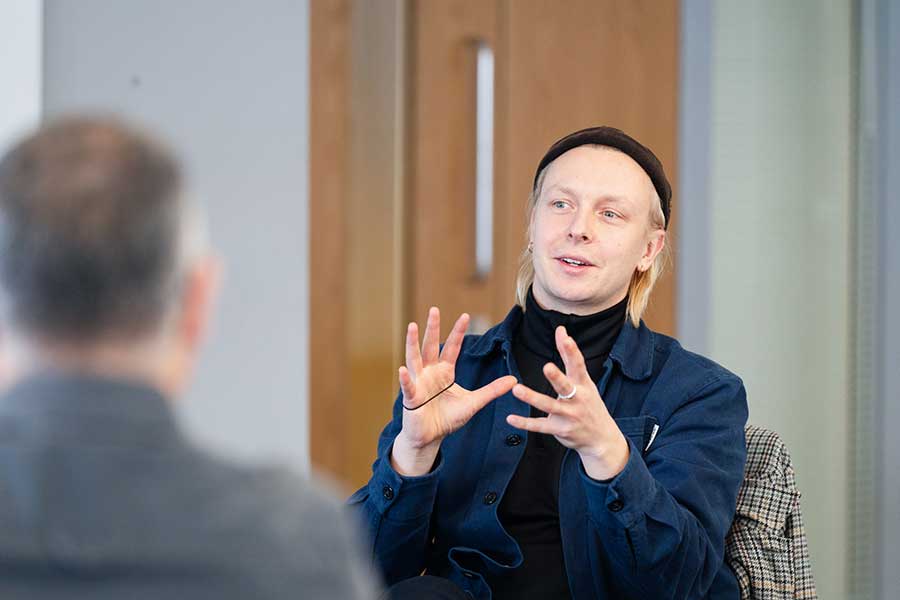
It’s almost four years since a standard was approved for a Level 7 Curator apprenticeship in England. This means a group of industry professionals wrote and got approved what this qualification should contain and is ready for delivery by training providers including Universities. We spent many months staring at the webpage, wondering how to design something that could make a real impact.
Editor’s update, October 2026: this contribution describes the programme in March 2024. Funding rules in England changed for new Level 7 starts from 1 January 2026: government funding is limited by age and specified exceptions, while apprentices who started earlier remain funded through completion. Prospective learners and employers should check the current rules and Teesside’s course information before relying on the historical funding description below.
What is an apprenticeship?
The UK government brought these in as new vocational qualifications where you work and study at the same time, and they pay 95% or 100% of the fees. In England, apprenticeships run from Level 2 (GCSE-equivalent level) to Level 7 (master’s level). A qualification level is not the same as an awarded degree; in our programme, we chose to combine the apprenticeship with an MA.
Why integrate?
We still aren’t sure why some level 6 or 7 standards aren’t integrated, however in our sector it is expected that curators have a master’s degree. As our mission is to widen access and address inequality, we decided it must be an MA Curating as well, especially as the levels are not widely understood or referred to. As a university, we can award these degrees as well as the Level 7 Higher Apprenticeship if we write into the design.

What about curating?
It has never been more important to focus on how to navigate content and collections, how to engage with different types of people and communities, and how to address key issues around environmental crisis and digital technologies. Our research at MIMA (Middlesbrough Institute of Modern Art, part of our university) coalesces around curatorial strategies that engage, empathise and expand knowledge transfer for all constituents (including non-human). Future-proofing the role of a curator involves adapting to emerging trends, technologies, justices and changes in the socio-cultural landscape.
Designing for difference
We created a masters based on the apprenticeship by adding more direction to the aspects of curating that are important to us: learning and engagement, digital curation, decolonial issues, diversity and inclusivity, non-hierarchical approaches. We are not teaching the subject specific knowledge, we are teaching the wide-ranging, evolving skillset that all curators need whether they are working with ancient artefacts, artist film or animals. For us it’s about working with people, and this gives collections, exhibitions and curatorial projects their value. On a practical level, traditional day release was never an option as it’s too inflexible. We made three large modules where students attend a one week intensive on campus per module and the rest is online. Our school thinks a lot about the barriers to higher education and nearly all of our students are balancing a great deal including significant work to pay bills, parenting, caring or other family duties, health issues and also higher education is not necessarily a familiar environment. The course offers new points of access to study for those already in work and who have not had an opportunity afforded to them to study through traditional routes. The aim being to democratise curatorial voice which is key to ensuring the longevity of this role.
Casa Batlló’s heritage apprenticeship programme offers a different institutional approach to practical learning.
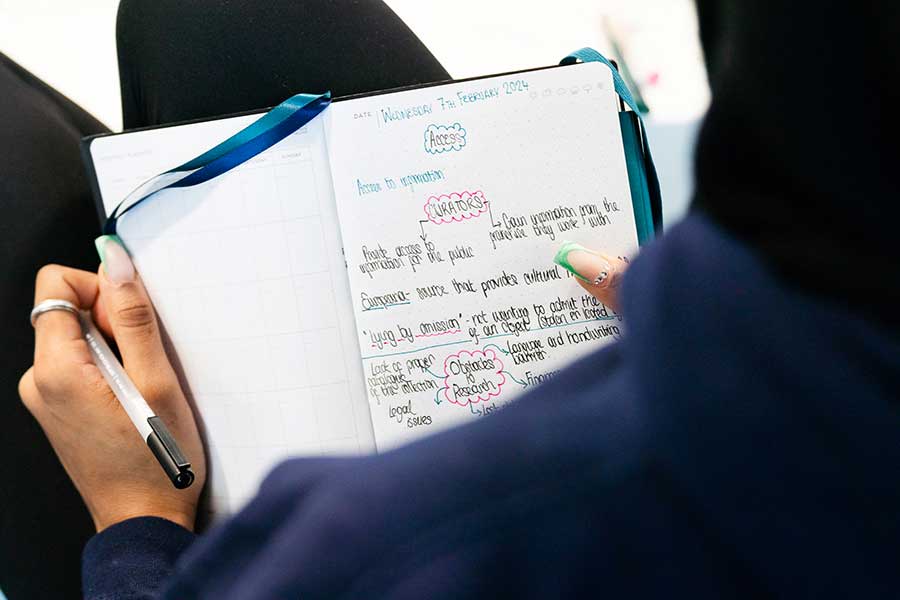
Several years later…
We have 50 apprentices on programme in our second year! Our apprentices come from all over England (including Tate, Science Museum, National Trust, Turner Contemporary, North Yorkshire Council, Durham County Council, Wellcome Collection, HOME, P21 Gallery, Open Eye Gallery and Sheffield Hallam University, and many others.) and their job roles vary greatly from visitor services, education and learning, programme and curatorial teams, marketing and even senior level posts. Most come from GLAM (Galleries, Libraries, Archives and Museums) but there is increasing interest from leisure, media, environment and health sectors. The National Trust are one of the heritage sector leaders for apprenticeships with a proactive outlook and lots of organisational support for their workforce.
Insert apprenticeship into job roles!
The cultural sector is behind a lot of others (for example health, finance) and has limited knowledge of government apprenticeships generally. As well as upskilling existing staff, the idea is really to embed apprenticeships in new posts and use this to diversify workforces, many people are now searching directly for apprenticeships over jobs or standard University courses. A handful of organisations have now worked with us to achieve this including Tate and The Science Museum and it’s exciting to see this jump in action, this is how barriers to access are truly removed and workforces become more diverse. For example, someone working in community arts setting for many years but who does not have a UG or PG degree can now get past the gatekeeping tradition of an MA Museum Studies or Curating.
Compare this with museum apprenticeships that open new routes into work in other settings.

What’s happening next?
This MA Curating (Curator Apprenticeship) starts three times a year and intensive weeks take place in Middlesbrough or at our TU London new space in Stratford. Our design is also adapted to new apprenticeships as an MSc Art Psychotherapy, MBA Cultural and Creative Leader and Creative Industries Production Manager. The pair of us are launching a Professional Doctorate in Curating and Creative Practice in September that is equivalent to a PhD and follows the same intensive week structure over three years and can be funded by a government loan. Whilst this government apprenticeship scheme operates separately in Scotland, Wales and Northern Ireland (not our rules!), you can also join our MA Curating as a standard route student from anywhere in the world.
How does this affect us and the sectors involved?
As MIMA Research Unit and its wider team of expanded curators connected to us, teaching and research are intertwined, we collaborate widely with students, industry and academics internationally, and are obsessed with real world practice-based research that we hope can have a lasting impact. Our work as academic museum and gallery curators (which by definition we also include practising designers, educators, artists, filmmakers, technologists, environmentalists, cultural leadership, the cultural and natural assets around us and so on) thrives on problem solving such as how can we address socio-economic barriers to engaging people and places, and removing assumptions based on traditional privileges.
Our forthcoming publication, These Things Take Time: Curating for a Changing World, outlines multiple voices calling for alternative methodologies to a range of challenges from addressing disability to interdisciplinary collaboration. By combining traditional curatorial skills with forward-thinking and adaptive approaches, our connected future curators can position themselves to navigate the evolving landscape of cultural institutions and continue making meaningful contributions within and beyond the museum sector.
For more information please visit our course website.






