Fresh ideas from museums around the globe in your inbox each week

December 30 2018
 By Jim Richardson
Archive context: the museum examples and prices below were reported in December 2018. The planning conclusion was updated on 10 October 2026; these historical listings are not recommendations of current availability.
In 2018, Airbnb described Airbnb Experiences as ‘activities designed and led by inspiring locals. They go beyond regular tours or classes by immersing guests in each host’s unique world. It’s an opportunity for anyone to share their hobbies, skills, or expertise without needing an extra room’.
Airbnb Experiences ranged from photo shoots in iconic parks to graffiti walking tours to a session with a personal shopper.
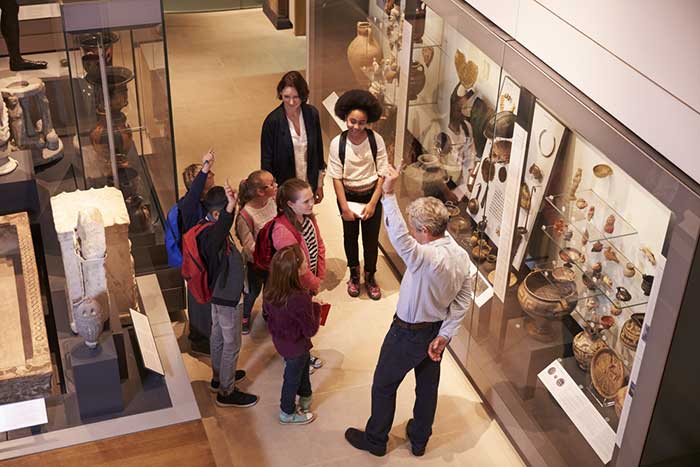
Airbnb launched Experiences in November 2016.
Museum-led and independent experiences
A search in 2018 on the Airbnb Experience website found both independent tour guides and institutions offering museum experiences through Airbnb.
The Natural History Museum of Utah, for example, offered a Private Tour of Utah’s Dinosaurs. This was a 45–60 minute tour of the Past Worlds exhibit, followed by exclusive access to the museum’s Paleo Prep Lab, where paleontology volunteers prepared fossils recovered from the field for further study.
The 2018 Airbnb Experience description said they ‘are currently excavating a newly found 75 Million-Year-Old relative to the T-Rex! See him now before he goes on display’.
The price reported in December 2018 was $21, including museum admission.
The useful idea in the historical Utah example is a programme with a clear point of difference: a guided encounter with specialist work beyond a standard visit. A museum can assess that idea before choosing where to sell it.
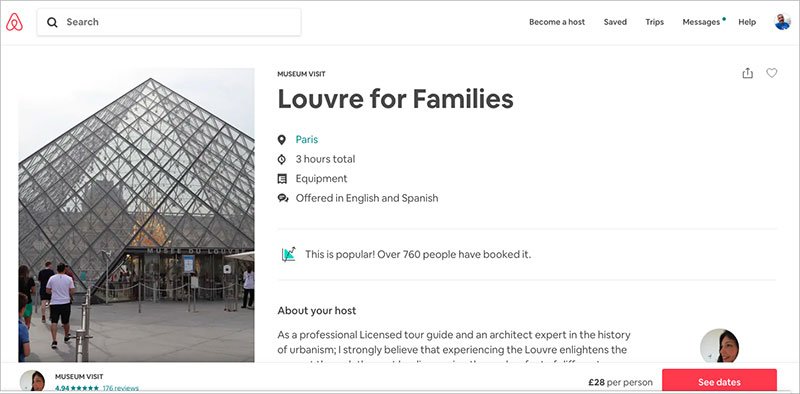
Other Airbnb Experiences in the 2018 article were offered by independent tour guides.
These often highlighted one part of the museum collection, for example, Remarkable Women at the British Museum or Image of the Black in Tate Britain. Some went beyond the usual museum visit with extra activities such as Draw With Me At the Met or the Stockholm Viking Experience.
These independent-guide listings were distinct from the museum-led Utah example. A third-party tour inside a museum does not by itself establish an official museum partnership.
Cost the programme and its responsibilities
Write the programme’s boundaries first. Agree access with the teams responsible for collections, conservation and security; define the group size, staff time and visitor requirements. Cost the whole session, including preparation and any platform charges, rather than treating the ticket price as income available to the museum.
Read more about testing audience fit before commissioning a format.
Before commissioning, check:
- Who the experience is for and what distinctive access it offers.
- Collections, conservation and security permissions, and available staff capacity.
- Group size, visitor access needs and insurance requirements.
- Current platform fees and cancellation terms, alongside preparation, delivery and other programme costs.
- The net contribution after costs, rather than gross ticket sales alone.
Assess a current distribution route
Airbnb introduced a reimagined Experiences service in May 2025. Check the current host requirements and terms before using it as a distribution route, and compare it with the museum’s own booking system or another appropriate partner. Platform scale does not establish demand for a particular museum programme.
Read more about matching measures to a digital engagement purpose.
–
What distinctive experience could your museum develop, and which audience and distribution route would fit it? Share your thoughts in the comments below.
Image Credits: Shutterstock / Screenshot from Airbnb


About the author – Jim Richardson
Jim Richardson is the founder of MuseumNext. He has worked as a consultant to the museum sector for more than twenty years advising on technology and leadership. Jim now splits his time between running innovation consultancy for museums and leading our museum conferences around the globe.




