Fresh ideas from museums around the globe in your inbox each week

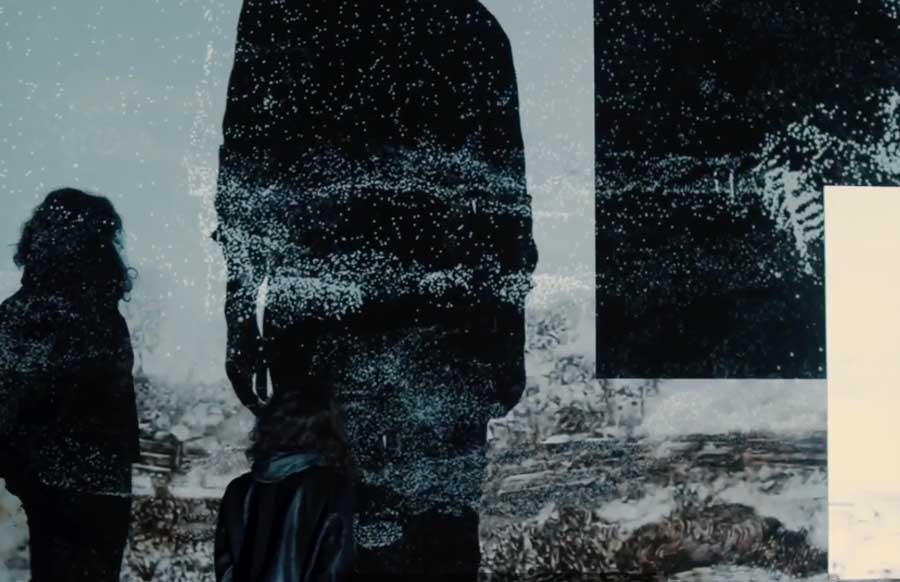
The McCord Stewart Museum in Montreal has long pushed the boundaries, offering exhibitions that explore the city’s rich history and evolving identity. One of its most innovative projects, “Mental Maps,” a digital installation created by Studio Iregular, uses cutting-edge artificial intelligence (AI) technology to reinterpret the traditional watercolours of 19th-century artist James Duncan featured in the exhibition Becoming Montreal: The 1800s Painted by James Duncan.
AI Meets Montreal’s History
The Becoming Montreal exhibition showcases around 100 works by James Duncan, a painter and watercolourist of Irish origin who documented Montreal’s transformation between the 1830s and 1870s. His artworks provide a vivid chronicle of the city’s evolving landscape, capturing its topography, cityscapes, and daily life scenes. Curated by Christian Vachon of the McCord Stewart Museum and Laurier Lacroix from Université du Québec à Montréal, this retrospective immerses visitors in a visually compelling narrative of historical Montreal.
The AI-Driven Birth of “Mental Maps”
Seeking to bridge past and present, the museum enlisted Montreal-based digital art studio Iregular, led by Daniel Iregui, to create a contemporary response to Duncan’s work. The result was Mental Maps, an AI-powered immersive digital installation that reimagines Duncan’s Montreal through a modern technological lens.
“We wanted to propose a new view of Duncan’s work anchored in the 21st century,” shared Stéphanie Poisson, Head of Digital Outreach at the museum. Supported by a Canada Council for the Arts grant, the team collaborated closely with Iregular from the early stages of the exhibition’s design.
AI-Generated Art in Action
Iregui and his team used a cutting-edge AI algorithm known as NeRF, typically employed to generate 3D models from 2D photographs. However, adapting the technology to interpret Duncan’s watercolours posed a unique challenge. The algorithm, designed for photographic realism, struggled with the fluid, textured qualities of watercolours.
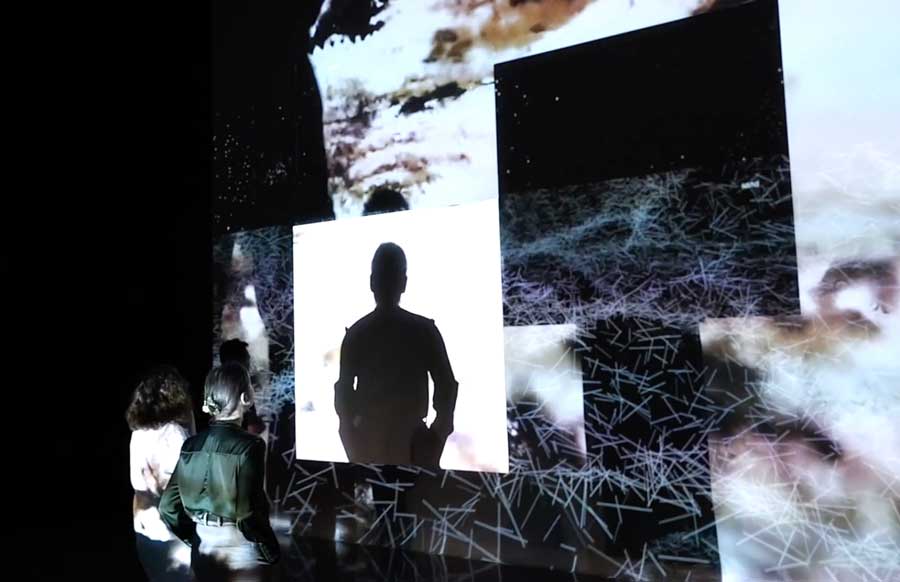
To overcome this, the team segmented Duncan’s works into smaller pieces, enabling the AI to reconstruct imagined 3D landscapes. These digital interpretations blended seamlessly into the immersive experience, where visitors’ shadows revealed dynamic visual patterns projected on the gallery walls.
An Interactive AI Experience
Mental Maps is more than a visual installation—it’s an AI-driven interactive experience. Visitors become part of the artwork as their shadows manipulate the projected visuals, uncovering the digital reinterpretation of Duncan’s world. The soundscape, created through improvised sessions with musicians, evolves in real-time, adding depth to the multi-sensory environment.
A Bold Leap into AI Art
For the McCord Stewart Museum, integrating such a technologically ambitious piece was a bold departure from its typical exhibitions. “We were not in a typical client-supplier relationship,” Poisson noted. “Iregular had almost carte blanche.” This open-ended collaboration meant embracing uncertainty, allowing the creative process to unfold organically.
Though Mental Maps doesn’t aim to teach visitors about Duncan’s work in a traditional sense, it offers a novel way to experience it—by juxtaposing historical art with futuristic AI technology. As Daniel Iregui reflected, “Our work will get to be seen by people who wouldn’t normally attend a digital art exhibition, while art lovers visiting for Duncan’s work encounter something entirely unexpected.”
Becoming Montreal: The 1800s Painted by James Duncan, featuring Mental Maps, runs through the summer at the McCord Stewart Museum. Visitors are encouraged to explore this unique intersection of historical art and AI-driven digital innovation—and perhaps even see their own shadows come to life in Montreal’s imagined past.