Fresh ideas from museums around the globe in your inbox each week
Speaker
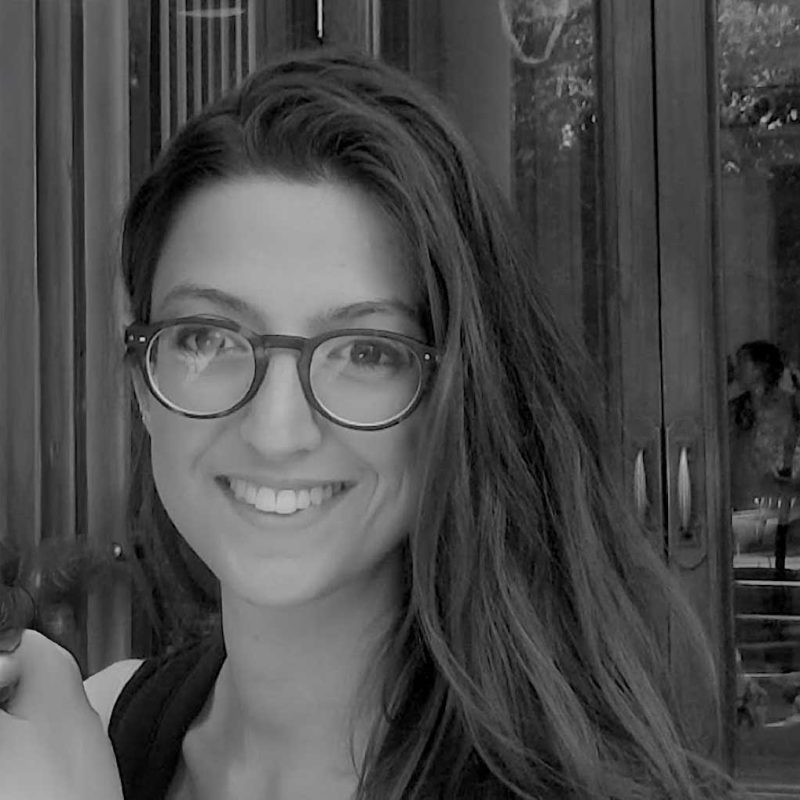
Giulia Taurino
Researcher
Giulia Taurino, Ph.D. is a researcher, artist and curator specialized in AI for the management and preservation of cultural heritage collections. Her research focuses on forms of content organization in online repositories and digital archives, cultural implications of algorithmic technologies, and applications of AI in the arts, heritage and museum sectors.
Past and present affiliations include the NULab for Digital Humanities and Computational Social Science, the Alan Turing Institute AI & Arts interest group, Getty Research Institute, Brown University’s Virtual Humanities Lab, metaLAB (at) Harvard, MIT Data + Feminism Lab. Since 2019, she has been working on research & knowledge creation projects exploring the intersection between AI and curatorial practices in museums and heritage archives.
Previous residencies and awards include MITACS Award, FIAT/IFTA Grant, S+T+Arts x Nesta Italia – City of the Future, Unreal Engine x Zú Atrium – Creative Showcase. Giulia holds a doctoral degree in Media Studies and Visual Arts from the University of Bologna and the University of Montreal.
She has served as a Director of Research and Innovation at AI Impact Alliance, where she worked on project design and implementation research for AI ethics and sustainable development goals. On the side, she collaborates as editor for The Programming Historian, as instructor for Generativa Academy and is member of the scientific committee for the AI + Architecture project VISIONE.
Giulia Taurino spoke at the Museum AI Summit 2026 :
Beneath the Catalogue: Generative Approaches to Museum Image Curation
This presentation ventures into the uncertain depths where computation meets curation, descending past the museum galleries into the sediment of institutional memory.
We carry old tools: human-made objects, artifacts, research questions, curatorial skills. But we also come with new instruments: vision-language models, pattern-recognition systems, new ways of algorithmic seeing. What surfaces from archival repositories when machines scan thousands of images in an afternoon?
Where the myth of the complete catalogue finally cracks open, what do we find beneath? Archival gaps, missing data, incomplete descriptions. This talk interrogates the role of AI in filling uncertain archival information and re-designing cataloguing practices across museum collections.