Fresh ideas from museums around the globe in your inbox each week

July 12 2026
 By Manuel Charr
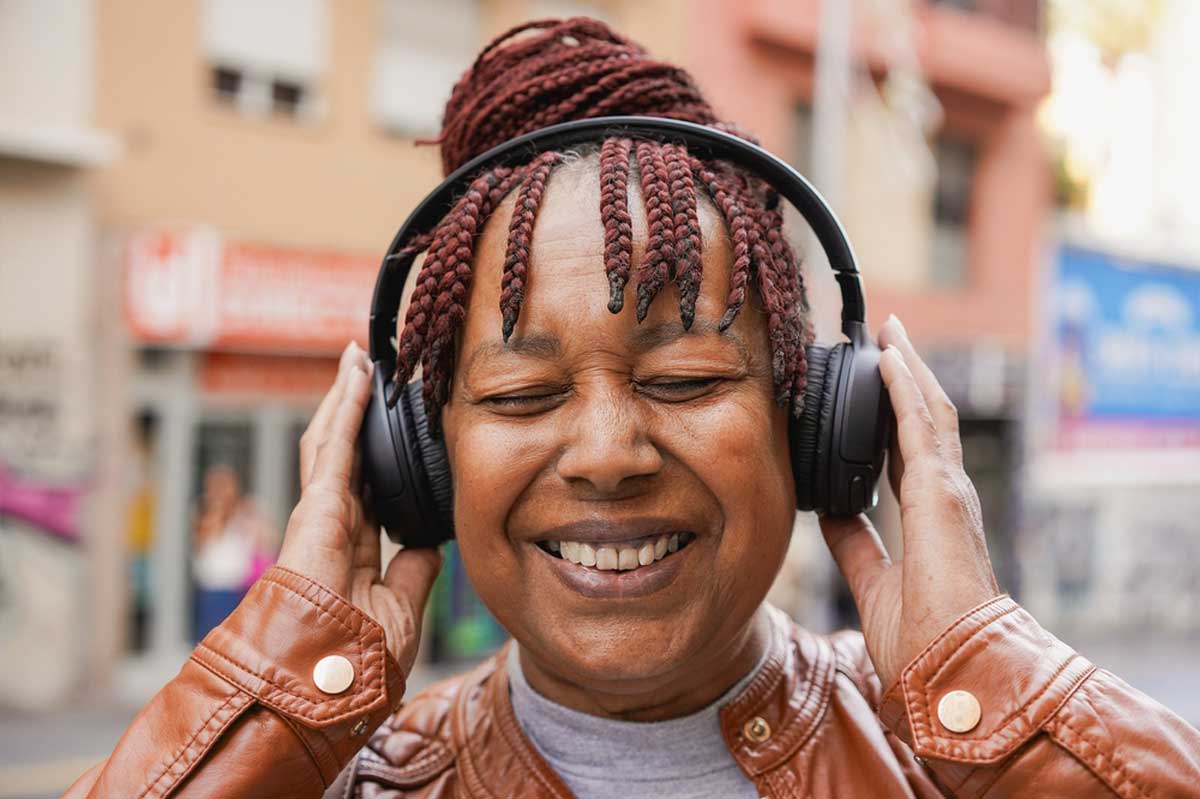
The British Library set out to rescue the nation’s most fragile sound recordings. Along the way, its partners stumbled on something nobody had put in the funding bid: birdsong, steel bands and shipyard clatter seemed to make people better.
Consider a woman who has had a stroke. She has aphasia: the words are still in there somewhere, but the road to them has been washed out. The obvious remedy is speech therapy, which means working at language head-on, and often failing at it in front of someone.
Now consider a stranger approach. Post her a box of good-quality art supplies. Log her into a video call. Play her the sound of a woodland, or of waves on a long-gone coastline, and ask her not to describe it, just to make a mark on the paper.
Some weeks later, a participant in exactly that kind of session tells a camera: “I couldn’t speak and then art class, I speak.”
That is not the result most of us would predict. Which is exactly why it is worth asking how it happened.
A rescue mission with a side effect
On paper, Unlocking Our Sound Heritage was a salvage operation. Funded by the National Lottery Heritage Fund and led by the British Library with ten regional hubs, it aimed to save the UK’s most at-risk audio before tape and disc decayed beyond recovery. The haul ran from world music and pop to oral histories, wildlife recordings and performance poetry: more or less anything anyone had ever bothered to record.
Saving recordings is easy to justify. The awkward question for any archive is a different one: who is actually going to listen? So alongside the preservation work ran a national learning and engagement programme, from July 2018 to March 2023, overseen by Dr Chandan Mahal. It reached schools and young people, older people and people with visual impairments. One of its biggest strands reached people living with illness, brain injury and addiction.
Two details matter more than they first appear. Much of the work happened during the pandemic, so sessions designed for a room had to be rebuilt for a screen. And the hubs didn’t work alone: they paired archivists with therapists, NHS trusts, charities and artists. That pairing, someone who knows what’s in the vault alongside someone who knows what a person needs, is the quiet engine behind everything that follows.
The trick of not trying
The stroke survivor belongs to a project called Seeing Sounds. It brought together the British Library, the Free Space Project at Kentish Town Health Centre in London and The Brain Charity in Liverpool, working with people living with aphasia, the loss of language that follows a brain injury, most often a stroke. The sessions were led by Cat Andrews, who happens to be both an artist and a speech therapist.
Here is the counterintuitive part. The standard treatment for a language problem is more language. Seeing Sounds did close to the opposite. Many of the archive recordings had no words in them at all, so participants could listen hard without having to process speech. As Andrews put it, they were going around the damaged route and expressing themselves through a different sense entirely.
They weren’t even asked to draw what they heard. No seagull, no rowing boat. Just a response: a mark, a shape, a colour. Which removes something that haunts every rehabilitation exercise, the possibility of getting it wrong.
The feedback is striking. Participants reported more confidence and a greater sense of wellbeing, and said the sessions helped them learn to live within the limits their condition imposed. Some reported physical gains too, such as better use of their non-dominant hand. “Cat told me how to draw with left hand,” one said. “Slowly, slowly I became a drawer.”
The most revealing comment was this one: “It’s helped me with my aphasia because it’s made me forget it.” Not thinking about the problem, the participant found, made it turn up less. The most effective move, in other words, may have been to stop staring at the thing you’re trying to fix.
One small detail is worth a second look. Before the first session, every participant was posted a box of genuinely good art materials, and several said receiving it was what made them want to start. It’s a cheap signal, but a powerful one: someone thought you were worth decent paper. The work ended up in an exhibition at Kentish Town Health Centre and online.
What a front room remembers
In London, the Memory Archives project took a different group: Caribbean elders living with dementia, people whom mainstream services often don’t cater for. London Metropolitan Archives worked with the arts charity Culture& and the Friends of the Huntley Archives to test a simple idea. Could archive material act as a memory prompt that also spoke to the experience of migration and cultural dislocation?
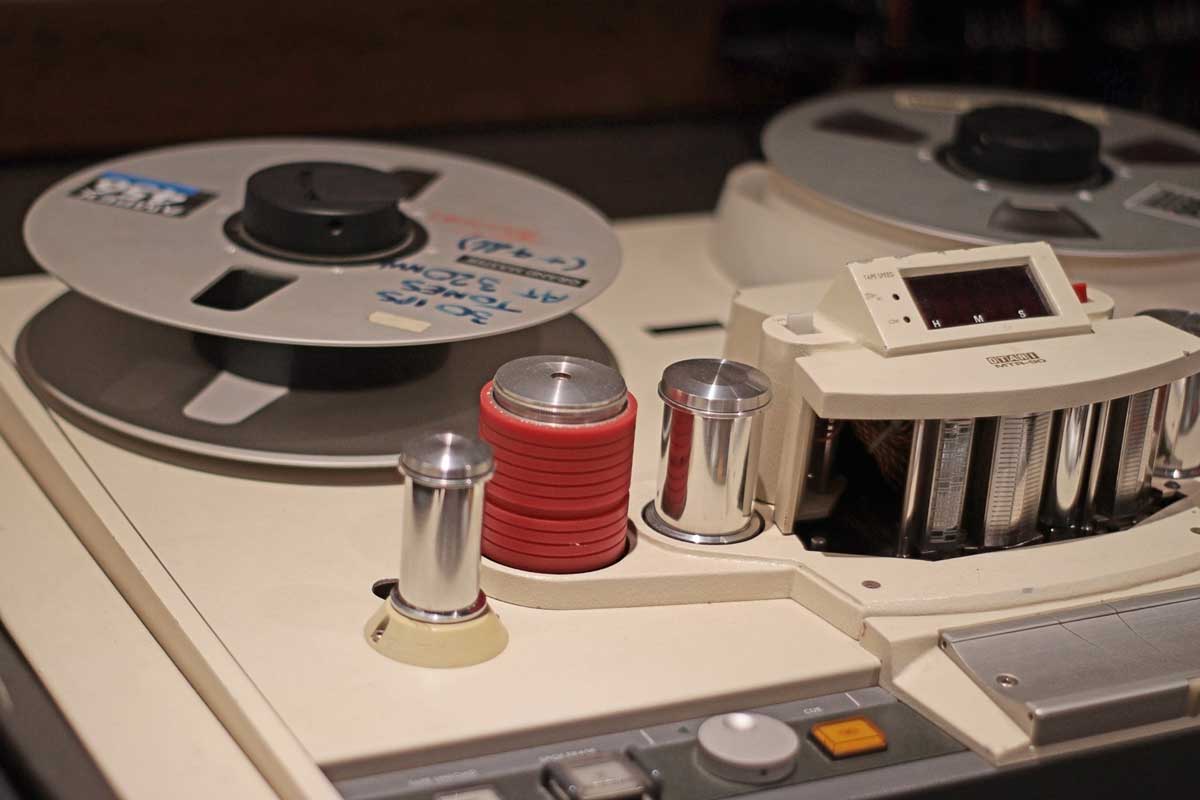
The twist is that sound wasn’t the star. It was one ingredient in a deliberately crowded mix: music, storytelling, posters and pamphlets, Caribbean food, and a recreation of the West Indian front room, the installation originally conceived by artist and writer Michael McMillan. The recordings included a steel band festival from the old Greater London Council archive and a 1970s jazz concert in Ealing.
When the participants talked about what mattered, they kept coming back to the food. That’s a useful correction for anyone who thinks of memory as a filing cabinet sorted by format. Memories don’t live in a “sound” drawer or a “taste” drawer; they come back when the whole scene is rebuilt around you.
Then came the outcome nobody designed for. Sessions aimed at elders began drawing younger relatives. The older participants found themselves showing grandchildren how a record player or a cassette deck worked, and talking about the music they used to play on them. A dementia session had quietly turned into a conversation across three generations.
The partners have since built on the work with a series of memory boxes for use in care settings.
The toy shop in the city centre
If you had to pick a recording to stir the memories of people with dementia, you might reach for the big moments: a coronation, a cup final, a wartime broadcast. The University of Leicester’s experience points somewhere smaller.
Working with the local council and health professionals, the team built three toolkits from Leicestershire’s sound collections, used with groups including the Leicester Musical Memory Box group. Sessions mixed deep listening with discussion on themes such as place, holidays, working life and the great outdoors.
The clip that landed hardest featured an interviewee reminiscing about a toy shop in the city centre. It was a landmark for many in the room, and health workers reported that as people listened and swapped memories, the mood visibly lifted. The logic is easy to miss: a national event belongs to everyone, which means it belongs to no one in particular. The toy shop was theirs.
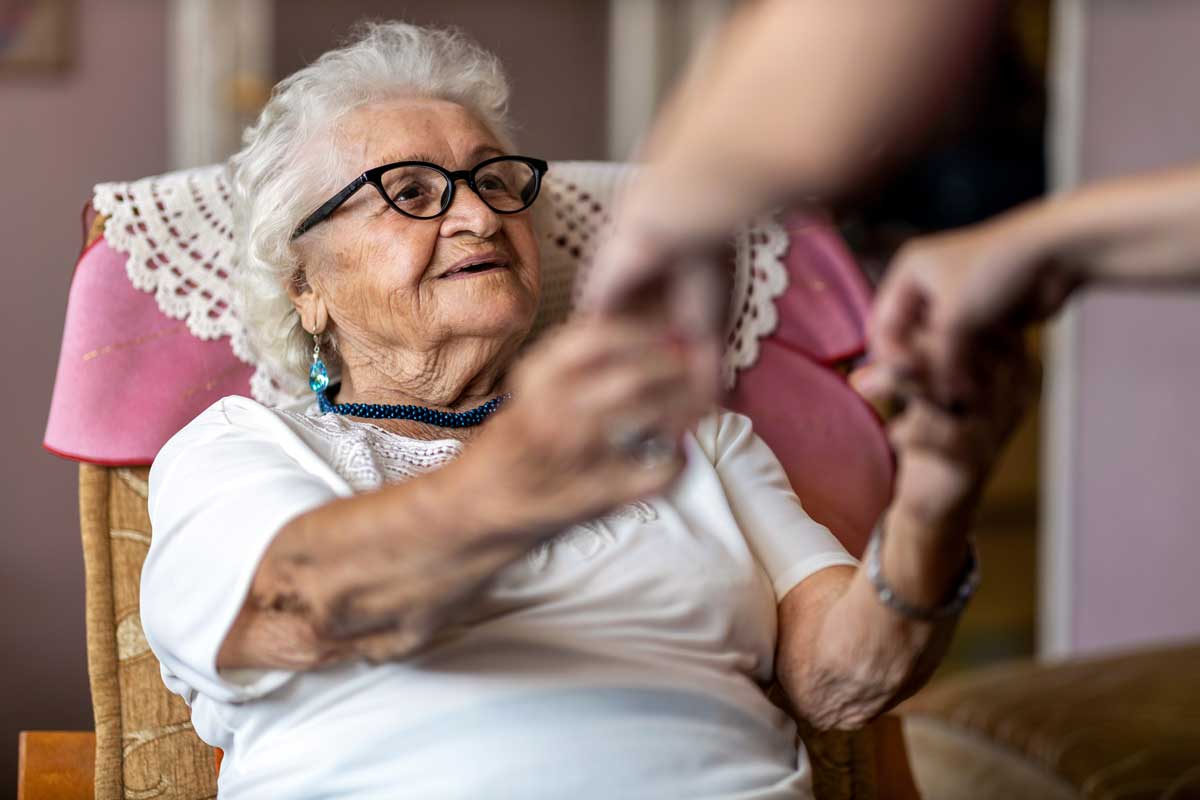
There’s a second, less visible beneficiary. Health workers said the resources helped them start and sustain conversations, which anyone who has sat with a relative with dementia and run out of things to say will recognise as no small thing. So the team also ran training for professionals and family carers, and the toolkits have since been distributed across the council. The recordings, in effect, became a conversation kit for the people doing the caring.
Why a fairground might help you stay sober
The last case contains a genuine puzzle. Picturing Sounds, led by North East Museums, worked with Recovery Connections, which supports people in Gateshead recovering from long-term alcohol and drug addiction. A great deal of recovery work, as project lead Benjamin Jones explained, is about staying in the present and not dwelling on a past that may have fed the addiction in the first place.
So why would you play these people sounds from their past? The fairground. The clang of the shipyards. The roar of the football ground. The Christmas window at Fenwick’s department store.
The answer seems to be in which past came back. The recordings that resonated most were the ones that returned people to childhood and family: warm memories, not the ones that hurt. And the act of listening closely, as a group, to a single sound is itself a present-tense exercise. The evaluation found that clients became more self-aware and mindful, more attentive to the world around them, and drawn away from negative thoughts. Call it mindfulness by the back door.
Many of the participants hadn’t done anything creative since school, and this was their first time in a support group, let alone one held online. Newcastle artist Michael Davis kept the materials simple, asking people to make marks or cut out shapes in response to what they heard. Confidence rose. So did something harder to engineer: staff reported that clients became more trusting of them as professionals. An art class had opened a side door into the therapeutic relationship.
The clearest verdict came from the participants themselves, who wanted art sessions built into their recovery programmes. The project’s legacy is a set of films of Davis demonstrating the activities, made so other practitioners can try sound in their own work.
So what is actually going on?
Strip away the specifics and the same few mechanisms keep turning up.
- Lower the stakes. There is no wrong answer to birdsong. Remove the chance of failure and people try things they would otherwise avoid.
- Go around the obstacle, not through it. For people with aphasia, wordless sound offered a route that skipped the damaged one.
- Small and local beats big and famous. A toy shop or a Christmas window does more than a historic broadcast. The project’s own summary found that sounds linked to childhood were especially good at prompting reflection and creative response.
- The group is part of the treatment. Listening to the same sound at the same time gave people something to share before they had to share anything about themselves.
- The side effects are often the main effect. Trust with key workers, grandchildren at a dementia session, a carer who finally has something to talk about.
Now the honest caveat. Most of the evidence here comes from participant feedback and staff observation, gathered across small groups with no control groups. People who sign up for an art class may be the people most likely to enjoy it. And a reported improvement in a non-dominant hand is a participant’s impression, not a clinical measurement.
So this is promising evidence, not proof. But look at the other side of the ledger. The recordings had already been paid for and digitised; the art materials cost little; the risks are close to zero. When an intervention is this cheap and this safe, it doesn’t need trial-grade evidence to be worth trying. It needs trial-grade evidence to find out how much it’s really worth.
The cheapest prescription in the building
The usual story about archives is an accountant’s story. They are a cost: climate-controlled shelves, specialist staff, endless digitisation, all to preserve things for their own sake. Worthy, perhaps, but not obviously useful.
Unlocking Our Sound Heritage hints at a different story. Sitting in the vaults was a stock of low-cost, low-risk tools for wellbeing that had gone unused for decades, not because they didn’t work, but because nobody had introduced the curator to the speech therapist, the addiction worker or the dementia carer.
The recordings didn’t change. The woodland sounded the same in lockdown as on the day it was recorded. What changed was who was in the room when someone pressed play. And for at least one participant on a video call, sitting with a box of art materials and a page of marks, that was enough to start getting the words back.
–
This article is based on a presentation by Dr Chandan Mahal at the Museums, Health & Wellbeing Summit 2026.
Interested in discovering other wellbeing initiatives in museums? Learn how the Art Institute of Chicago Is building mindfulness Into the museum experience in this article, or find out how the Vancouver Art Gallery Is turning art into a prescription for wellbeing here.

About the author – Manuel Charr
Manuel Charr is a journalist working in the arts and cultural sectors. With a background in marketing, Manuel is drawn to arts organizations which are prepared to try inventive ways to reach new audiences.


