Fresh ideas from museums around the globe in your inbox each week


The climate crisis poses one of the greatest challenges of our time, with the heating, cooling, and powering of buildings accounting for a significant proportion of global emissions.
Museums, often housed in older, energy-intensive buildings, face a unique challenge but also a tremendous opportunity.
At the Green Museums Summit 2023, Patrick Hamilton, Director of Climate Change, Energy, and the Environment at the Science Museum of Minnesota, shared how museums can not only transform their energy performance but also lead by example in showcasing the clean energy economy.
The Challenge: Museums as High Energy Consumers
Hamilton began by outlining a stark reality: buildings are responsible for 35% of global energy use and, therefore, a comparable share of greenhouse gas emissions. Museums are no exception.
Many cultural institutions occupy large, historic buildings that require substantial energy for lighting, heating, and maintaining strict temperature and humidity controls to preserve collections. This makes them disproportionately high energy consumers.
However, as Hamilton highlighted, this energy use is not only environmentally unsustainable but also financially costly. With rising energy prices and growing pressure to reduce carbon footprints, museums must act to address this challenge.
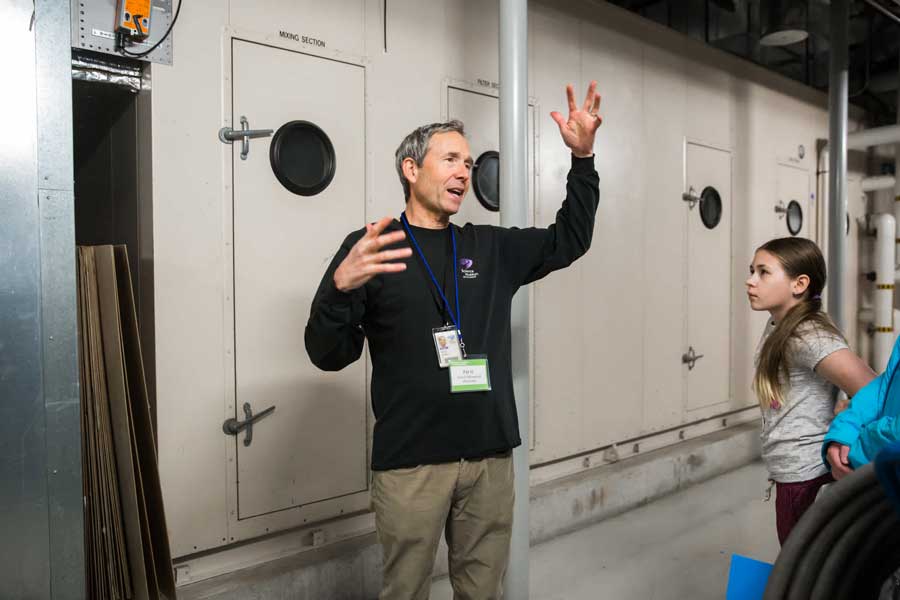
Patrick Hamilton, Director of Climate Change, Energy, and the Environment at Science Museum of Minnesota
Finding and recovering wasted heat
The Science Museum of Minnesota provides an inspiring example of what can be achieved. Recognising the inefficiencies in their building’s energy use, the museum embarked on a transformative journey to improve its energy performance.
This began with an energy audit conducted by mechanical engineer Dave Solberg, which revealed a startling inefficiency: the museum was throwing away vast amounts of heat energy while simultaneously purchasing new energy to meet its heating needs. A related case examines using meter data to identify avoidable demand.
In response, the museum installed advanced heat recovery chillers – essentially large-scale heat pumps designed to move heat from where it isn’t needed to where it is. For example, in winter, these systems pre-warm incoming fresh air using heat energy that would have previously been wasted. Related guidance covers building the case for museum heating upgrades.
The results have been remarkable:
- A 60% reduction in the museum’s hot water purchases.
- A 40% decrease in electricity consumption through additional energy efficiency measures.
- Financial savings of $150,000 annually on energy costs, offering a simple payback period of just six years on their $900,000 investment.
These savings now support the museum’s scientific and educational mission rather than being funnelled into utility bills.
Setting Ambitious Goals
Buoyed by their success, the Science Museum of Minnesota has taken its commitment further. Initially aiming for 100% carbon neutrality by 2050, the museum brought this target forward by 20 years. They are now on track to achieve complete carbon neutrality by 2030.
This bold ambition is being realised through a combination of strategies:
- Subscribing to carbon-neutral electricity through local energy programmes.
- Partnering with district energy systems that supply carbon-neutral chilled water and hot water.
- Implementing energy-efficient retrofits and upgrades.
As a result, the museum has already reduced its carbon emissions by 89% since 2014.
The Bigger Picture: Benefits Beyond Sustainability
Hamilton emphasised that improving energy efficiency is about much more than reducing emissions. Retrofitting buildings creates jobs and stimulates local economies, employing tradespeople such as factory workers, electricians, and technicians. It also enhances the visitor experience, making museum spaces more comfortable and welcoming.
For museums, embracing energy efficiency can deliver a range of benefits:
- Economic: Reduced operating costs free up funds for core missions.
- Employment: Creating jobs and supporting local economies.
- Equity: Ensuring museums contribute to a cleaner, healthier environment for all.
- Education: Showcasing the clean energy economy inspires and informs visitors.
- Environment: Dramatically cutting emissions and improving energy performance.
Museums as Leaders in Climate Action
Museums are trusted institutions that play a key role in shaping public understanding. By taking action on climate change, they can lead by example and inspire others to follow suit. Hamilton’s presentation underscored that museums are uniquely positioned to showcase solutions to the climate crisis, demonstrating that addressing climate change is not only necessary but achievable.
As he put it, “Human-caused climate change is real, and it is solvable through courageous action informed by science.” Museums, as champions of knowledge and learning, have a responsibility to act boldly and intentionally in creating a sustainable future.
A Call to Action
The starting point in Minnesota was an engineering question: why buy heat while throwing usable heat away? That made the audit important before any investment decision. The reported savings came from a combination of heat recovery and other efficiency measures, so another museum would need to examine its own operating hours, heating demand and energy contracts before expecting similar returns. The case is strongest as an example of finding a building-specific opportunity and following it through with technical expertise.
–
Patrick Hamilton, Director of Climate Change, Energy, and the Environment at the Science Museum of Minnesota spoke at the Green Museums Summit 2023.


