Fresh ideas from museums around the globe in your inbox each week

February 20 2023
 By Manuel Charr
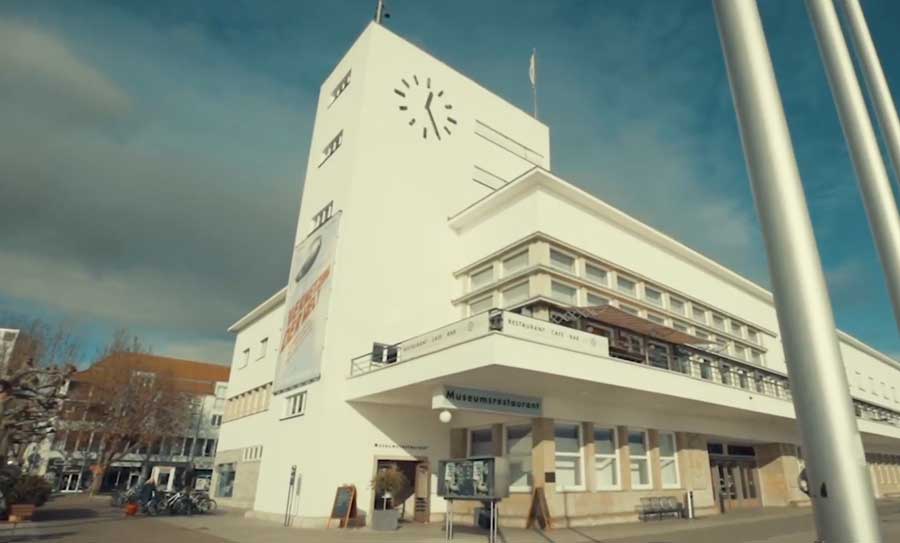
Frauke Stengel, Communications Officer and Sustainability Manager at the Zeppelin Museum Friedrichshafen, recently presented at the Green Museums Summit to share the institution’s bold journey towards sustainability. As one of only four German museums awarded the “Fonds Zero” funding by the German Federal Cultural Foundation, the Zeppelin Museum has embraced the challenge of delivering its upcoming exhibition, Into the Deep: Mines of the Future, in an environmentally conscious way. The museum has committed to minimising its carbon footprint, offsetting only 1% of the resulting emissions.
What Is a Climate-Friendly Exhibition?
The upcoming exhibition tackles a globally pertinent theme: the environmental, economic, and social impacts of resource extraction. Curated collaboratively by the museum’s technology and art departments, Into the Deep explores critical topics such as deep-sea and deep-space mining, the history and impact of aluminium production, and the role of activism and resistance against environmental exploitation.
With funding from the German Federal Cultural Foundation’s Zero programme, the Zeppelin Museum has set ambitious sustainability goals for this exhibition. As Frauke Stengel explained, the project is designed to be as “climate-friendly” as possible rather than claiming complete climate neutrality, reflecting the museum’s commitment to honesty and transparency in its environmental efforts.
How Is the Zeppelin Museum Reducing Its Environmental Impact?
The museum has taken numerous steps to reduce the environmental impact of Into the Deep. These include reusing materials from previous exhibitions such as walls, display cases, and paint, as well as incorporating construction site elements like fencing and locally sourced stones, which will be returned to their original use after the exhibition. Artists involved in the exhibition will work on-site in rented apartments, reducing travel and emissions associated with transporting artworks. The museum is also testing whether air conditioning can be reduced or turned off entirely during the exhibition’s run, a significant step given the energy demands of maintaining climate control in exhibition spaces.
Compare collection-aware changes to exhibition climate control at Guggenheim Bilbao.
How Is the Museum Promoting Sustainable Practices?
In addition to reducing its own emissions, the Zeppelin Museum aims to serve as a model for other institutions. The exhibition will include a sustainability laboratory, which will educate audiences on the environmental impact of everyday objects and encourage resource-conscious behaviour. A repair café will demonstrate how to extend the life of items such as bicycles, electronics, furniture, and clothing, highlighting the value of reuse over disposal. Promotional materials for the exhibition, including posters and flyers, are printed on recycled paper with ecological inks, and even invitations are designed with sustainability in mind, using seed paper that can grow into plants.
For a related practical example, explore using a repair café to explore reuse.
What Can Be Learned Through Innovation?
The Zeppelin Museum views Into the Deep not just as an exhibition but as a learning process for the entire institution. The museum has conducted detailed climate audits to track emissions and will use this data as a baseline for future projects. As Frauke noted, the ultimate goal is to “emit less and less greenhouse gases and to have less and less to compensate.” This approach encourages museums to rethink their practices and implement changes that align with sustainability goals.
What the exhibition was designed to test
Into the Deep links its subject of resource extraction with decisions about how an exhibition is made. Reusing walls and cases, borrowing materials that can return to their original use, and accommodating artists locally all change the production brief. The climate-control experiment needs particular care because collection requirements differ between museums. Read as a project in development, this account is valuable for the questions it sets out to test, rather than as a completed demonstration of carbon neutrality.
–
Frauke Stengel from the Zeppelin Museum Friedrichshafen spoke at the Green Museums Summit 2023.


About the author – Manuel Charr
Manuel Charr is a journalist working in the arts and cultural sectors. With a background in marketing, Manuel is drawn to arts organizations which are prepared to try inventive ways to reach new audiences.


