Fresh ideas from museums around the globe in your inbox each week

December 27 2024
 By Manuel Charr

In an era marked by division and misunderstanding, how can museums become spaces for fostering empathy and driving social transformation? The Empathy Museum stands as a beacon, demonstrating how cultural spaces can cultivate understanding, challenge biases, and inspire meaningful change.
Founded in 2015 by philosopher Roman Krznaric and directed by artist Clare Patey, the Empathy Museum is a series of participatory art projects dedicated to helping us look at the world through other people’s eyes. Through immersive experiences and storytelling, the museum has redefined how cultural spaces can contribute to building a more compassionate society.
This article explores the Empathy Museum’s mission, flagship projects like A Mile in My Shoes, its global collaborations, and the transformative power of empathy within museum spaces.
What Is the Empathy Museum’s Mission?
At its core, the Empathy Museum is driven by the belief that empathy can be a transformative force in both personal and societal relationships. The museum operates with a simple yet profound goal: to encourage people to step outside their own perspectives and experience the world from someone else’s point of view.
As Clare Patey explains, “The Empathy Museum isn’t about telling people what to think. It’s about creating spaces where people can listen deeply and connect with stories that might challenge their assumptions or open their hearts.”
Through innovative projects, the museum challenges visitors to confront their own biases and embrace vulnerability, ultimately fostering a culture of deeper understanding and compassion.
How Does A Mile in My Shoes Build Empathy?
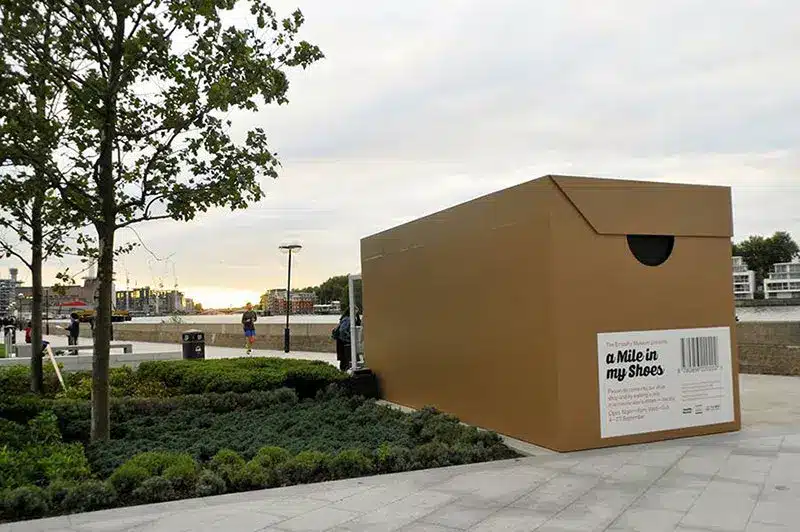
One of the Empathy Museum’s most celebrated projects is A Mile in My Shoes. The project invites visitors to literally walk a mile in someone else’s shoes while listening to their personal stories via headphones. Housed in a giant shoebox, the exhibit features a diverse collection of shoes and audio stories from people across different walks of life.
Participants might find themselves wearing the boots of a war veteran, the heels of a drag performer, or the sneakers of a refugee. Each step taken is accompanied by an intimate narrative, weaving together themes of love, loss, resilience, and hope.

Clare Patey shares, “Every visitor carries their own life experiences with them into these stories, and that interaction creates a unique connection. The act of walking in someone else’s shoes isn’t just symbolic—it becomes deeply personal.”
The project has traveled internationally, collecting over 350 stories in multiple languages across 14 countries. Each location brings new voices, new stories, and new opportunities for connection.
What Are the Other Projects by the Empathy Museum?
Beyond A Mile in My Shoes, the Empathy Museum has developed several other impactful projects designed to foster connection and understanding:
- A Thousand and One Books: A library of books donated by individuals who share why those stories matter to them. The project encourages visitors to take a book home, read it, and pass it on, creating a chain of shared experiences.
- Human Library: Visitors borrow people instead of books. These “Living Books” share their personal stories in one-on-one conversations, challenging stereotypes and fostering meaningful dialogue.
- From Where I’m Standing: A photographic and audio storytelling project capturing life in London during the COVID-19 pandemic. Through powerful portraits and personal narratives, it celebrates resilience and shared humanity.
Each project offers a different pathway into empathy, but all share a common thread: the power of storytelling to break down barriers.
How Was A Mile in My Shoes Adapted for Brazil?
In Brazil, A Mile in My Shoes took on new life through a collaboration with InterMuseus, an organization dedicated to using culture as a tool for social change. Led by Andrea Buoro, the partnership resulted in a localized version of the project, featuring stories from Brazil’s diverse communities.
The Brazilian adaptation showcases narratives from people of different ages, genders, and social backgrounds. Stories range from a young girl confronting fatphobia to a man navigating ADHD in school and a woman facing prejudice after converting to Islam.
Speaking at MuseumNext, Andrea Buoro reflected on the project, “These stories aren’t just Brazilian stories—they’re human stories. The themes of belonging, struggle, and resilience are universal.”
The project has reached over 15,000 visitors in Brazil alone, with thousands of participants leaving handwritten messages reflecting on their experiences.
Can Museums Take Empathy Beyond Exhibition Spaces?
The success of A Mile in My Shoes in schools offers a compelling case for taking empathy beyond traditional museum settings. InterMuseus adapted the project for schools by developing a mobile version, complete with shoe shelves, headphones, and MP3 players.
In schools, the project created safe spaces for students to engage with difficult topics such as prejudice, mental health, and social inequality. Teachers and principals also embraced the initiative, prompting the creation of an educational guide inspired by Roman Krznaric’s work on empathy.
Andrea Buoro emphasizes, “Schools are microcosms of society. If we can build empathy there, we’re planting seeds for a more compassionate future.”
Why Are Museums Powerful Tools for Social Transformation?
Museums are uniquely positioned to foster empathy because they are spaces of storytelling, reflection, and connection. Unlike other public spaces, museums invite visitors to slow down, engage with narratives, and reflect deeply.
The Empathy Museum’s participatory model exemplifies how museums can become platforms for social change. By creating immersive, emotional experiences, they encourage visitors to see the world through others’ eyes and challenge their own biases.
Clare Patey reflects, “Museums have the power to shift perspectives—not through facts and figures, but through stories that touch the heart.”
What Can We Learn from the Empathy Museum?
The Empathy Museum, through projects like A Mile in My Shoes and others, demonstrates how cultural spaces can transcend their traditional roles. They can become places of connection, healing, and transformation.
As visitors walk in the shoes of strangers, borrow human “books,” or reflect on shared stories, they are reminded of our shared humanity. The lessons of the Empathy Museum extend beyond its walls, offering a blueprint for how museums everywhere can contribute to building a more empathetic world.
For more information about the Empathy Museum and its projects, visit their official website.


About the author – Manuel Charr
Manuel Charr is a journalist working in the arts and cultural sectors. With a background in marketing, Manuel is drawn to arts organizations which are prepared to try inventive ways to reach new audiences.