Fresh ideas from museums around the globe in your inbox each week

June 23 2017
 By Seema Rao
Museums often hold diverse collections. Think of the Royal Ontario Museum whose holdings include dinosaurs, building columns, and moccasins in one collection. Accusations of privilege and elitism can make museums seem more old guard than future-facing. Museums have acquisition policies and hierarchy, certainly, but even anarchists need to organize for a protest.
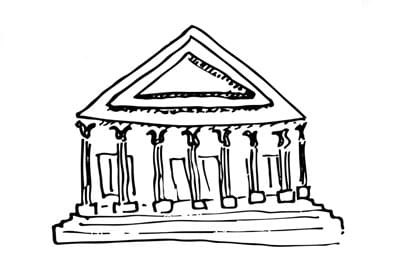
Museums have faith in their audience. Museums let people in. They make precautions to secure their collections of the guards and buzzer persuasions. But, even with these items in place, for the most part, museums are putting themselves out there with their ideas written on the wall. They have the faith in their audience to come and go, over and over, and leave the collections unscathed. What could be more democratic? There is no entrance test. Many are as free as your local library. The democratic promise is that a billionaire and a person experiencing homelessness should be equally welcome.
Museums encourage difficult conversations. Walk into many science centres and you will explore climate change, as scientists present it, not as we wish it to be. Explore many contemporary art museum exhibitions and you will be faced with inequality issues. These museums invite people to engage with difficult realities.
Konrad Ng’s account of cultural dialogue gives one example of how that commitment can shape programming.
Museums are into education. While politicians debate the best way to do education writ large, museums like the Museum of Fine Arts, Boston, have been encouraging learning for more than a century. Certainly, museums have struggled with the bad press the word education gets, changing their departments to learning or interpretation. But at their essence, most museums are into education. Across these institutions, a great deal of informal learning takes place.
Millions of dollars are required to acquire and maintain collections. However, once art becomes part of a museum collection, it rarely returns to the open market. Its public value can extend far beyond a market price, even though financial valuations still matter for insurance and collection management. In a world where stock prices, IPO, and quarterly gains, museums are in the business of priceless.
The challenge is to make those possibilities visible in everyday practice. A museum can ask who feels welcome, whose knowledge shapes interpretation and which difficult conversation its collection helps people have. The answers may reveal a gap between the democratic promise and the experience at the door. That gap is a useful place to start.
Tony Butler on museums’ social purpose offers a further view of how collections and community work can belong in the same mission.


About the author – Seema Rao
Seema Rao is the Principal at Brilliant Idea Studio in Cleveland, Ohio, With more than 15 years of experience at the edge of nonprofits, museums, technology, and education, she has held multiple leadership roles. She blends research skills, strategic thinking, and good humor in order to get the best products.




