Fresh ideas from museums around the globe in your inbox each week

February 28 2024
 By Manuel Charr
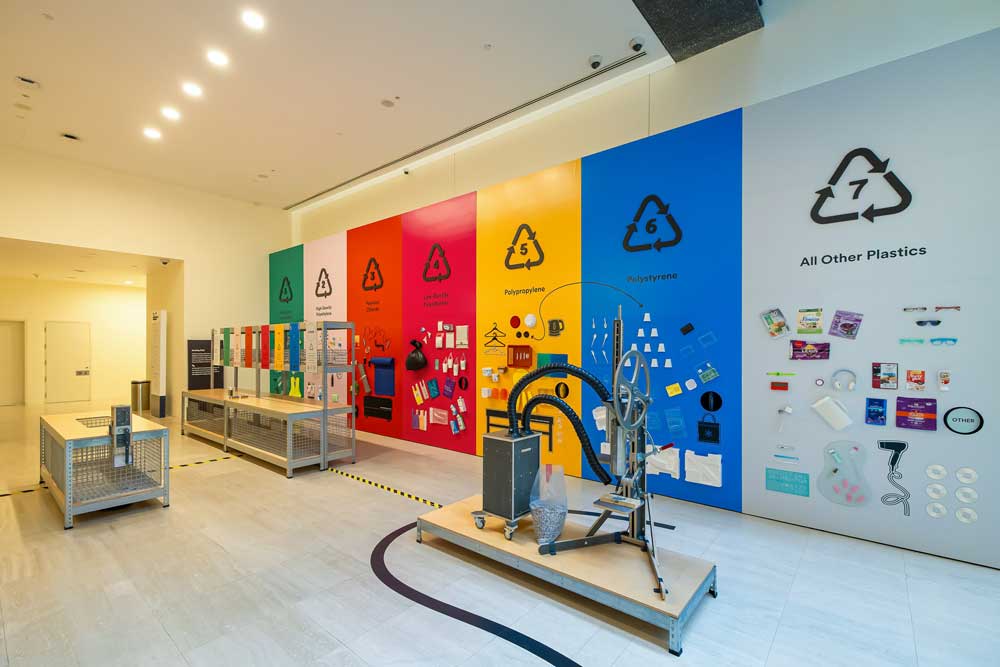
Sustainability has become an increasingly pressing issue for museums, not only in terms of the narratives they present but also in their operational and exhibition design choices. At the National Museum of Singapore, a commitment to sustainability has been embedded within its latest initiative: Plastic: Remaking Our World, a travelling exhibition from the Vitra Design Museum.
In a recent presentation at the Green Museums Summit, Alicia Chew and Jan Yap from the National Museum of Singapore provided an in-depth look at how the institution has developed innovative content and programmes that encourage audiences to engage with environmental issues in meaningful ways.
The Role of Museums in Addressing Plastic Waste
Plastic has become one of the most ubiquitous materials in modern life. While its affordability and versatility have made it indispensable, its environmental impact has led to increasing scrutiny.
Plastic: Remaking Our World examines the historical evolution of plastic, its role in contemporary society, and potential sustainable alternatives. As the exhibition makes its first stop in Asia, the National Museum of Singapore has taken this opportunity to create additional educational and participatory experiences that deepen audience engagement with the topic.
Want more insights like this? Explore our upcoming virtual conferences here
The Plastics in Our Lives Educational Zone
A key addition to the exhibition at the National Museum of Singapore is the Plastics in Our Lives interactive educational zone. Designed to encourage visitors to think critically about their daily interactions with plastic, this space takes the form of a domestic environment filled with everyday objects. Some of these objects contain plastic in ways that may not be immediately apparent, challenging visitors to reconsider the material’s pervasiveness in their lives.
The educational zone integrates touch sensors, a game element, and an interactive microplastics artwork to engage audiences of all ages. By gamifying the learning experience, the museum seeks to foster a deeper understanding of sustainability challenges while making the subject accessible and engaging.

Practical Steps Towards Sustainable Exhibitions
Beyond the content of the exhibition, the National Museum of Singapore has also explored ways to make the display itself more sustainable. As Alicia Chew and Jan Yap explained, the museum has taken several steps to reduce waste and promote sustainable practices, including:
- Crowdsourcing used objects: Rather than sourcing new materials, the museum actively involved the community by collecting plastic objects from the public to feature in the exhibition. This not only minimised waste but also helped foster a sense of collective responsibility among visitors.
- Experimenting with alternative materials: Efforts were made to incorporate recycled, upcycled, or more environmentally friendly materials throughout the exhibition space. Labels and signage were produced using a PVC-free film mounted on plywood, reducing the use of plastic.
- Repurposing existing exhibition elements: The museum worked with partners such as Semula, a local plastic recycling company, to create signage from recycled plastic materials. Exhibition plinths and showcases were reused from previous installations, extending their lifecycle and reducing the need for new production.
- Interactive sustainability activities: The museum developed hands-on learning opportunities such as the Shore Debris Table, a participatory installation featuring plastic debris collected from Singapore’s shores. Visitors are invited to sift through the materials, providing a tangible representation of the impact of plastic waste on the environment.
Put these ideas into practice! Our virtual conferences are designed to help museum professionals do exactly that. Find out what’s on
Encouraging Institutional Change
By embedding sustainability not just in the exhibition narrative but also in its execution, the National Museum of Singapore sets an example for other institutions looking to adopt more responsible exhibition practices. As museums worldwide grapple with the challenge of reducing their environmental footprint, initiatives such as these demonstrate that meaningful change can be achieved through thoughtful design, innovative partnerships, and community collaboration.
For museums seeking to take similar steps, Alicia Chew and Jan Yap emphasise the importance of engaging with local sustainability players. By working with artists, social enterprises, government agencies, and corporate partners, museums can leverage existing expertise and resources to create more impactful and environmentally responsible exhibitions.
A Model for Future Exhibitions
As the museum sector continues to reflect on its role in sustainability, Plastic: Remaking Our World at the National Museum of Singapore provides a compelling case study of how exhibitions can go beyond raising awareness to actively modelling and promoting sustainable practices. By integrating education, community engagement, and sustainable materials, this initiative showcases how museums can contribute to broader conversations on environmental responsibility while inspiring action at both individual and institutional levels.
With future exhibitions planned around sustainability, the National Museum of Singapore continues to pave the way for innovative approaches that balance storytelling with environmental consciousness. For museum professionals, this case study serves as a valuable reminder that small steps—whether in exhibition design, material choices, or programming—can collectively lead to a more sustainable future for the sector.
Our virtual conferences are one of the most affordable ways to stay at the forefront of museum practice. Explore our upcoming events here


About the author – Manuel Charr
Manuel Charr is a journalist working in the arts and cultural sectors. With a background in marketing, Manuel is drawn to arts organizations which are prepared to try inventive ways to reach new audiences.