Fresh ideas from museums around the globe in your inbox each week

March 10 2022
 By Manuel Charr

In her 2022 presentation, Anja Keitel-Campsall described more than five years of developing play in Coventry Transport Museum’s galleries. Anja Keitel-Campsall, Family Learning Officer at the museum, shared insights at the Museums, Games & Play Summit into how integrating playful interactions within gallery spaces has helped to foster deeper engagement and learning among visitors of all ages.
The Power of Play in Museum Spaces
When one thinks of a transport museum, images of classic cars, historic bicycles, and engineering marvels often come to mind. However, at Coventry Transport Museum, these exhibits sit alongside a vibrant, interactive play environment filled with an array of loose parts—tyres, carpet tubes, sledges, balls, crates, hoops, bells, headlights, pumps, tape, rope, tins, blocks, fabrics, and steering wheels. This carefully curated selection of objects is not simply scattered but deliberately designed to invite exploration and creativity, allowing families to engage with the museum’s collections in unexpected and meaningful ways.
Rather than confining play to designated learning spaces, the museum has integrated it directly into its galleries. By doing so, it signals to families that their presence and participation are not only welcomed but actively encouraged. Children and their caregivers are given the space, time, and permission to engage with exhibits through play—an approach the team used to invite families into the galleries.
A STEM-Focused Approach to Playful Learning
As a museum with a strong focus on Science, Technology, Engineering, and Mathematics (STEM), Coventry Transport Museum has found that play naturally aligns with STEM learning principles. While Keitel-Campsall does not come from a traditional STEM background—her expertise lies in art history and museum studies—she has discovered a strong connection between STEM practitioners and those who embrace play. Both groups share an intrinsic curiosity about the world, a willingness to experiment, and a resilience that welcomes failure as a learning opportunity.
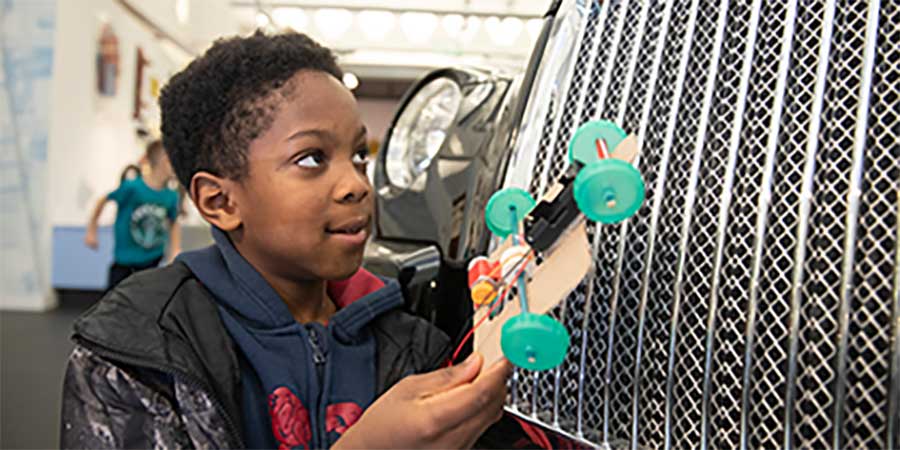
Through the museum’s ‘Mini Museum Engineers’ sessions, families are invited to engage in hands-on activities that nurture problem-solving, creativity, and innovation. The open-ended nature of play with loose parts means that no two sessions are ever the same, and children continually find new ways to experiment, collaborate, and discover within the museum’s collections.
Overcoming Challenges and Changing Perceptions
Introducing play into museum galleries has not been without its challenges. Initial resistance from some staff and visitors required a shift in perception around the role of play in museums. Concerns about risks, such as trip hazards and potential damage to objects, had to be addressed with carefully designed safety measures and dynamic risk assessments. Front-of-house teams were engaged in discussions around play, and regular training sessions were introduced to help staff embrace the museum’s commitment to creating a playful environment.
One of the key successes of this approach has been the overwhelmingly positive response from families. Visitors appreciate the opportunity to engage with the museum in a way that feels accessible, informal, and inclusive. Parents and caregivers have expressed their appreciation for a space where their children can freely explore and learn through play, without the constraints often associated with traditional museum visits.

Practical Considerations for Museums Introducing Play Spaces
For museums considering integrating play into their own galleries, Keitel-Campsall shared several practical considerations:
- Storage and Logistics: Managing a wide variety of loose parts requires careful storage solutions. Coventry Transport Museum has dedicated a specific space to house its play materials, ensuring that setup and takedown are efficient. A compact collection-led playbox at the Royal Navy Submarine Museum offers a different format for storing and moving materials.
- Cost and Sourcing Materials: While museums can purchase structured loose-parts kits, many elements can be sourced through donations or repurposed from existing resources. Low-cost play at Shepparton shows how simple materials can support a family programme without a large digital installation.
- Time Investment: Play sessions require time not only for setup and supervision but also for ongoing maintenance, including safety checks and tidying up after each session.
- Risk Management: A flexible approach to risk assessment is essential. Assess the risks in the actual space, including visitor routes, the materials in use and the needs of the collection, and adjust the activity as it unfolds.
- Staff and Stakeholder Buy-in: Embedding a culture of play requires persistence and advocacy. Engaging staff in training sessions and team discussions can help to shift mindsets and build enthusiasm for playful engagement strategies.
Looking Ahead: The Future of Playful Museums
By embedding play into its core family engagement strategy, Coventry Transport Museum has redefined what it means to be a welcoming and interactive museum space. The museum’s approach demonstrates that play is not a distraction from learning but rather a powerful tool for fostering curiosity, experimentation, and discovery.
Before bringing loose parts into a gallery, walk the route with learning, front-of-house and collections colleagues. Agree where people can pass, who checks materials and who can pause or change the activity. Include set-up, supervision and reset time in the budget, and use observations from each session to adjust the next one.
–
This article is based on the presentation, "Embracing Play(fulness) for Successful Family Engagement", by Anja Keitel-Campsall, Family Learning Officer at Coventry Transport Museum at the Museums, Games & Play Summit 2022 organised by MuseumNext.


About the author – Manuel Charr
Manuel Charr is a journalist working in the arts and cultural sectors. With a background in marketing, Manuel is drawn to arts organizations which are prepared to try inventive ways to reach new audiences.