Fresh ideas from museums around the globe in your inbox each week

March 05 2025
 By Jim Richardson

What happens when you move a museum exhibition from the safety of a gallery into a shopping centre, a church hall, or a public park? Do people stop to engage—or just walk straight past? Do they expect to pay an entrance fee? And how do you spark meaningful conversations about climate change with people who didn’t come expecting to have one?
These are the kinds of questions that Clemency Cooper, Community Participation Coordinator for the University of Cambridge Museums, set out to answer in 2024 when her team launched Adapt: A Pop-Up Museum on Environmental Change. As part of a bold experiment to engage local communities with environmental issues, the University of Cambridge Museums (UCM)—a consortium of eight museums and a botanic garden—stepped outside their institutional walls and into the heart of the city.
This is the story of what happened when a museum decided to show up where people already are, instead of waiting for them to come through its doors.
Want more insights like this? Explore our upcoming virtual conferences here

Meeting the Community Where They Are
Cambridge is a city of contrasts. It boasts world-class museums and a globally renowned university, but it’s also a place where many residents feel those institutions aren’t “for them.” Geographic, economic, and cultural barriers can make university museums feel out of reach, particularly for people living in more deprived parts of the city.
For UCM, this wasn’t just a barrier to access—it was a barrier to conversation. Environmental change is one of the most pressing issues of our time, and the museums wanted to understand how local people think and feel about it. What better way to do that than by popping up directly in community spaces—from libraries to eco fairs—to spark conversations where people already feel comfortable?
A Different Kind of Exhibition
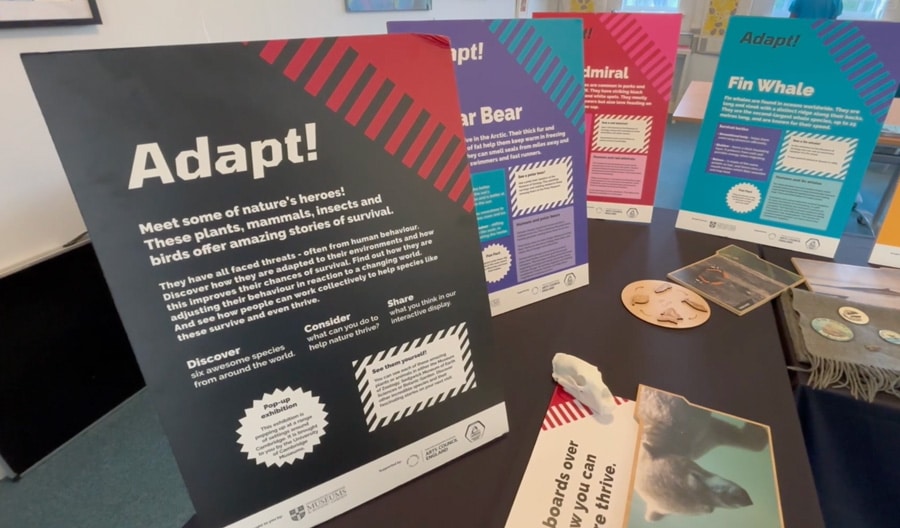
This wasn’t about recreating a mini museum in a new location. Instead, UCM worked with Tory Flower Design, a creative design agency, to craft something much more dynamic: a playful, participatory installation inspired by the museums’ natural history collections.
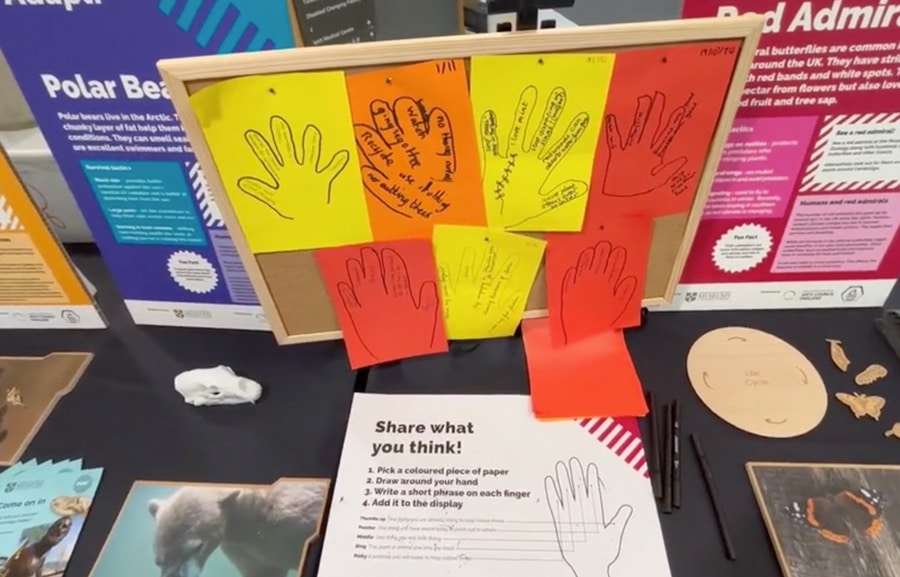
The exhibition introduced six species—from polar bears to ginkgo trees—that have all adapted to environmental change. Handling materials and eye-catching information boards drew people in, while an interactive activity invited visitors to trace their hands and make personal pledges to help nature thrive. These responses became part of a growing, evolving display—a living reflection of community attitudes to environmental change.
Put these ideas into practice! Our virtual conferences are designed to help museum professionals do exactly that. Find out what’s on
Listening as Well as Talking
One of the most valuable lessons from the Adapt project wasn’t about what the museums said—but about what they heard. Early on, the team abandoned formal surveys in favour of open-ended conversations. This shift allowed visitors to steer the dialogue, leading to surprising, nuanced insights.
Some people shared deep anxieties about climate change. Others spoke about personal connections to nature, from spotting goldfinches in their gardens to using time outdoors as a way to manage mental health challenges. Conversations naturally linked across generations, as children’s curiosity about fossils sparked memories and stories from parents and grandparents.
The Power of Pop-Ups
For museum professionals, Adapt offers several thought-provoking takeaways:
- Museums have a civic responsibility to engage with urgent global challenges, like climate change.
- Meeting people where they are—physically and emotionally—can break down barriers and spark unexpected conversations.
- Collections are powerful conversation catalysts. A fossil, a tree leaf, or a taxidermy specimen can open up discussions that go far beyond scientific facts.
- Environmental issues don’t have to be doom and gloom. Framing the conversation around adaptation—how both nature and people can respond positively to change—helped keep dialogue hopeful and constructive.
A Different Kind of Impact
Adapt changed the setting and the method of engagement. The team went to places residents already used, then moved away from formal surveys when open conversations proved more useful for listening. The account captures the kinds of issues people raised, rather than a measured change in environmental behaviour. For museums planning outreach, it shows why the purpose of evaluation needs to fit the encounter.
Compare the mobile format with Mark Museum’s travelling climate exhibition, and the question of continuity with longer-term nature engagement with schools.
Our virtual conferences are one of the most affordable ways to stay at the forefront of museum practice. Explore our upcoming events here
This article is based on the presentation, “Adapting to Changing Environments: Popping up in and listening to our local community”, by Clemency Cooper, Community Participation Coordinator for the University of Cambridge Museums at the Green Museums Summit 2025 organised by MuseumNext.


About the author – Jim Richardson
Jim Richardson is the founder of MuseumNext. He has worked with the museum sector on digital and innovation projects for almost thirty years and now spends his time championing best practice through MuseumNext.



