Fresh ideas from museums around the globe in your inbox each week

May 29 2025
 By Manuel Charr
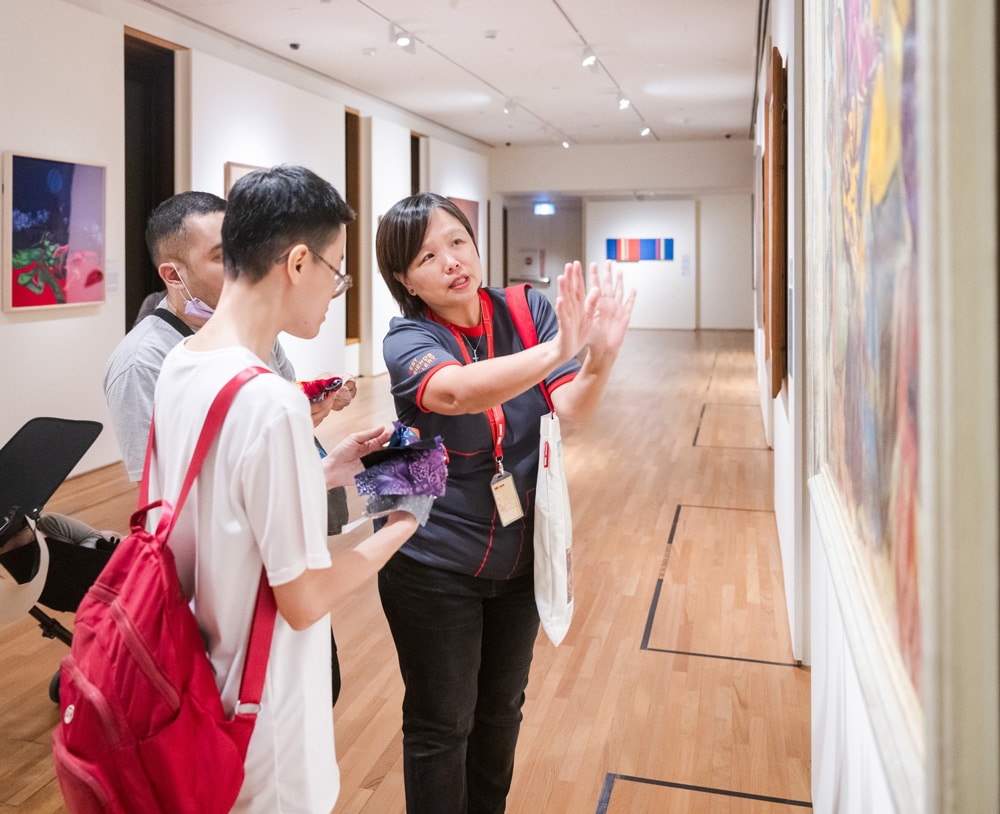
Trained volunteer uses tactile materials to engage adults with intellectual disabilities from MINDS Hub @ Farrer, creating an inclusive and engaging experience at the Gallery. – Photo by National Gallery Singapore
What happens when a museum stops designing for people and starts designing with them?
At the National Gallery Singapore, that shift has reshaped how programs are created, how art is experienced, and how inclusion becomes part of everyday museum life. The result is a model that other institutions are starting to look to—not because it’s flashy, but because it works.
At the Museums & Public Programs Summit, Alicia Teng, Deputy Director, Community & Access and Loretta Lim, Manager, Community & Access at National Gallery Singapore shared their approach.
This isn’t a story about offering help. It’s a story about building trust. And it starts with one question: What do people really need?
A Plan That Changed Direction
A donor approached the Gallery to provide a well-meaning program to help school children visit by providing free transport. But when the team review this proposal closer, they noticed something unexpected—many schools already had the support they needed.
So, they stepped back, asked the community what was missing, and listened.
That shift in approach led to a new focus: underserved groups like migrant workers, seniors, neurodivergent and disabled visitors, and families facing barriers to access. The Gallery used the same tools—funding, transport, planning—but pointed the partnership with their donor in a new direction. The difference came from asking the right people the right questions.
Want more insights like this? Explore our upcoming virtual conferences here
Designing with, Not for
The Gallery uses a framework called CARES—Capability Building, Advocacy, Research, Engagement & Representation, and Sustainability. It’s a solid structure. But what makes it meaningful is the thinking behind it: Nothing about us without us.
Here’s what that looks like in practice:
1. Gallery Wonders
Once focused on schools, this initiative was redesigned alongside community groups. It now includes tailored visits with various access considerations such as language , provision of calming spaces, and volunteers trained to meet a wide range of needs.
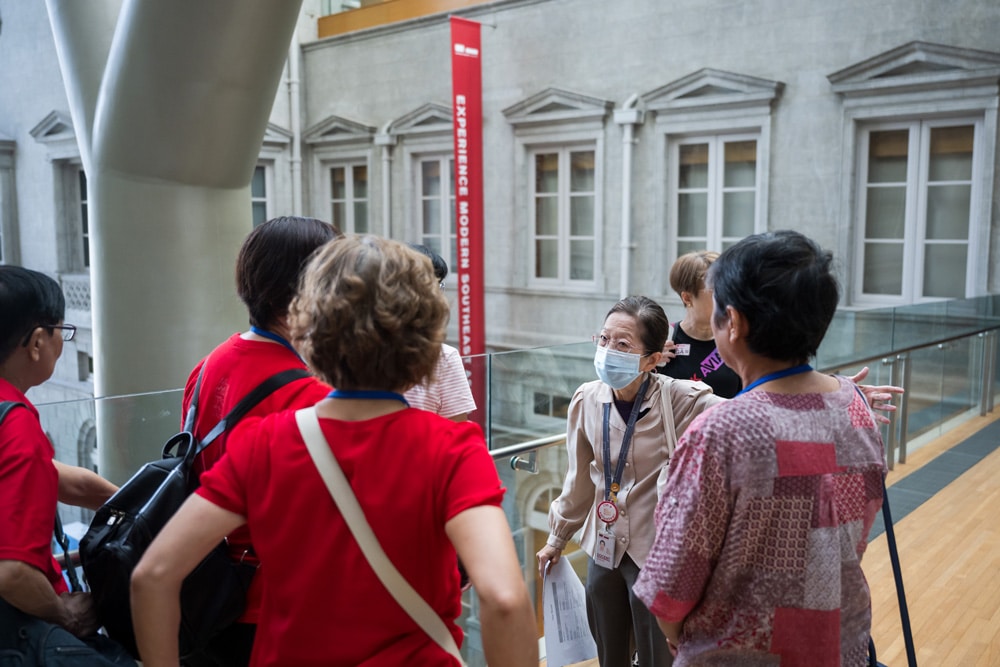
Seniors from Thye Hua Kwan @ Taman Jurong take part in a Mandarin guided tour led by a volunteer, reflecting the Gallery’s ongoing efforts to make visits more accessible through language support. – Photo by National Gallery Singapore
During the pandemic, the Gallery introduced livestream tours, which are still available now to support visitors who otherwise cannot visit the Gallery. The transport support expanded to include hydraulic van transport so programme participants using wheelchairs can comfortably make their way and from the Gallery. These changes led to a rise in participation from participants with mobility challenges such as children with cerebral palsy and older adults who previously couldn’t attend.
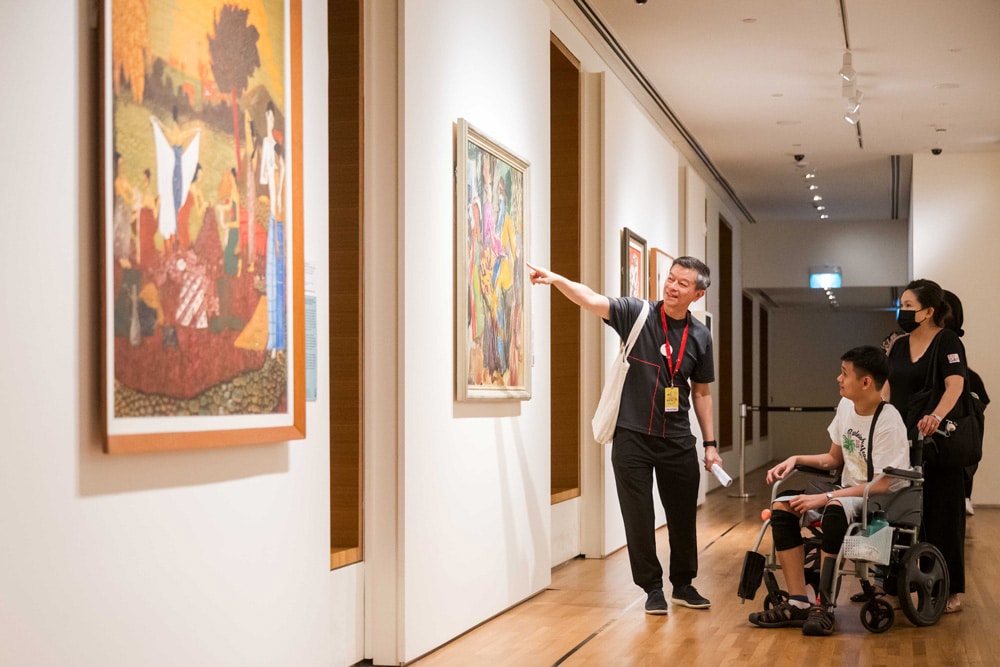
A participant from MINDS Hub @ Farrer with mobility needs joins a guided tour at the Gallery, made possible through hydraulic van support. – Photo by National Gallery Singapore
2. Art With You and the Calm Room
The dementia-friendly Art With You program was created as an evidence-based program with input from experts in dementia care as well as caregivers and persons living with dementia. The Calm Room was developed in response to neurodivergent visitors highlighting the need of a sensory-friendly facility that can support them when feeling overwhelmed in the galleries.
Both initiatives started the same way: by asking the people affected what would help—and then building around those answers.

Interior of the Calm Room, showing two private pods in the foreground with armchairs of varying heights and communal seats in the background. – Photo by National Gallery Singapore
3. The HOLD Collection
The Gallery worked with Beyond Vision International to co-develop the HOLD (Hands-On Learning and Development) Collection for blind and vision-impaired visitors. Artworks were reimagined as layered tactile forms and paired with audio described guides.
Feedback shaped every part of the project. As one participant, Melissa Yeo, said:
“This allows me to see the artwork not only through sound, but also through touch.”
The Gallery didn’t assume what people needed—it tested, adjusted, and invited users into the process.
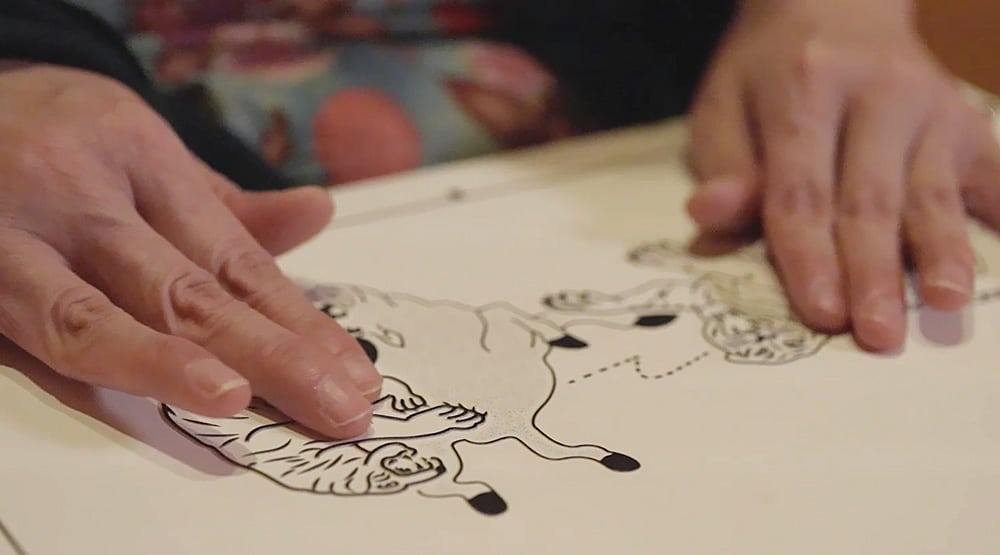
Screenshot from the HOLD Collection video showing Melissa, a vision-impaired visitor, experiencing the tactile-audio interaction system for Boschbrand. – Photo by National Gallery Singapore
Growing Together
The Gallery’s approach has also reached beyond its own walls. Working with the Museum Roundtable – a collective of over 50 and public and private museums in Singapore, they shared the tactile interpretation resources with interested museum members in the collective. The aim is simple: build inclusion across the whole sector, not just within one institution.
What Museums Can Take Away
The biggest lesson from National Gallery Singapore is this: inclusion is stronger when it’s built with communities.
Programs are more relevant. Visitors feel seen. Teams learn faster. And institutions become more responsive and resilient.
Want to make inclusion part of your core work? Start here:
Ask questions before offering solutions
Involve communities early and often
Treat feedback as part of the design process
Focus on long-term relationships, not quick fixes
Share what works so others can benefit
Inclusion doesn’t require more resources. It requires a different mindset—one rooted in collaboration.
And that’s where real change begins.
Related practical examples: sensory-friendly visits; youth partnership.
Discover the most exciting work taking place in Museums at our virtual conferences – Learn More
–
This article is based on the presentation, "CARES in Action: A Strategic Framework for Inclusive Museum Engagement", by Alicia Teng, Deputy Director, Community & Access and Loretta Lim, Manager, Community & Access at National Gallery Singapore at the Museums & Public Programs Summit 2025 organised by MuseumNext.


About the author – Manuel Charr
Manuel Charr is a journalist working in the arts and cultural sectors. With a background in marketing, Manuel is drawn to arts organizations which are prepared to try inventive ways to reach new audiences.