Fresh ideas from museums around the globe in your inbox each week

October 24 2026
 By Manuel Charr
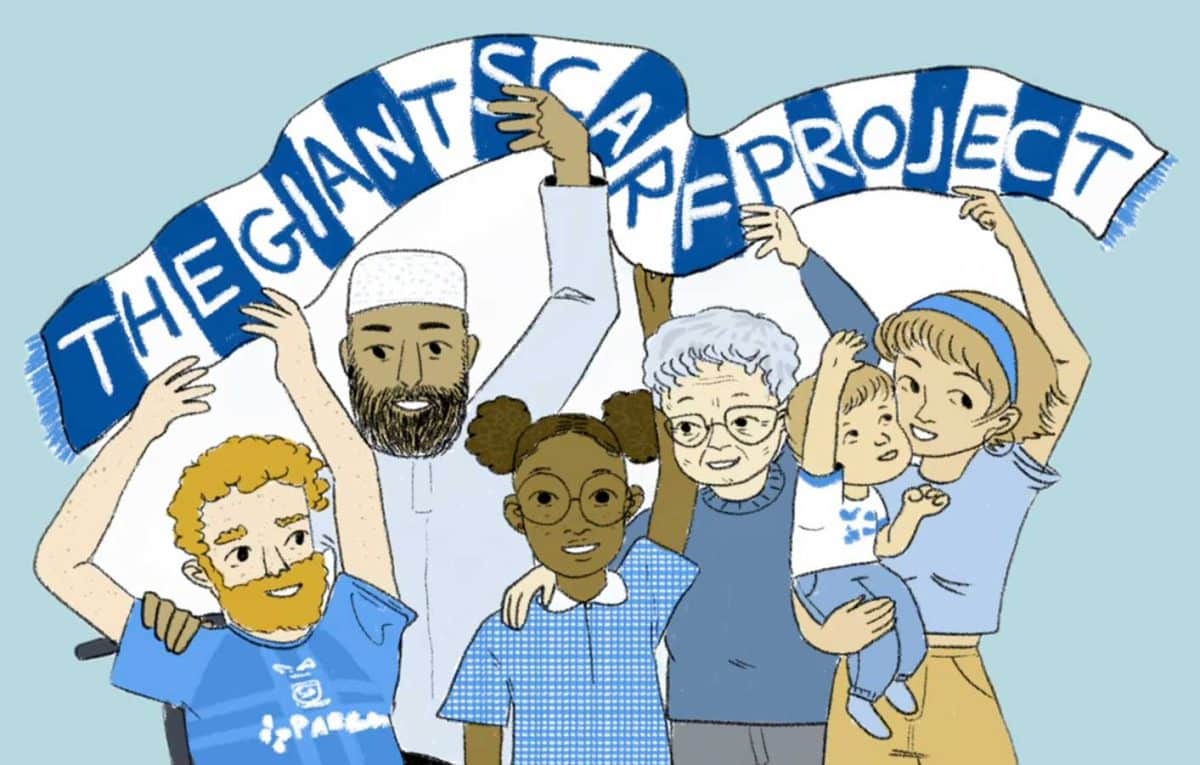
What happens when a football museum asks a city to knit? For the National Football Museum, the answer was a scarf more than 200 metres long, made from over 1,000 segments – and a way back into a community it had become distant from.
The Giant Scarf Project ran for two years in Preston, in partnership with Preston North End Community and Education Trust. It invited football lovers and loathers, experienced knitters and complete beginners to contribute a piece of a giant bar scarf. It was designed to reach people who might not see themselves reflected in a football museum, and to reconnect the museum with the city it left in 2012.
This case study sets out how the project was delivered, what it achieved, where the team had to adapt, and four lessons for museums planning community participation projects.
Project at a glance
| Project detail | Details |
|---|---|
| Where | Preston: Deepdale Stadium, libraries, markets, shops, faith spaces and community venues |
| Duration | Two years |
| Lead partners | National Football Museum; Preston North End Community and Education Trust |
| Funding | Arts Council England, supporting a dedicated participation producer post |
| Core team | Amy Heath, Participation Producer, National Football Museum; Michael, Preston North End Community and Education Trust |
| Other partners | Lancashire Libraries, two youth clubs, a care home, ESOL sessions at a town hall, Waterstones, Preston Markets, faith-based groups |
| Output | A 200-metre-plus scarf of over 1,000 segments, part of it accessioned into the national collection |
Rebuilding a relationship after relocation
The National Football Museum opened in 2001 at Deepdale, home of Preston North End. Financial pressures led it to move to Manchester in 2012, but its Research and Archive Centre has remained at Deepdale ever since.
That left two problems. Many local people did not know the archive was still on their doorstep, open for research visits and heritage days. And some were, as Stacey-Leigh Dolan, the museum’s Head of Learning and Participation, acknowledges, rightly upset about the move – feelings sharpened by a long-standing rivalry between Preston and Manchester.
The museum decided it could not lead this work alone. With Arts Council England funding, it appointed a participation producer, Amy Heath, to reconnect with Preston. Rather than return under its own banner, Amy approached Preston North End Community and Education Trust.
Trusted partners gave the project credibility the museum could not claim on its own:
- The club’s community trust brought local standing and detailed knowledge of the club’s history and present-day work.
- Faith-based groups vouched for the project to their members, reassuring them it was not tokenistic.
- A clear commitment that the finished scarf would enter the national collection showed participants their contribution would be kept, not discarded.
Starting with one object: Dennis Bradley’s bar scarf
The project grew from a single item in the collection. On a research day in the archive, Amy and Michael found a hand-embroidered Preston North End bar scarf from the club’s 1964 FA Cup run, which belonged to lifelong supporter Dennis Bradley.
Bar scarves are classic 1960s football scarves: handmade in wool, knitted in blocks of club colours, usually without a crest and finished with a knot or double fringe. Looking at Dennis’s scarf, Amy and Michael asked: what if it were larger? Residents would each knit a segment, and together the segments would form one giant scarf representing the community, civic pride and football pride.
The project set out three ambitions:
- Bring people together to support their wellbeing
- Encourage creativity and learning a new skill
- Celebrate Preston’s football history
Designing for participation: lowering the barriers to taking part
The team aimed to make taking part as simple as possible. They created knit-in packs containing blue and white wool, knitting needles, ten-step instructions and information about the project.
Working through trusted community hubs
Lancashire Libraries became a key partner. Libraries were already places people visited without needing to know anything about knitting or football, so packs waited there to be collected during a shopping trip or on a special visit.
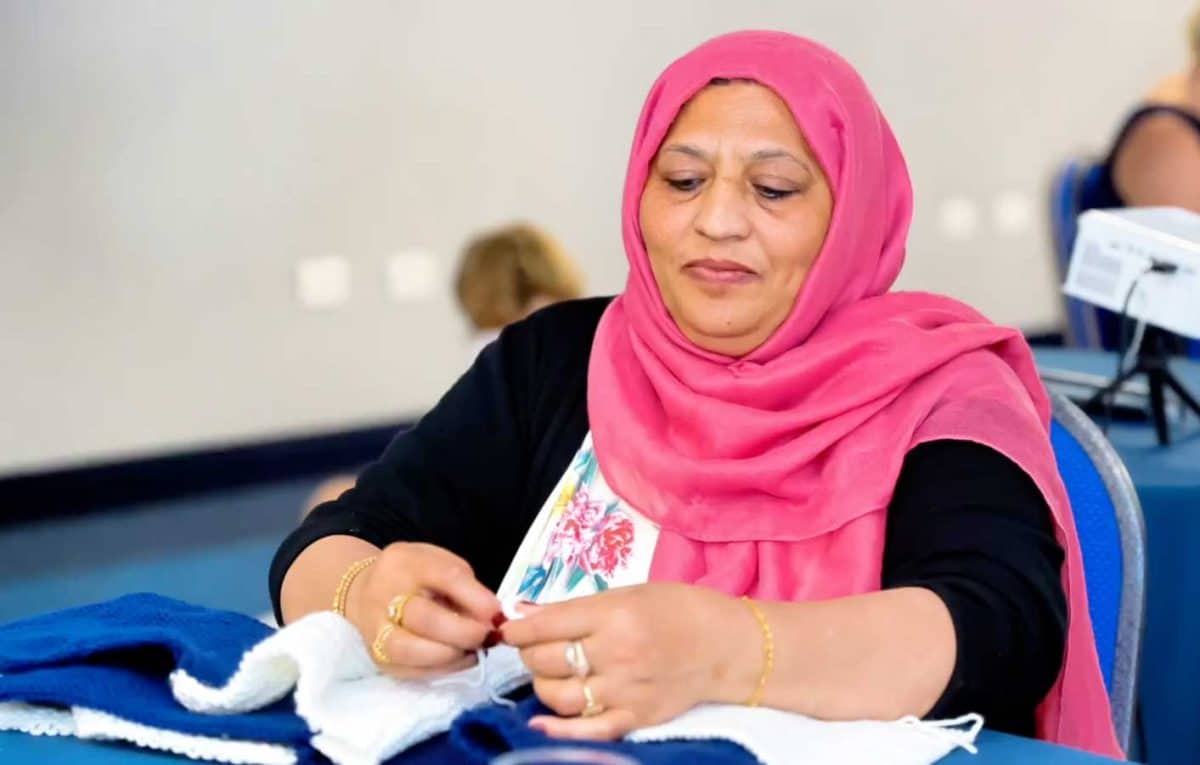
Amy also ran facilitated workshops with groups the project might not have appealed to on paper: two youth clubs, a care home, and ESOL (English for Speakers of Other Languages) sessions at a town hall.
The approach drew in people with little interest in the game itself. One participant, whose husband, son-in-law and other relatives hold season tickets, explained the appeal:
“It seemed a way of being a part of that without actually having to come and watch the football.”
Where the original plan fell short
The team initially assumed that libraries and community centres would cover everyone who wanted to take part. Participants told them otherwise. People asked for packs to be posted to them and for sessions closer to where they lived and shopped.
The team adapted. They introduced a request-by-email postal service and turned Deepdale into a drop-off point for finished pieces. They ran knitting parties at Waterstones, spent the summer at Preston Markets and held sessions in faith-based spaces.
The work was not always easy. As one participant put it at the celebration event: “It’s been stressful. It’s been fun.”
By the end, people could take part in four ways:
- Pick up a pack and knit at home
- Join a knit and natter session at a community hub
- Take part through a community organisation
- Attend a family activity at Deepdale, run by Preston North End or during archive open days
Turning experienced knitters into volunteers
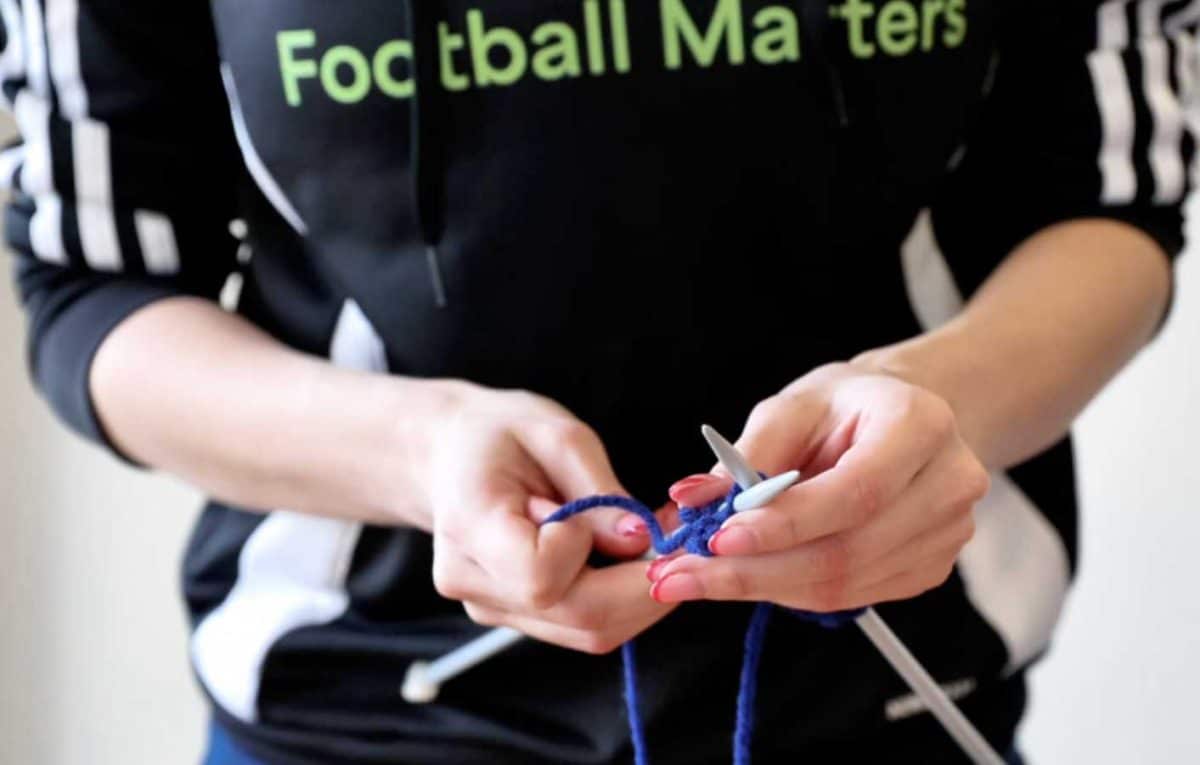
The team observed that for the majority of participants, this was their first time knitting – and Amy and Michael were learning alongside them. That shared learning quickly revealed who the expert knitters were, even when they tried not to be perfectionists.
The team invited these knitters to volunteer. Their role was to support beginners at facilitated sessions, with one knitter teaching two, and those two teaching more. Volunteers also gathered at sewing-together parties at Deepdale, where the segments were joined into the Giant Scarf over plenty of tea and biscuits.
This peer-to-peer model let a small team extend the project’s reach while recognising expertise that already existed in the community.
Impact: what the numbers show, and what participants said
The finished scarf stretched over 200 metres when laid across Deepdale Stadium. The figures below show the project’s reach.
| Measure | Result |
|---|---|
| Knit-in packs sent out | 600 |
| People who contributed to the final scarf | 207 |
| Volunteers | 29 |
| Volunteer hours recorded | 150+ |
| Recorded engagements across knit and natter sessions, sewing parties, family activities and outreach | 579 |
These outputs show how many people took part. Participants’ own accounts show what taking part meant to them. The quotations below come from the project’s celebration event, where speakers were not named in the recording.
- Confidence and connection. A volunteer who had moved to Preston and lost touch with old friends said the project helped their confidence grow “because it was at zero”.
- Reconnecting with the club. Stacey-Leigh Dolan described participants who rekindled a love for the club that had faded after losing a spouse.
- Meeting other communities. A faith group representative valued working alongside groups they would not normally interact with. A community group lead noted that people can knit alone at home, but come for the social side.
Legacy: a place in the collection, and a second life
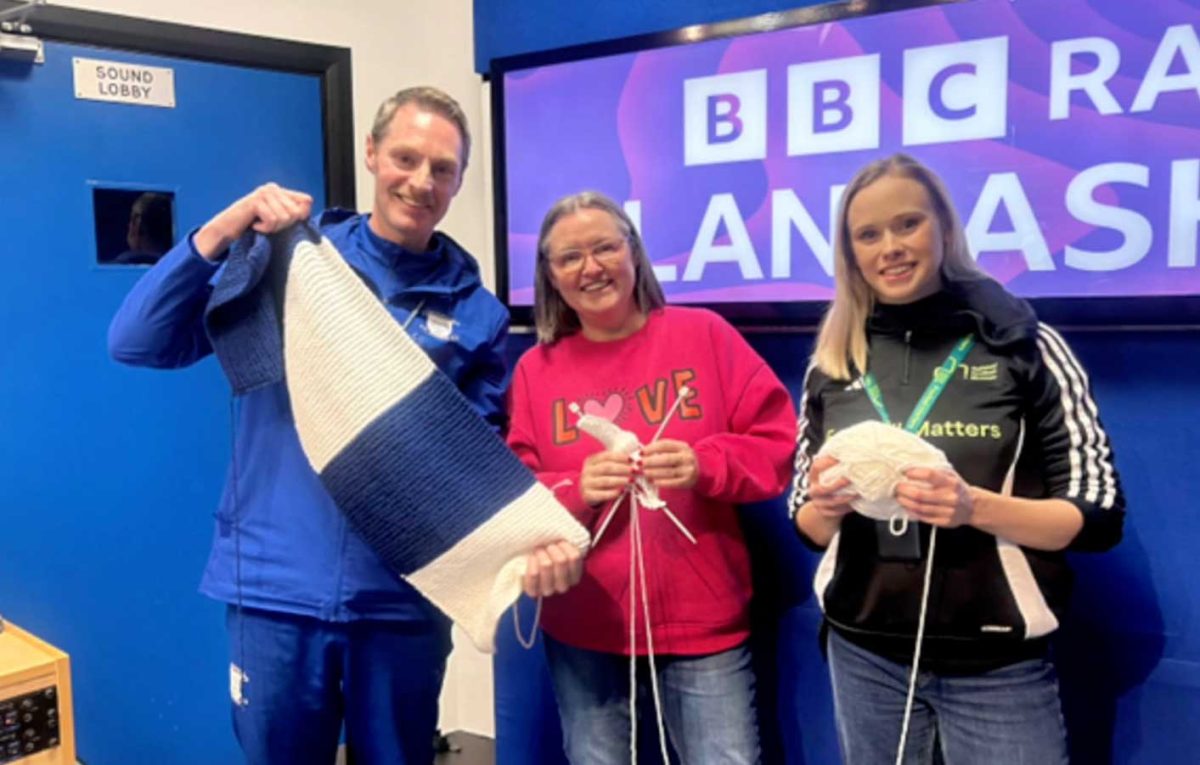
From the outset, the team planned to accession the Giant Scarf. A large section is now in the National Football Museum’s collection, where it tells the story of Preston North End and the people of Preston.
As contributions grew, the team saw that the scarf could have a second life beyond the collection. They broke it into segments and gave part of it back to the community:
- Baby blankets for the neonatal ward at Preston Hospital
- Schools work, continuing the project with Preston North End Community and Education Trust
- Outreach, where the museum uses segments to explore identity and civic pride through football scarves
Four lessons for museums planning community participation projects
1. Start small and start authentically
The project began with one object – not the biggest or most valuable, but one with a real local story. Because Dennis Bradley’s scarf was already in the collection, the museum could explore a Preston story it genuinely held, giving it an honest way back into the community.
2. Offer many ways in, and let audiences reshape them
The team’s first plan relied on libraries and community centres. Participants asked for postal packs and sessions closer to home, and the team changed the offer in response. Building in room to adapt meant addressing barriers the team had not anticipated.
3. Share expertise and ownership
The museum brought knowledge of sporting heritage; the club’s community trust brought detailed knowledge of the club and its present-day work. Libraries and faith spaces could speak to their communities with more trust than the museum could alone. Participants also shaped delivery: their requests led directly to the postal service and the move into shops, markets and faith spaces.
4. Plan a lasting home, and leave room for new uses
The team planned the accession from the start, which gave participants confidence their work would be kept. The hospital blankets and schools outreach emerged later, as the scale of the scarf became clear.
Conclusion
The Giant Scarf Project shows how a single object, trusted partners and flexible ways to take part can widen participation in museums. For a museum repairing its relationship with a city it had left, it offered a way to return as a collaborator rather than a visitor. As one participant said, the legacy “actually isn’t the scarf” – it is the connections people made.
This article is based on a presentation given at the Creative Museums Summit on 21 October 2026 by Stacey-Leigh Dolan, Head of Learning and Participation, National Football Museum


About the author – Manuel Charr
Manuel Charr is a journalist working in the arts and cultural sectors. With a background in marketing, Manuel is drawn to arts organizations which are prepared to try inventive ways to reach new audiences.


