Fresh ideas from museums around the globe in your inbox each week

October 24 2026
 By Manuel Charr
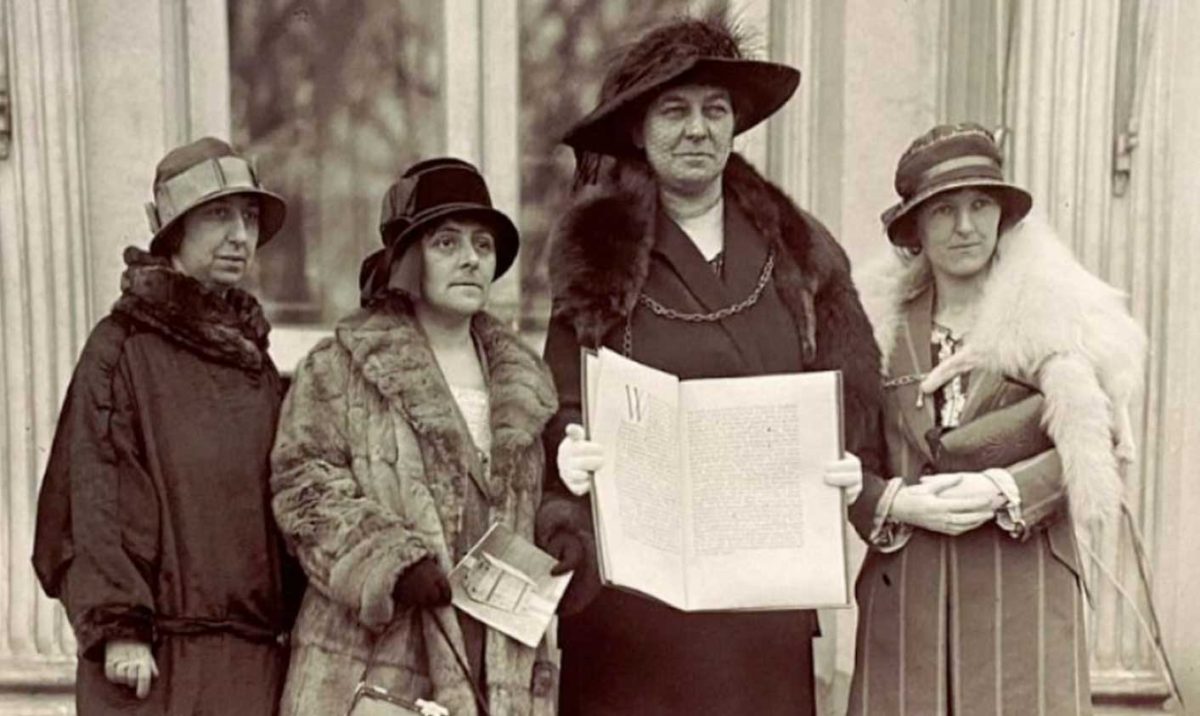
Starting in autumn 2023, around 400 volunteers transcribed the names and addresses on the 390,296 signatures of the Welsh Women’s Peace Petition of 1923–24. Most of the work was done in about 15 months.
Their effort turned a document forgotten for nearly a century into a searchable record. That record then became the starting point for a nationwide movement of discovery, creativity and connection.
Dafydd Tudur, Head of Engagement at the National Library of Wales, felt that connection first-hand. Searching the newly digitised petition, he found his great-grandmother, Selina Edwards. She had signed in the hope that her newborn daughter, Gwenllian, might grow up in a world without war.
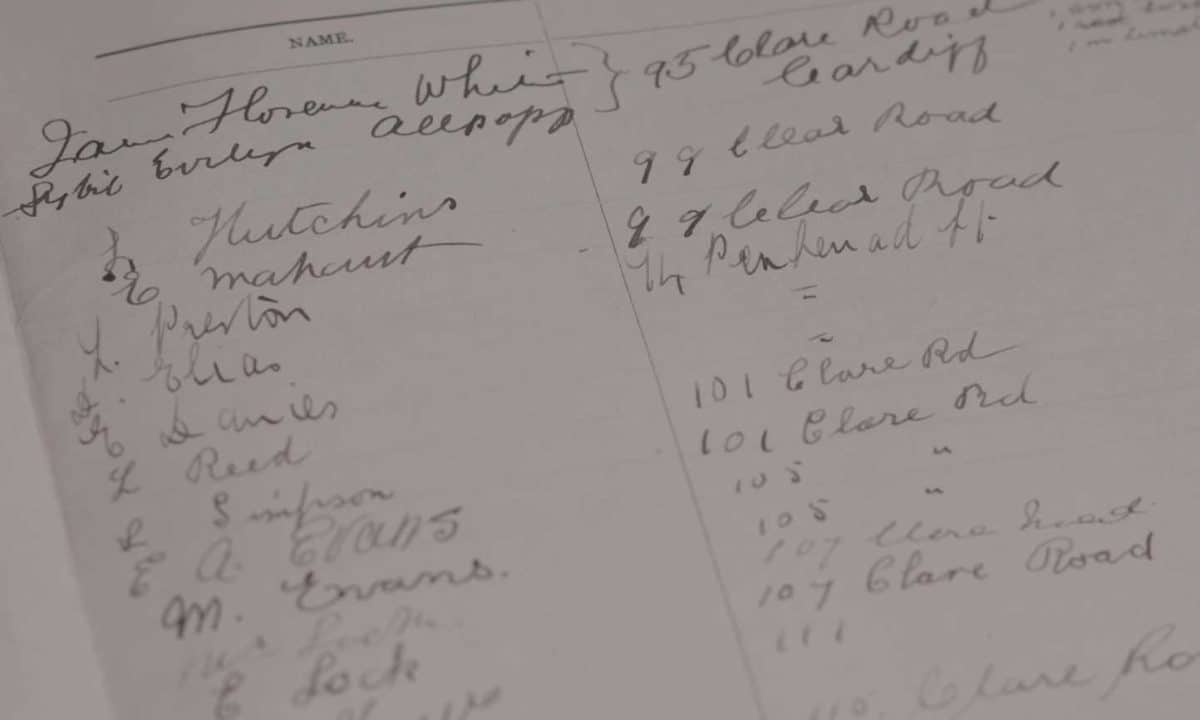
Volunteers uncovered other voices too. Jane Florence White, a mother from Cardiff, wrote a few words beside her name to explain why she signed: “One son killed, one lost his leg, one in lunatic asylum.” Another signatory wrote simply: “No more war.” Those notes had probably gone unread since the 1920s.
There is a fitting symmetry here. A petition organised, carried and signed by women was brought back to light by volunteers who were mostly women. There were about as many of them as there were campaigners who coordinated the original collection.
This case study shows how the National Library of Wales and its partners turned an archive into a participatory movement, with crowdsourcing as the engine. It covers fast-track digitisation, building a volunteer community, the challenges involved and the creative responses that carried the petition far beyond the library.
Case study at a glance
- Lead organisation: National Library of Wales, with Academi Heddwch Cymru and a national partnership
- Collection: 390,296 signatures from 1923–24, gifted by the Smithsonian and returned to Wales in April 2023
- Approach: parallel digitisation, location tagging, crowdsourced transcription, and a community and creative programme
- Volunteers: around 400 registered transcribers
- Pace: most transcription done between autumn 2023 and the end of 2024, averaging 800–1,000 signatures a day
- Funding: National Lottery Heritage Fund for an 18-month community programme
- Outcomes: a searchable website, a permanent exhibition, a touring play, public art and schools resources
Background: the 1923 appeal
In May 1923, the Welsh League of Nations Union held its annual conference in Aberystwyth. Wales was still grieving after the First World War, and many hoped the League of Nations would secure peace. But the USA had not joined.
The conference resolved that the women of Wales should appeal directly to the women of America to help achieve a warless world. By winter, organisers across Wales had gathered 390,296 signatures from women over 18. They did it without email, social media or, often, cars.
In February 1924, Annie Hughes Griffiths, Elined Prys and Mary Ellis carried the petition to the USA. Laid end to end, it was said to stretch over seven miles. President Coolidge promised to look after the oak chest that held it. Then it was forgotten.
Rediscovery: an unexpected gift from the Smithsonian
In 2014, staff at Cardiff’s Temple of Peace and Health found a leather-bound volume containing the appeal. Almost nobody had heard of it. After it was exhibited at the National Library, a volunteer group called Heddwch Nain/Mam-gu (Our Grandmothers’ Peace) tracked the chest to the Smithsonian.
Academi Heddwch Cymru, Wales’ National Peace Institute, then formed a partnership to mark the centenary. Partners included the National Library of Wales, Amgueddfa Cymru – Museum Wales, the Welsh Centre for International Affairs, the Women’s Archive of Wales and Urdd Gobaith Cymru, with National Lottery support.
In 2020, the library asked the Smithsonian’s National Museum of American History about a loan and about digitising the petition. In June 2021 the digitisation request was declined. The Smithsonian followed it with a remarkable offer: would Wales accept the petition and chest as a permanent gift?
In April 2023, almost exactly 100 years after the appeal began, the petition arrived at the National Library of Wales.
Digitisation case study: getting a collection online fast
The Peace Chest and selected papers went on public display within days, once condition checks were complete. The remaining volumes went to conservation.
To meet the centenary timetable, the team dropped the usual sequence. Cataloguing, digitisation and ingest ran in parallel, making the petition accessible far sooner than a standard workflow would allow.
Staff and volunteers also tagged every petition paper with a location. For the first time, people could search for signatures from a particular city, town or village. The first boxes went online in early September 2023, and families began searching for their grandmothers almost immediately.
How to run a crowdsourced transcription project
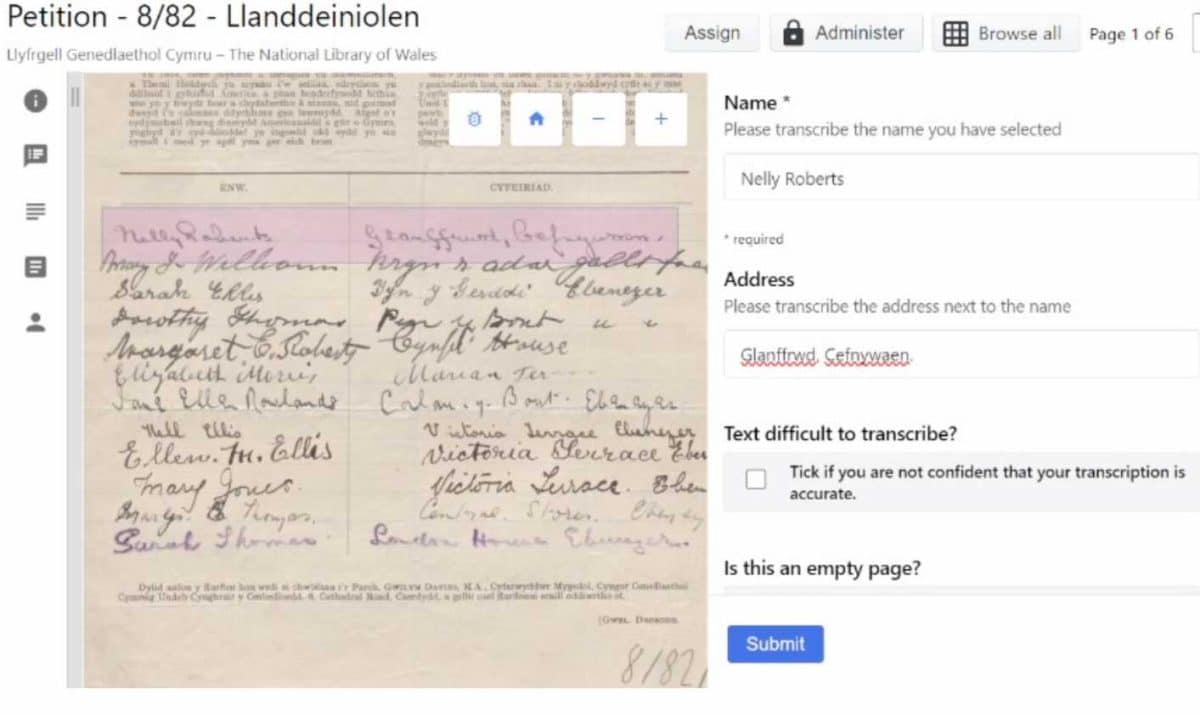
The ask was simple: help transcribe the names and addresses of every signatory. The project ran alongside an 18-month community programme led by Academi Heddwch and funded by the National Lottery Heritage Fund.
A Facebook group became the project’s backbone. Volunteers used it to decipher difficult handwriting, agree consistent conventions, celebrate milestones and share what they found. It grew into the hundreds and became a hub for news of events across Wales.
Progress was rapid:
- First five weeks: more than 27,000 signatures, by a small group
- April 2024: 100,000
- August 2024: 200,000
- End of November 2024: 300,000
- 31 December 2024: 336,048
- February 2025: every petition paper claimed by a volunteer
Library volunteers then checked submissions paper by paper to find gaps, and the most experienced transcribers completed the remaining work.
What made the volunteer model work
- Local relevance from day one. Location tagging let volunteers start with their own town or family.
- A dedicated online community. The Facebook group solved handwriting puzzles, kept conventions consistent and kept people motivated.
- Peer mentoring. Experienced transcribers supported newcomers, easing the load on staff.
- Visible milestones. Celebrating each 100,000 signatures gave the project momentum.
- A claiming system. Volunteers claimed whole petition papers, so coverage could be tracked to completion.
- Quality checks at the end. Library volunteers reviewed every paper for gaps, and expert transcribers finished the hardest work.
The challenges
The hardest constraint was time. A fixed centenary deadline is what forced the parallel digitisation workflow, and the project’s digital plans had already been knocked off course when the original digitisation request was declined.
The material itself was demanding. Century-old signatures, gathered door to door, were often hard to read. With hundreds of people transcribing, the team also had to agree a shared approach and keep it consistent, which is much of what the Facebook group was for.
Finally, there was the long tail. Once every paper was claimed, the last stretch still needed paper-by-paper checking and expert help to close the gaps.
Community engagement: from archive to movement
The petition reached people in schools, community centres, libraries, village halls and local pubs. A book, Yr Apêl (The Appeal), told its story, and schools resources linked it to the Curriculum for Wales. Families shared stories never told in public before. Some recognised a grandmother’s handwriting, and the library matched some signatories to people in its photographic collections.
The most striking results were creative. The one-woman play Annie Cwrt Mawr, about organiser Annie Jane Hughes Griffiths, toured 17 communities in autumn 2023. Urdd Gobaith Cymru, Wales’ largest youth organisation, made the petition the theme of its annual peace message. Its film and poem by Casi Wyn reached 57 countries and was translated into 62 languages.
Stitched signatures in Ruthin
In Ruthin, north Wales, artist Bethan Hughes worked with residents on the local women who had signed a century earlier. Participants stitched versions of selected signatures. Some were descendants of the signatories. Others now lived, worked or studied at the addresses where the signatures were collected.
Nineteen stitched signatures were then shown in the windows of the houses they came from. The result was a street-level dialogue between past and present. Any organisation with address-level records could adapt the idea.
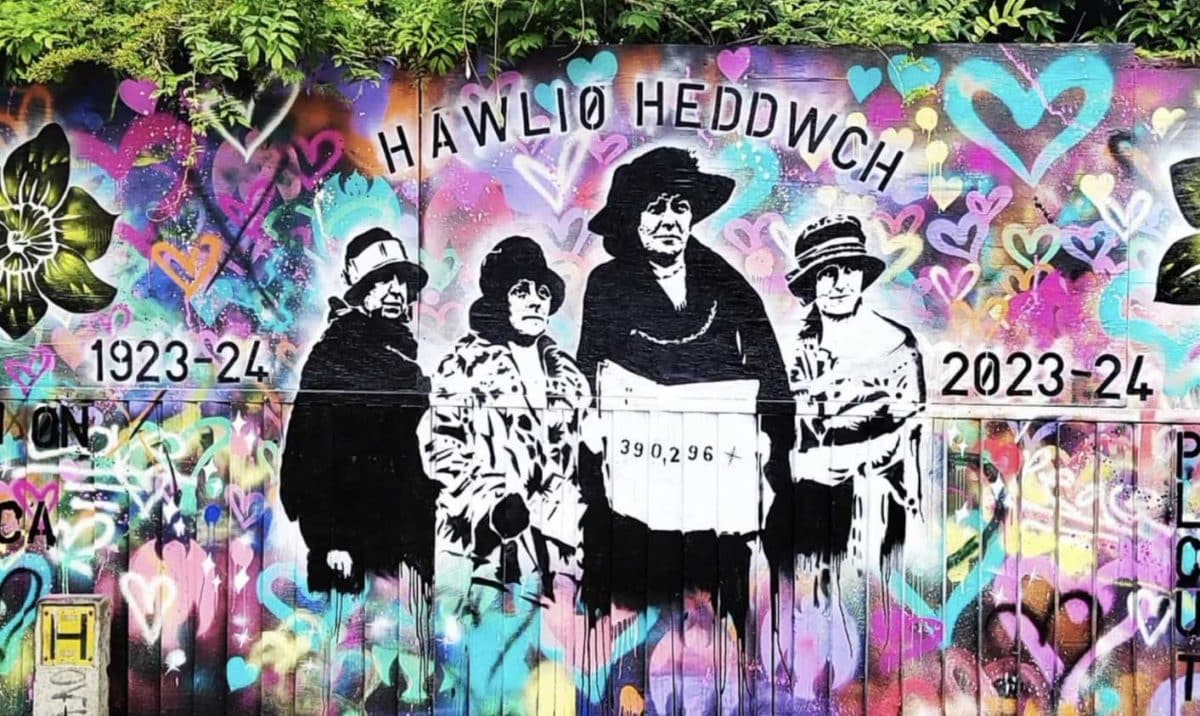
Other communities found their own responses. In Newport, young people worked with a local artist on a mural celebrating the women who carried the petition across the Atlantic. In Aberystwyth, artists and Transport for Wales turned the town-centre bus stop into a public artwork. In Talgarth, villagers wrote and signed new petitions of their own, a century after their grandmothers.
A searchable website and a permanent exhibition
The volunteers’ work now powers peacepetition.library.wales, searchable by name and location. In October 2025, the library opened Heddychwyr (Peacemakers), a permanent exhibition of the Peace Chest and original papers. It tells the women’s story and invites visitors to consider their own part in building peace.
Key lessons for museums, libraries and archives
- Find the personal hook. Hundreds of thousands of families can trace a link to this petition. Search by name and place turned an archive into a personal discovery.
- Adapt workflows to the moment. Running cataloguing, digitisation and ingest in parallel got the collection online while public interest peaked.
- Build a community, not just a crowdsourcing tool. The Facebook group let volunteers support each other, share stories and stay motivated for more than a year.
- Share ownership through partnership. Museums, peace bodies, youth organisations, artists and community groups each carried the story to their own audiences.
- Invite creative responses. Plays, murals, stitched signatures and new petitions let people respond to the archive, not just view it.
The biggest lesson goes beyond digitisation. Making a collection accessible let people create entirely new cultural experiences around it. A century after almost 400,000 women signed for peace, their message is being heard again.
For another example of crowdsourcing that builds community as well as collection data, see how Art UK turned digital volunteering into real-world connection.
—
This article is based on a presentation at the Creative Museums Summit on 21 October 2026 by Dafydd Tudur, Head of Engagement, The National Library of Wales, Professor Mererid Hopwood, Aberystwyth University and Bethan Rees, The National Library of Wales


About the author – Manuel Charr
Manuel Charr is a journalist working in the arts and cultural sectors. With a background in marketing, Manuel is drawn to arts organizations which are prepared to try inventive ways to reach new audiences.