Fresh ideas from museums around the globe in your inbox each week

September 25 2024
 By Jim Richardson
When Louvre Abu Dhabi tested “The Secret of the Dome Stars” with 19 families and 34 children over three days, the feedback led to a specific change: simplify the story and get children to the puzzles sooner. Eiman Al Hammadi described that development process at the Museums, Games & Play Summit 2024.
An Interactive Adventure Under the Dome
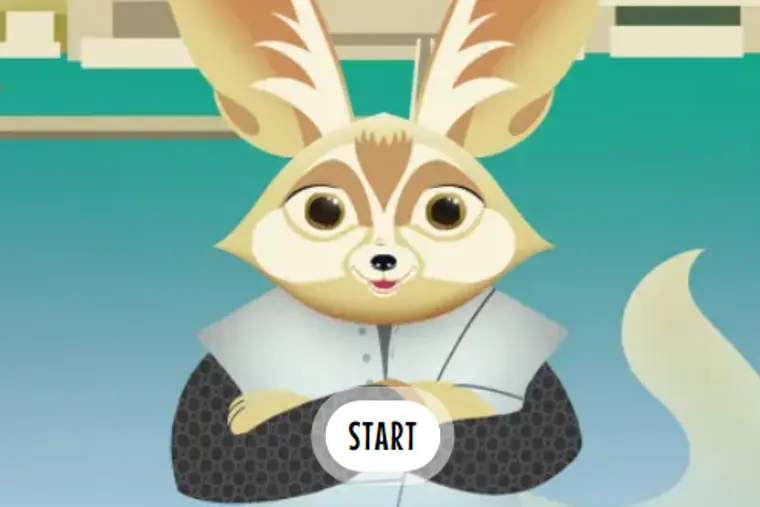
Imagine wandering through the grand halls of Louvre Abu Dhabi, only to find that the stars from the museum’s stunning dome have mysteriously scattered throughout the galleries. This intriguing premise sets the stage for “The Secret of the Dome Stars,” a location-based game that can only be played within the museum. Aimed at children aged 6 to 12, the game invites young visitors and their families to team up with Volpi, a spirited sand fox, to retrieve the lost stars and restore the dome’s fading energy.
Eiman Al Hammadi, a senior interpretation and creative content officer at Louvre Abu Dhabi, spoke about the project at the Museums, Games & Play Summit 2024. She shares that the game was designed not just to entertain, but to deepen connections between young audiences and the museum’s collections. “Our goal was to create an experience where children don’t just look at the art—they engage with it, learn from it, and have fun along the way,” says Al Hammadi.
Blending Culture with Creativity
The game’s storyline is closely tied to Louvre Abu Dhabi’s mission of bridging cultures through art. Set against the backdrop of the museum’s awe-inspiring dome, designed by renowned architect Jean Nouvel, the game incorporates elements that resonate with local culture. Volpi, the game’s guide and guardian of the dome, is a sand fox native to Abu Dhabi, adding a familiar touch for local children.
As players navigate the museum’s 12 main galleries, they solve puzzles and interact with artworks to find the hidden stars. The intention was to keep artworks at the heart of the experience and encourage children to explore them. “The game’s heads-up design ensures that players are looking at the real world around them, not just at their screens,” explains Al Hammadi.
Community-Driven Development
From its inception, “The Secret of the Dome Stars” was shaped by community feedback. Early in the development process, the team conducted a prototype test with 19 families and 34 children. This hands-on testing provided critical insights that helped refine the game. For instance, initial feedback showed that the original storyline was too complex for younger players, leading the team to simplify the narrative and focus more on engaging gameplay.
“We learned that kids are most excited by the action—solving puzzles, finding the stars—so we made sure those elements are always front and center,” says Al Hammadi. Audience testing gave the team a way to revise the experience rather than assume the original narrative would work.
Co-designing with a Children’s Council can extend audience involvement beyond testing a near-finished prototype.
A New Way to Experience Art
The browser-based design reduces download steps: visitors can use a web app on their own devices, reached through a QR code or URL. It also gives the team a route to update content. Those conveniences do not by themselves establish accessibility for every visitor.
ACM’s QR-code trail offers another approach to connecting family gameplay with objects.
“The Secret of the Dome Stars” uses a reward system to keep players motivated. As they progress through the levels, players receive stars, encouraging feedback from Volpi, and the satisfaction of unlocking new challenges. This structure not only makes the game rewarding but also reinforces the educational aspect by linking each reward to learning moments tied to the artworks.
Soft Launch and Continuous Evolution
Understanding the importance of a seamless user experience, the team opted for a soft launch, allowing them to address technical issues before a broader rollout. This approach underscored a key learning: start with a minimum viable product, gather feedback, and evolve. The game’s development didn’t stop at launch; it continues to grow, with new features and updates planned to keep the experience fresh and engaging.
In her 2024 presentation, Al Hammadi described an April launch and positive early visitor feedback. The account does not report measured educational gains.
Why This Matters
The prototype test gave the team a specific decision to make: simplify the story so children could get to the puzzles more quickly. Nineteen families and 34 children took part over three days. For other museums, that is a useful model for testing an early experience before investing in a polished version of a narrative that may be too complex.
For current age guidance and on-site access instructions, visit Louvre Abu Dhabi’s official game page.
This article is based on the presentation “The Secret of the Dome Stars: A new location-based game at Louvre Abu Dhabi” by Eiman Al Hammadi at the Museums, Games & Play Summit 2024, organised by MuseumNext.


About the author – Jim Richardson
Jim Richardson is the founder of MuseumNext. He has worked with the museum sector on digital and innovation projects for almost thirty years and now spends his time championing best practice through MuseumNext.




