Fresh ideas from museums around the globe in your inbox each week

January 30 2024
 By Tim Deakin

Ben Earle, Learning and Engagement Officer (Environment) at Gressenhall Farm and Workhouse Museum, shares how his museum is facilitating positive conversations around climate change. In a world of scary statistics and doom-fuelled facts, the team are utilising interactive and memorable climate change activities to open up the floor to necessary conversations.
The Gressenhall Environmental Hub offers a range of workshops, support services, and green spaces for schools and organisations alike. As part of Norfolk Museums Service, the Hub is funded by Norfolk County Council and has recently expanded its work with schools to empower the region’s children and teachers.
“We want to help visitors explore not only the environmental crisis, but the environment as a whole,” says Ben Earle. “It’s about creating a literal ‘hub’ of information, inspiration, and support for organisations across the county.”
The Gressenhall Environmental Hub: A Resource for Change
The Gressenhall Environments Hub offers a range of school events, exploring a wide array of environmental themes, from history and geography to science. While there are numerous features included, there are three key activities within the Hub for pupils to experience:
- Food and Farming: finding out where our food comes from during an active day on the farm.
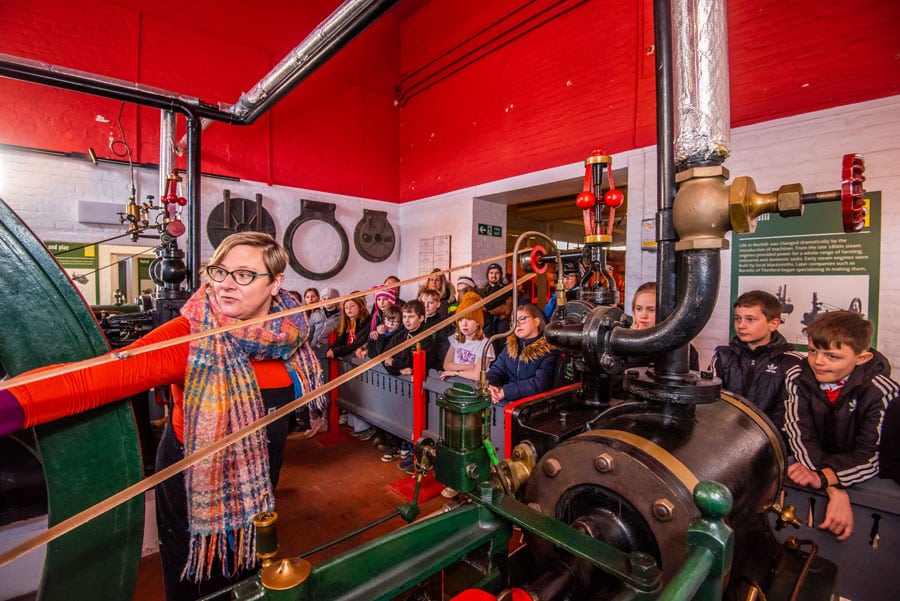
- The Greatest Invention Ever!: an interactive exploration of four moments in human history, questioning the environmental consequences of some of our greatest ideas.
- Homes or Habitats?: an immersive activity where students debate an imaginary housing development on the museum site.
Each of these activities takes advantage of Gressehall’s enviable location, with its “expansive farm and rich history”. The activities encourage children to actively participate in learning about the environment, rather than just absorbing information as they would in a more traditional classroom setting. MERL offers another way to connect rural collections with environmental questions.
Less Doom And Gloom, More Inspiration
The climate crisis is the defining issue of the modern age, so it’s understandable that a lot of material surrounding the movement focuses on the worrying statistics and fears for the future. However, as Ben explains, this route can be risky.
“Rapid action is needed, of course, but there are different ways of approaching the crisis with different groups. For me, it’s important to be inspiring, and try to build a passion for the natural world.
“I try to move beyond the “Isn’t everything terrible?” angle when working with children, because they’re not ready for that message, and they can’t do anything with it. You risk switching people off entirely.
“They either think: I don’t know what to do, so I’m just not going to think about it, or they feel like they are being criticised for their actions. It can make people – particularly young audiences – feel depressed and helpless.”
The Power of Inquiry: The Greatest Invention Ever!
To avoid the risk of disheartening participants, the Hub takes a more impassioned, positive approach to the planet, particularly with The Greatest Invention Ever!
The activity flips the expectations of a climate workshop on its head, as Ben explains:
“We take four key inventions – farming, bronze, steam, and plastic – and portray them as the best things to ever happen to humanity. It’s then up to the audience to question us and point out the negatives.
“For example, when we discuss farming, we highlight how it brought a surplus of food, which allowed us to build cities and societies and art. The children can then highlight that, for example, it required us to cut down a lot of trees.
“We’re not pointing the finger at anyone. They’re pointing the finger at us.”

A Collective Approach to Sustainability
This creative way of addressing the climate crisis reflects a wider belief upheld by the Hub: that global warming isn’t about individual blame, but collective change. A related museum case explores how to give young people a voice in climate conversations.
Ben says: “We don’t dwell on personal responsibility; it isn’t fair to put these colossal issues on the shoulders of ordinary people. Instead, we encourage them to talk with people who have the power to make great changes. What organisations could you get involved with to create local change? Who are the people in your community you could speak to?
“If you’re not happy with the amount of plastic in your shopping, don’t bend over backwards trying to avoid plastic at all costs. Instead, tell your supermarket you want less plastic. We take the pressure off them, while also reminding them that they have a voice.”
Feedback Shaping Environmental Learning and Sustainability
The hands-on nature of Gressenhall makes it a memorable experience for teachers and pupils alike, and Ben and the team are using the feedback they receive to hone their services even further.
Ben says: “We ask for feedback from teachers 1–2 weeks after each session, and this is used to rework the workshops. We also ask specific questions about attitudes towards climate change, reflecting on ways in which the pupils’ awareness of the environmental crisis was expanded through each activity. This feedback informs our future developments and changes.”
While the school activities have been a huge success, Ben says the team also have their eye on other services, namely their outreach programme. Other projects also explore how to build environmental learning beyond museum walls.
“The sessions are purely educational, while the outreach programme allows us to take action and support organisations to make changes. We’ve got various partners that provide trees for free to schools, help build allotments, survey wildlife, and more.
“We also have a multipurpose lab for workshops, lab work, and activities, as well as a conference space and large meeting room. These are intended to support various organisations across the county that work within environmental sector. In the future, we plan on expanding our list of partners who use the site for bookings.”
Partnerships and Play in Environmental Learning
Speaking of partnerships, Ben says it has been key to Gressenhall’s success. Any institution hoping to undertake similar work with schools and organisations should remember that they can’t achieve their true potential when working alone.
“Partnerships are so important,” says Ben. “Working with experts from lots of different areas is a great asset, because the environment is a complicated subject. You’re talking about both biodiversity and climate change, and those two subjects alone require several lifetime’s worth of knowledge to fully navigate.”
Positivity is also a vital part of any environmental campaign, as Ben states, because that’s how museums can engage audiences effectively:
“Having a light-hearted element is key, especially with children. The Greatest Invention Ever! involves a lot of playing and acting, because you’re encouraging participants to poke holes in your argument. Similarly, Homes and Habitats covers serious topics, but the active debate is how we get the kids on board.”
The Greatest Invention Ever! changes who does the questioning. By inviting pupils to challenge a deliberately positive account of an invention, the session makes room for its benefits and consequences to be discussed together. A museum can use that principle with objects already in its collection, provided the activity suits the group. Gressenhall also returns to teachers after the visit, creating a chance to hear what remained memorable and what needs changing before the next session.
–
Interested in how museums are responding to the climate crisis? Join us for the Green Museums Summit


