Fresh ideas from museums around the globe in your inbox each week

October 23 2026
 By Manuel Charr
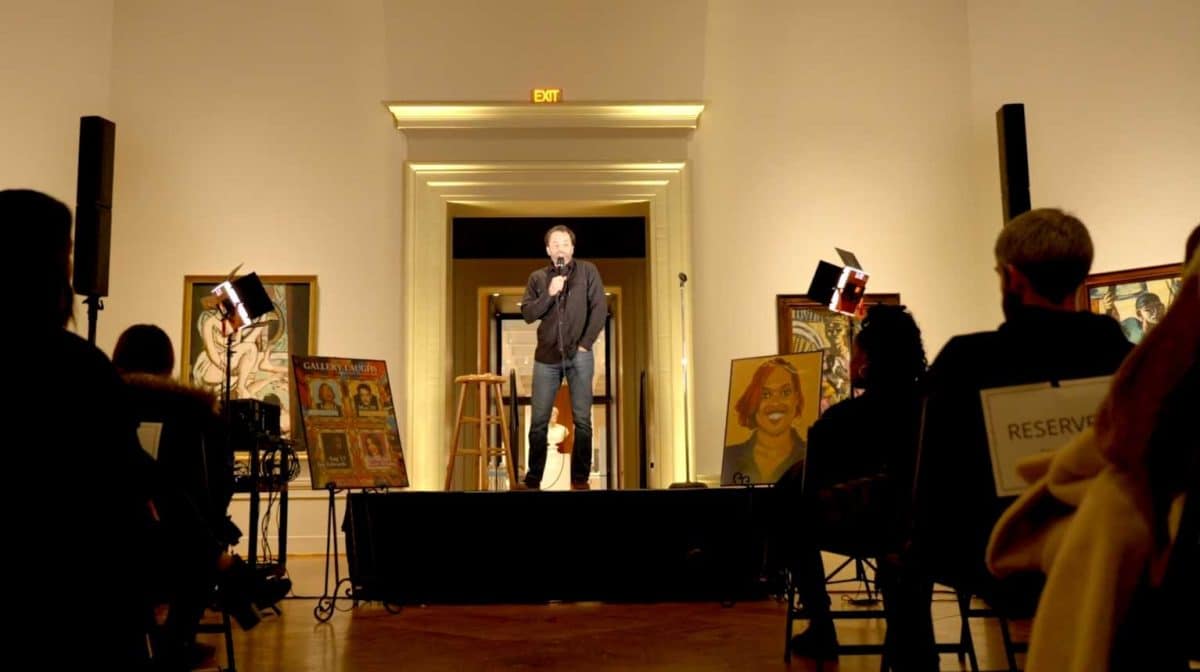
What happens when a museum invites babies, dogs and stand-up comedians through its doors? At the Saint Louis Art Museum (SLAM), it became a two-year testing ground for museum audience development. Educators Jessica M. Kennedy, Erica Richard and MaryClaire Pavlick shared four of these experiments at MuseumNext: what they tried, what worked, what didn’t and what they learned along the way.
Free to all, but not yet for everyone
SLAM was founded in 1879 and now holds more than 38,000 works spanning five millennia and six continents. Its home, the Palace of Fine Arts, displayed 11,000 works during the 1904 World’s Fair. For more than 115 years the museum has offered free admission, and “Dedicated to Art and Free to All” is carved above its main entrance.
The museum serves a region of nearly three million people across Missouri and Illinois. Most visitors come from the City of St. Louis and St. Louis County, whose tax support makes free admission possible.
Yet free entry alone does not make everyone feel welcome. That gap is what led SLAM to the Access for All grant.
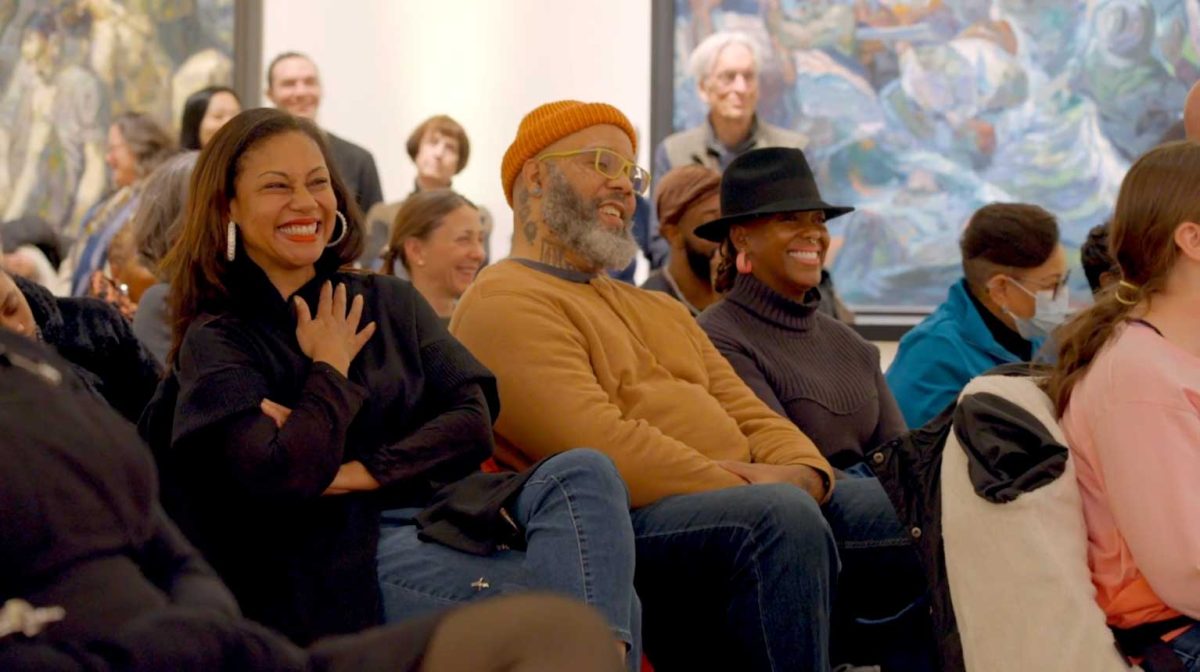
The Access for All grant: a licence to experiment
In 2024, SLAM was one of 64 US museums awarded an Access for All grant by the Art Bridges Foundation. The museum is using its $1.6 million in funding to run free programming every Friday through 2026.
The brief was deliberately open. Each programme needed to be transformative, interdisciplinary or audience-building: bringing something new, blending art with other disciplines, or actively welcoming people who don’t usually visit.
SLAM set itself three goals:
- Bring in first-time visitors.
- Deepen partnerships across St. Louis.
- Make the museum a place people actually want to be on a Friday night.
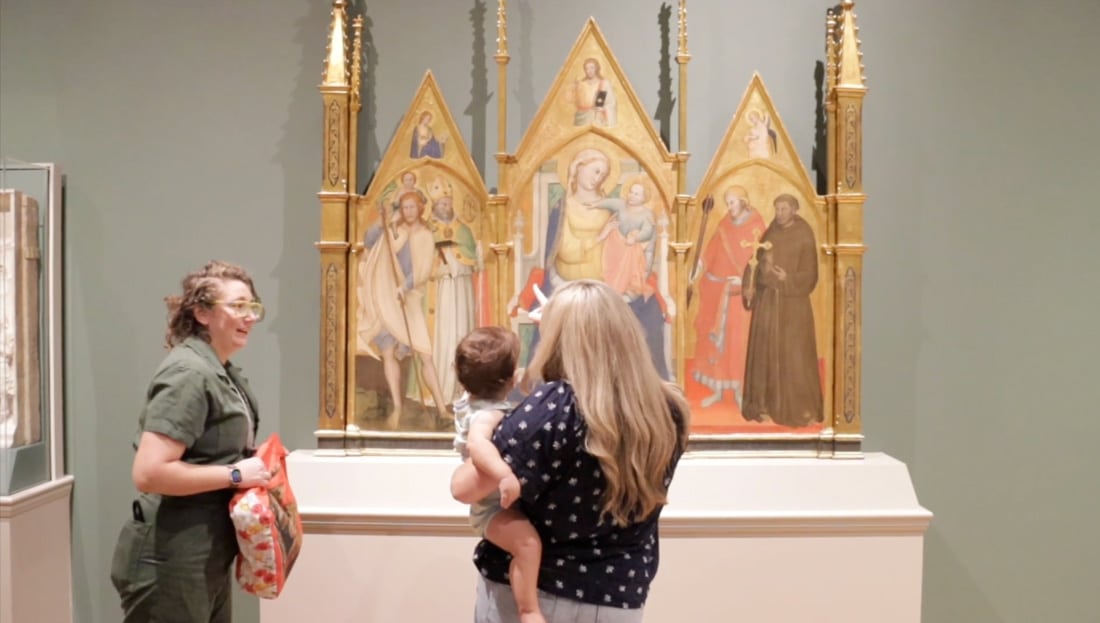
Case study 1: Baby & Me – designing museum programmes for infants and caregivers
Toddlers have long been part of SLAM’s family programming. With the grant, Erica Richard, Associate Educator of Youth and Family Learning, went younger: infants just a few weeks old and the caregivers who bring them.
The first year of life is the fastest period of brain development we ever experience. New parents are going through their own transformation too. Erica’s question was whether an art museum could help that period be one of thriving, not just surviving.
Most families with a newborn don’t picture a gallery as a place for them. Strollers, nappy bags and the fear of a crying baby in a quiet room all get in the way. Baby & Me set out to change that.
How the programme works
Each session pairs two elements:
- A micro tour: a single stop, one-on-one with an experienced volunteer educator.
- A group activity: babywearing, dance, yoga, story time or theatre for the very young.
A drop-in family lounge is always available. Every event is built around partners already doing this work, such as the St. Louis Breastfeeding Coalition, which partnered on World Breastfeeding Awareness Month.
The micro tour was developed with an early intervention occupational therapist. Together they chose artworks suited to each developmental stage and designed supporting tools month by month. These include high-contrast cards for newborns, soft sculptures, tummy-time mats and sensory elements for babies on the move. Metro Theater Company performs in the galleries and co-creates the work with the museum.
As Erica put it, a baby probably won’t remember any of this, but the caregiver will. Caregivers are the ones who come back, again and again.
What worked
- Micro tours. Designed as 10-minute experiences, caregivers often wanted 30. Moving at the baby’s pace became the biggest lesson.
- The family lounge. An art-themed baby gym and ball pit, run with Kids Play STL and given a custom theme for each visit. With sofas and bring-your-own snacks, caregivers got a place to exhale and connect.
What didn’t work (yet)
- Fabrication. Hand-sewn soft sculptures and water-resistant mats were piloted in-house, but making objects creatively and safely for babies proved a specialist skill. SLAM is still building that pipeline.
- Physical access. The building isn’t yet easy to navigate with babies, prams and caregivers, and internal staff capacity needs to grow.
Lessons for museum educators
- Bring in experts at the beginning, not the end. Grounding the programme in occupational therapy from day one changed everything.
- Partners aren’t an add-on – they are the programme. They already serve this audience.
- Development, connection and relaxation can coexist. One programme can offer all three, through relaxed unstructured time or facilitated activities.
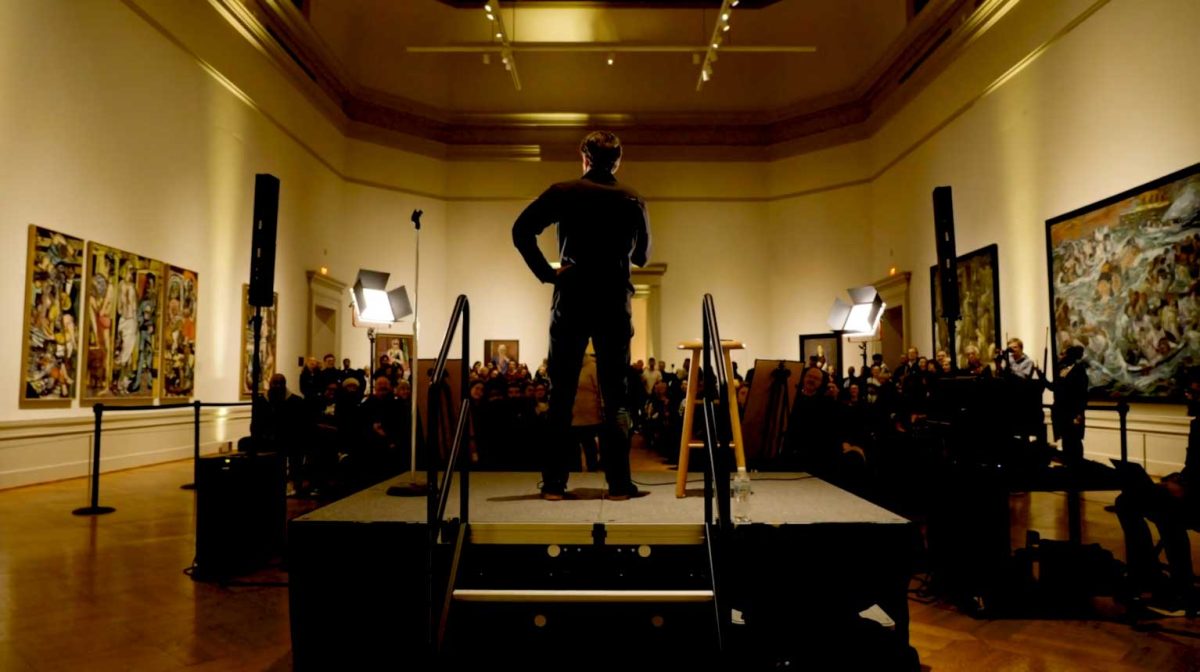
Case study 2: Gallery Laughs – stand-up comedy at the art museum
Gallery Laughs is a quarterly comedy night featuring nationally known comedians. Presented with a local media partner, it has served more than 2,200 visitors in two years.
The evening opens with a cash bar and a DJ. Three to five local comedians follow, then a nationally known headliner. A SLAM educator opens the show by highlighting artworks from the collection that show how art can be funny. A local artist illustrates portraits of each comedian for promotion, and reproductions are raffled at the end of the night.
The programme ticks all three grant criteria. It is new for SLAM and rare among museums. It sits alongside the music, dance and theatre the museum already programmes. And it draws people who don’t usually visit, with the crowd shifting depending on the headliner.
What worked
- Talent. High-calibre headliners paired with strong local openers.
- The right promotional partner. A partner plugged into podcasting and live comedy extended reach. Inclusion in St. Louis’s Flyover comedy festival reached fans who’d never check a museum calendar.
- A route into the galleries. The art segment sends people into the galleries afterwards and promotes lesser-known benefits such as the Print Study Room.
- Free entry. A free show with professional comedians is genuinely rare.
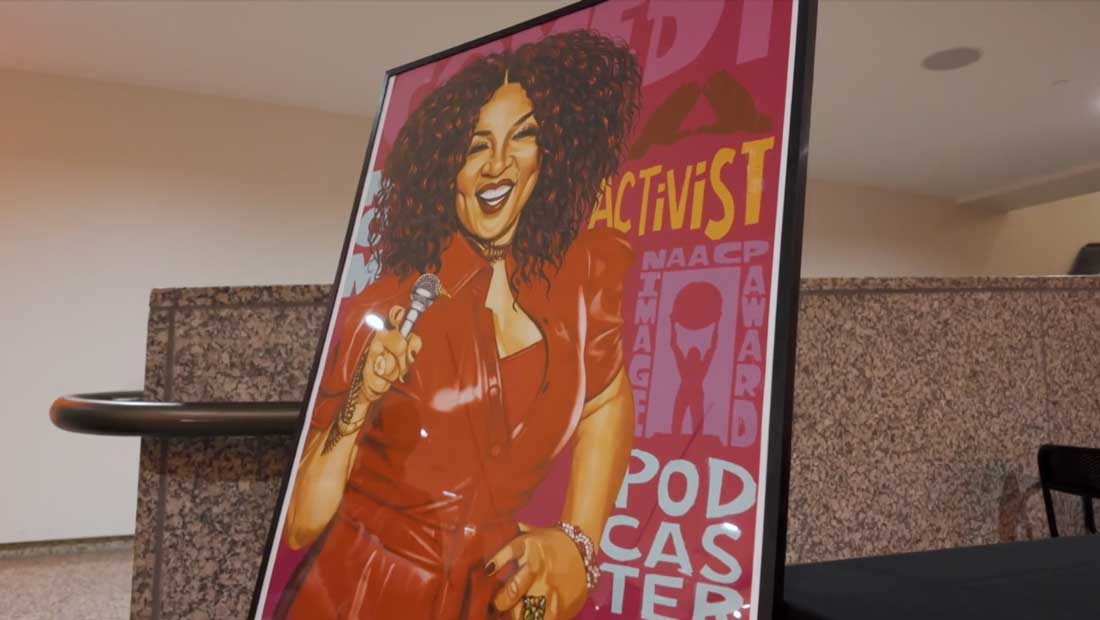
What didn’t work at first
The first Gallery Laughs did take place in a gallery holding about 125 people. More than 200 showed up and some had to be turned away. The programme moved to the 460-seat Farrell Auditorium, with an overflow room for around 125 more.
Lessons for museum public programmes
- Fix queuing with ticketing. People were arriving at 3pm for a 6.30pm show to hold a seat. Free tickets, released on the day and collected in person, solved it.
- Trust your audience. Taboo topics do come up, but the expected pushback never arrived.
- Comedy has broad appeal. Audience demographics proved remarkably wide. A lot of people simply love stand-up.
Case study 3: University Day – engaging Gen Z and university students
Young adults, especially Gen Z, are an important audience gap for SLAM. St. Louis has nearly 30 colleges, universities and technical schools, including Washington University in St. Louis, Saint Louis University and Harris-Stowe State University, a couple of miles away.
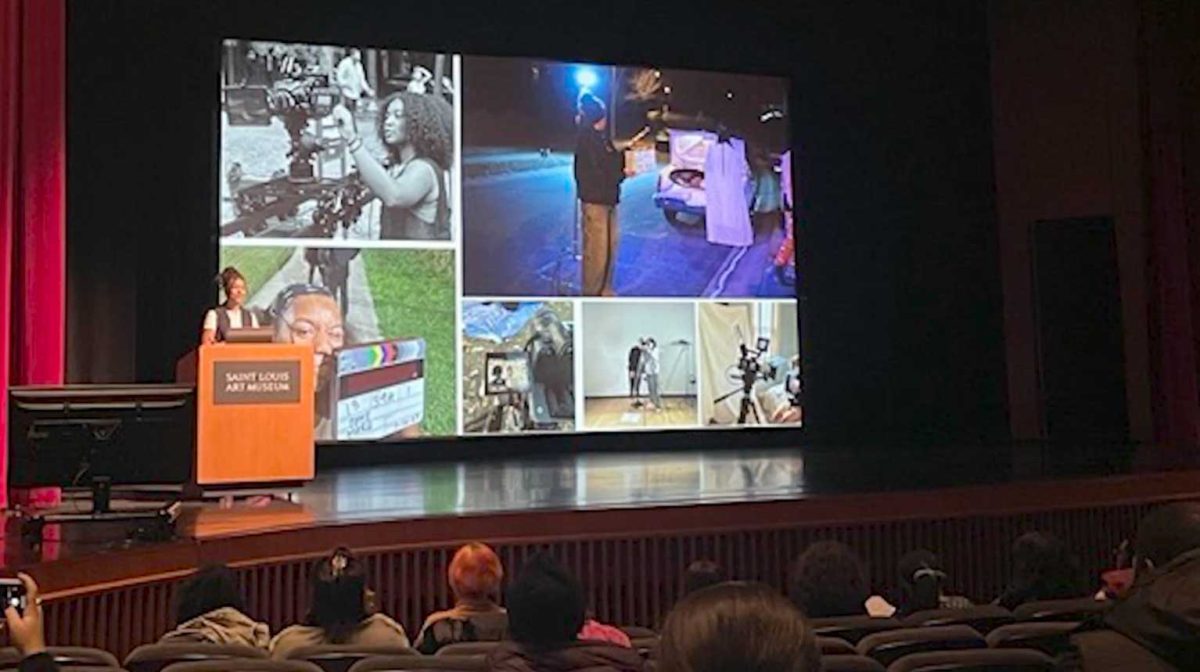
MaryClaire Pavlick, Museum Program Coordinator and a recent Saint Louis University graduate, led the work. Evaluation showed curiosity and location drive visits, so the challenge was simple: how do you make students curious enough to stop by?
The answer was University Day, held in 2024 and 2025. Students from different fields were invited to connect their own studies and interests with the collection, through hands-on art-making, student-led gallery talks and creative presentations.
What worked
- Student-led gallery talks. An open call invited students to pick works and link them to their discipline. One connected an Egyptian object to his archaeology studies; another shared her experience of visiting the site shown in a painting.
- Wider promotion. When talks were marketed beyond students, attendance rose sharply, drawing other students, professors and general visitors.
- Collaborative presentations. Translations: Creative Research in the Media Arts brought together film, sound, performance, photography, drawing and print, each introduced by the artists themselves.
Lessons for engaging young adult audiences
- Build with students, not just for them. Their expertise connects new audiences to the museum. Understanding their daily lives also shows what makes visiting hard.
- Student-led doesn’t mean student-only. Think broadly about who a programme can serve.
Case study 4: Dog Days of Summer – a dog-friendly museum event
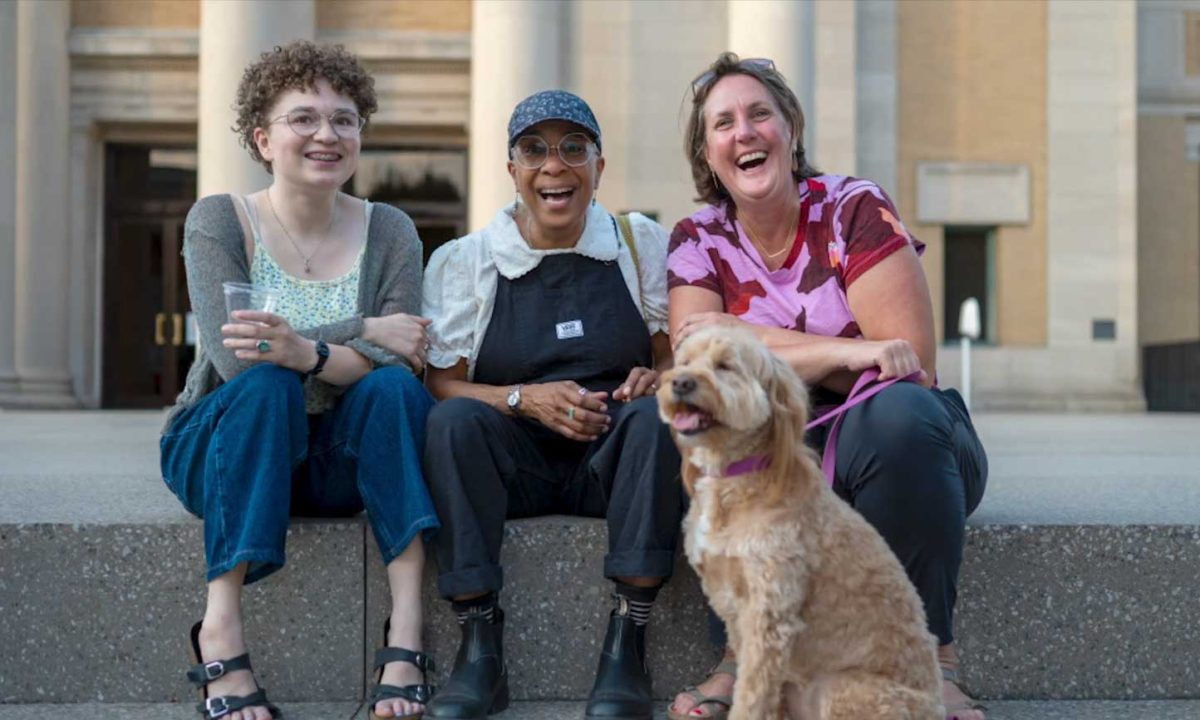
Dog Days of Summer began with one educator’s dog, Howard, and his love of outdoor art. If she wanted to bring her companion everywhere, she reasoned, others probably did too.
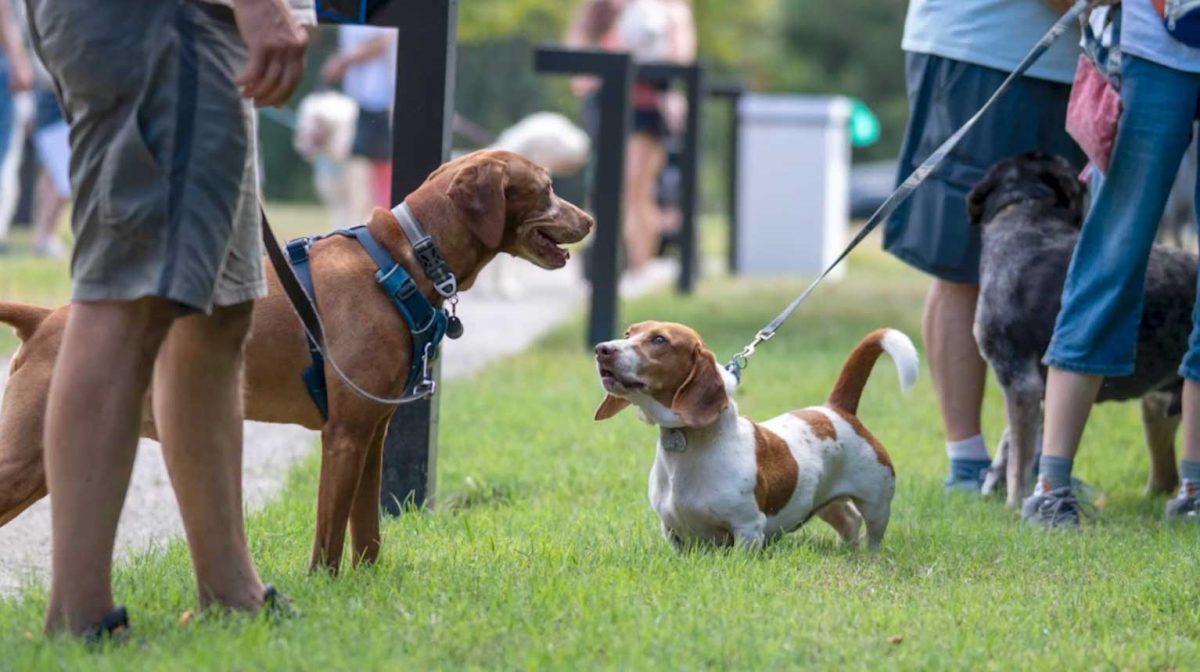
SLAM sits in Forest Park, which draws more than 15 million visitors a year to attractions including the Saint Louis Zoo, the Missouri History Museum and the Muny. The team wanted to reach people already in the park who weren’t visiting the museum. Their solution: open the Grace Taylor Broughton Sculpture Garden to an audience SLAM had never served before – dogs and their owners.
What worked
- Dog-friendly art-making. Dogs made peanut butter lick paintings while owners bedazzled their own poop bag holders.
- The bar. Pup cups included, it was a favourite for everyone.
- Pet caricatures. The most popular activity of all, with queues wrapping round the garden.
What was challenging
- Internal buy-in. Volunteer educators were thrilled, but other staff had real concerns about animals near art.
- Logistics and liability. Clear advance communication, liability planning and signage proved essential – including signs to stop dogs relieving themselves on bronze sculptures.
- Weather. Storms forced a reschedule in 2025, and an excessive heat wave led to a full cancellation the following year. SLAM is now considering other times of year for dog-centred programming.
Lessons for outdoor and audience-building programmes
- Your audience is broader than you think. Visitors came in large groups even when only one person had a dog, and some came just to be around dogs.
- Novelty is a powerful draw. People were thrilled to bring their dog somewhere it isn’t usually allowed.
- New programmes unlock new partners. SLAM worked with Stray Rescue, the Gateway Arch and a mobile pet treat boutique. The gift shop also learned it needs more dog merchandise.
From grant-funded pilot to lasting programme: key lessons for museums
Whatever happens with future grant funding, SLAM plans to continue three of the four programmes. They have proven themselves not as one-off experiments, but as events the community returns to again and again.
The thread running through all four is a practical recipe for audience development:
- Be willing to try something you’ve never done before. Comedy nights and dog-friendly events were new territory for SLAM.
- Build with real community partners. From occupational therapists to animal rescues, partners brought expertise and existing audiences.
- Watch closely for what isn’t working. Overcrowding, queues, weather and accessibility gaps all surfaced quickly.
- Adjust in real time. New venues, ticketing systems and rescheduling kept programmes alive.
That, the team argues, is how a grant-funded pilot becomes something that outlives the grant.
This article is based on the presentation “Babies, Dogs, Laughs, and Lessons” given at the Creative Museums Summit on 21 October 2026 by Erica Richard, Saint Louis Art Museum; MaryClaire Pavlick, Saint Louis Art Museum; and Jessica M. Kennedy, Saint Louis Art Museum.


About the author – Manuel Charr
Manuel Charr is a journalist working in the arts and cultural sectors. With a background in marketing, Manuel is drawn to arts organizations which are prepared to try inventive ways to reach new audiences.


