Fresh ideas from museums around the globe in your inbox each week

October 10 2026
 By Manuel Charr

The Städel Museum spent years learning how people living with dementia respond to art in its galleries. Then it had to work out how much of that experience could survive on a screen.
During one testing session for ARTEMIS Digital, a couple sat looking at Max Liebermann’s painting of girls sewing in an Amsterdam orphanage. The wife, who is living with dementia, said nothing about the picture. Instead, her hands began to move, recreating the stitching motions of the girls on the screen.
Anne Dribbisch of the Städel’s art education team shared that moment at MuseumNext, in a presentation with Dr Chantal Eschenfelder, the museum’s Head of Education and Digital Collection. It sums up what the project is after. The aim is not to teach people about art history, but to prompt a response, and to give a person with dementia and the person who cares for them something to share.
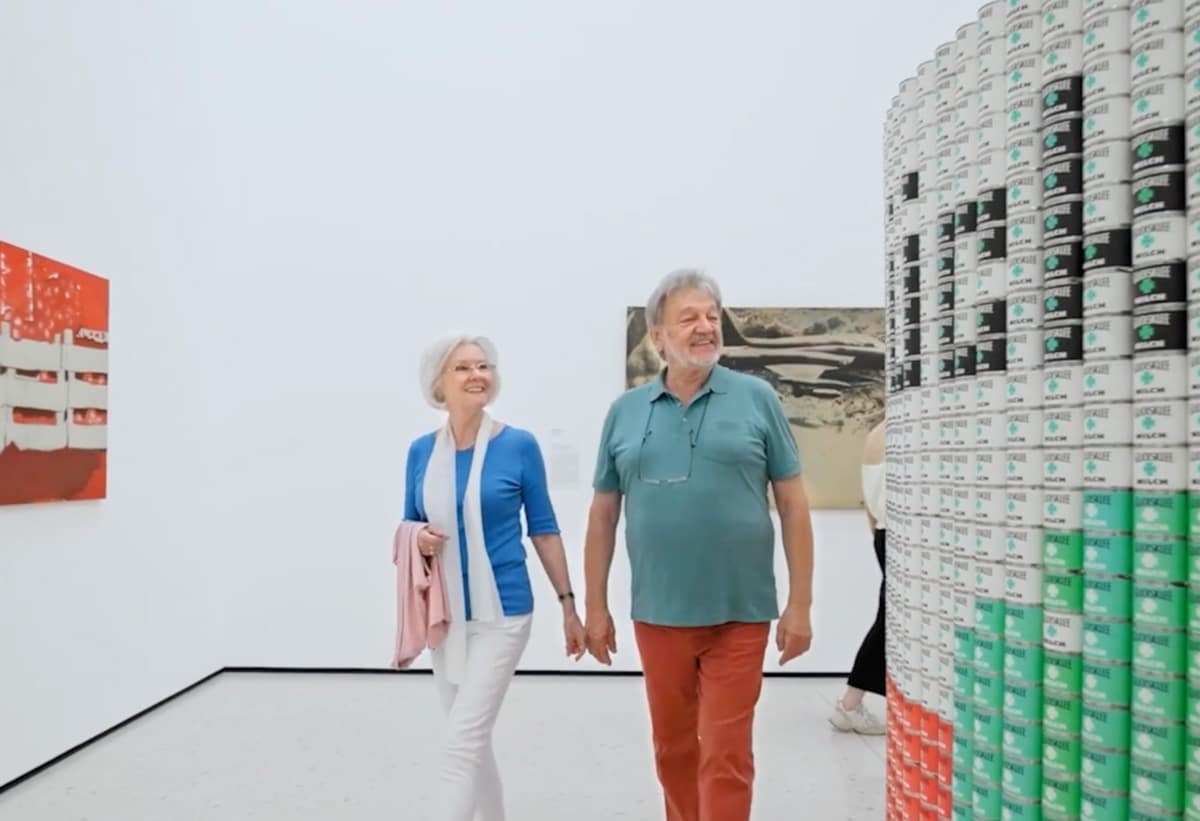
Above: Visitors at the Städel Museum, Frankfurt
A programme that already worked
ARTEMIS did not begin as an app. It started as an in-person programme developed by the Städel Museum with Professor Johannes Pantel and the Department of Geriatric Medicine at Goethe University Frankfurt. Once a month, up to six couples – each a person living with dementia and a relative or carer – join a free tour of the collection, then move into the museum’s studios to make something themselves. Themes such as Frankfurt, family, the colour blue and abstract art rotate every six months.
Crucially, the programme had evidence behind it. A randomised controlled study run by the university between 2014 and 2017 found that participants with dementia reported a better quality of life and showed significant reductions in apathy and depression. Their family carers’ well-being improved too.
Want more insights like this? Explore our upcoming virtual conferences here
Why go digital
The pandemic made the case for a digital version. It showed how damaging isolation could be for people with dementia and their families, and how many of them could never easily reach a museum in Frankfurt, pandemic or not.
One husband who took part in testing put the problem simply: every day with his wife was different, so planning an outing for a fixed date was hard. A web application that could be opened whenever a good moment arrived – at home, in a care home or in the gallery itself – removed that obstacle entirely. The team built it to run in a browser on a range of devices, so no download or particular hardware would stand in the way.

Designing a calm encounter
In the MuseumNext demonstration, Dribbisch walked through a prototype journey on the colour blue, using the Paradise Garden (The Little Garden of Paradise) by the Upper Rhenish Master, painted around 1410–20.
The first instruction is simply to take your time and look. A guided zoom leads the eye around the painting, after which users can roam the image freely, finding birds and cherries among the flowers. Short context follows, with a button for anyone who wants to know more about the artist, the work or the style.
Then come small interactive tasks. Users notice that three figures are dressed in blue and tap to find out who the Virgin Mary is and why she wears that colour. Later they look for the painting’s remarkably precise birds and plants – and press a button to hear each bird’s song. The team added sound because the research had suggested that engaging more than one sense deepens the effect of looking at art.
Each artwork has two to four steps, always in the same rhythm: background, then an activity. Transitions are slow. The repetition is deliberate. As Dribbisch explained, colleagues from the university helped the team understand that the goal was to stimulate people without overwhelming them, and a predictable structure gives each new artwork a familiar way in.
Discover the inspiring work happening in Museums around the world at our virtual conferences — Find out more
Room for two different people
ARTEMIS Digital is designed to be used by two people together, who will not always want the same thing. A carer might be curious about the history behind a painting; the person with dementia might want only to look. Keeping extra information behind an optional button lets each go as deep as they like without slowing the other down.
The app also makes stopping easy. Users can leave after a step or two and come back later. When they finish an artwork, they are offered three choices: take a break (the app suggests coffee and cake), explore another artwork, or move into a workshop section with creative activities for each theme, illustrated with work made by earlier participants.
Tested with the people it is for
None of these choices were made in isolation. The team held three testing sessions at the university, where couples worked through the entire application while the museum and medical teams watched. Each round led to changes in both the concept and the functionality.
What the team listened for went beyond usability. They paid attention to the conversations the paintings started, the emotional responses, and whether the app fitted the way people actually live – which is how the husband’s comment about unpredictable days came to shape the project’s case.
What other museums can take from it
The Städel’s experience suggests three things. First, build digital access on top of a programme you already understand: the team knew from years in the galleries what a good encounter with art looked like for this audience, and could ask which parts of it would translate. Second, bring in expertise beyond the museum; the geriatric medicine team shaped everything from the pace of the app to the decision to add sound. Third, test with real users early and repeatedly, and treat their circumstances – not just their clicks – as design information.
Since their MuseumNext presentation, the Städel has launched ARTEMIS Digital as a free web application at artemis.staedelmuseum.de, accompanied by a scientific study from Goethe University.
If you are interested in other ways in which museums are working on Dementia care, take a look at this article about the House of Memories project in Liverpool, England and this article about how Amgueddfa Cymru have worked toward greater dementia accessibility in their museums.
–
This article is based on a presentation by Dr Chantal Eschenfelder and Anne Dribbisch of the Städel Museum on ARTEMIS Digital at the Museums, Health & Wellbeing Summit 2024.


About the author – Manuel Charr
Manuel Charr is a journalist working in the arts and cultural sectors. With a background in marketing, Manuel is drawn to arts organizations which are prepared to try inventive ways to reach new audiences.