Fresh ideas from museums around the globe in your inbox each week

October 02 2025
 By Manuel Charr
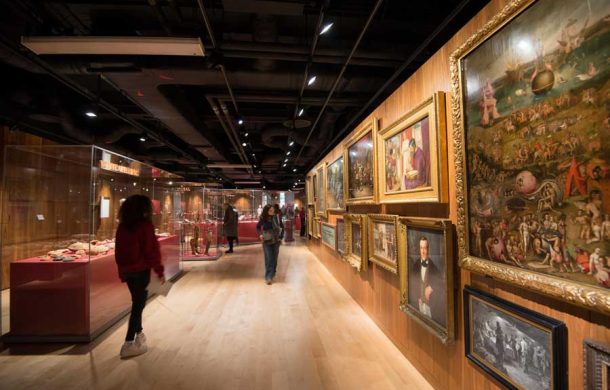
Step into the Australian Museum and you’ll see galleries filled with towering dinosaur skeletons, sparkling minerals and gemstones, and intricately woven cultural items. But hidden behind the walls, in climate-controlled storage rooms, lies something even more staggering: 22 million specimens and cultural collection items accumulated over almost two centuries.
“The scale is astonishing,” said Rhiannon Stephens, who leads the natural science digitisation programs. “We’re talking millions of insects, valuable mineral specimens, things that span from tiny shells to massive whale skeletons. The question isn’t just how do we preserve these objects—it’s how do we unlock their potential for the digital age.”
That question is at the heart of the Collection Enhancement Project (CEP), the Australian Museum’s ambitious effort to digitise its vast holdings. But unlike many digitisation initiatives, CEP isn’t one-size-fits-all. Instead, it’s an umbrella for purpose-built programs—each tailored to either the rigors of scientific research or the cultural protocols that surround First Nations and Pasifika collections.
Science Meets Technology
On the science side, CEP is about scale, precision, and accessibility. Researchers from around the globe once had to travel to Sydney to study specimens. Today, demand for digital access is exploding.
“Digitisation serves as an insurance against loss,” Stephens explained. “It also makes type specimens—the originals used to describe new species—globally accessible for taxonomic research.”
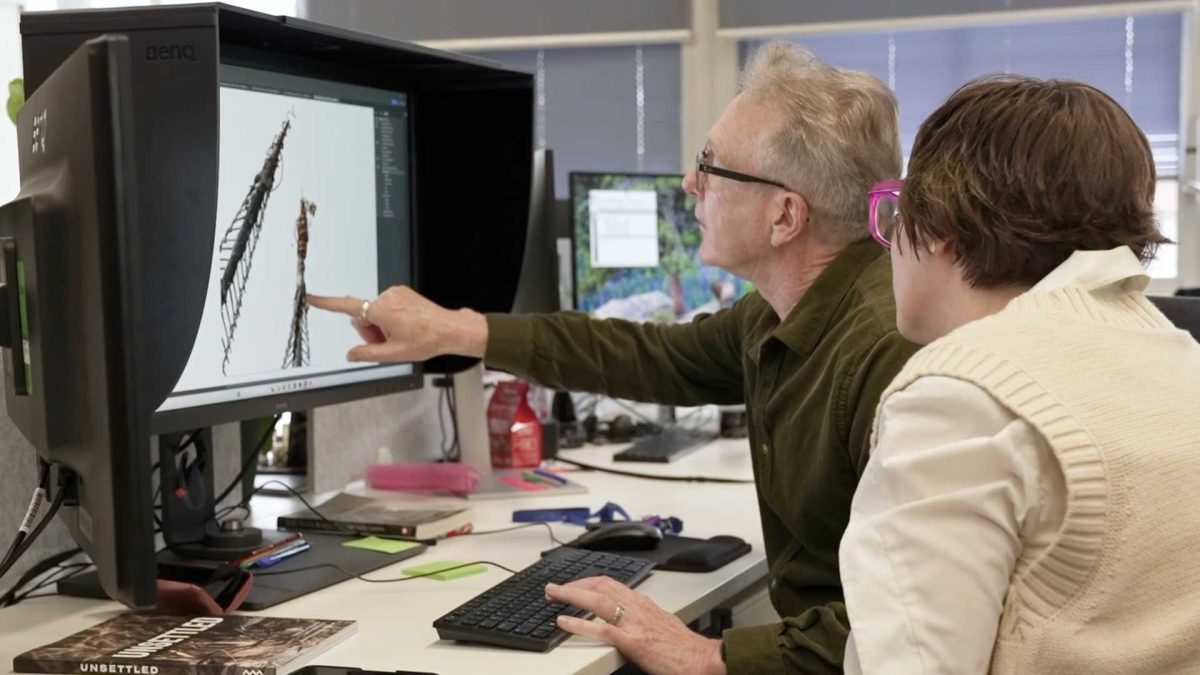
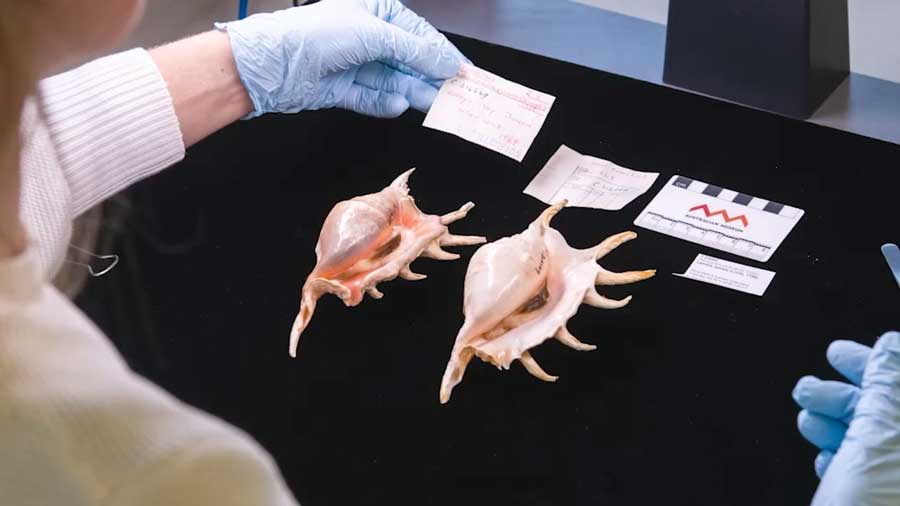
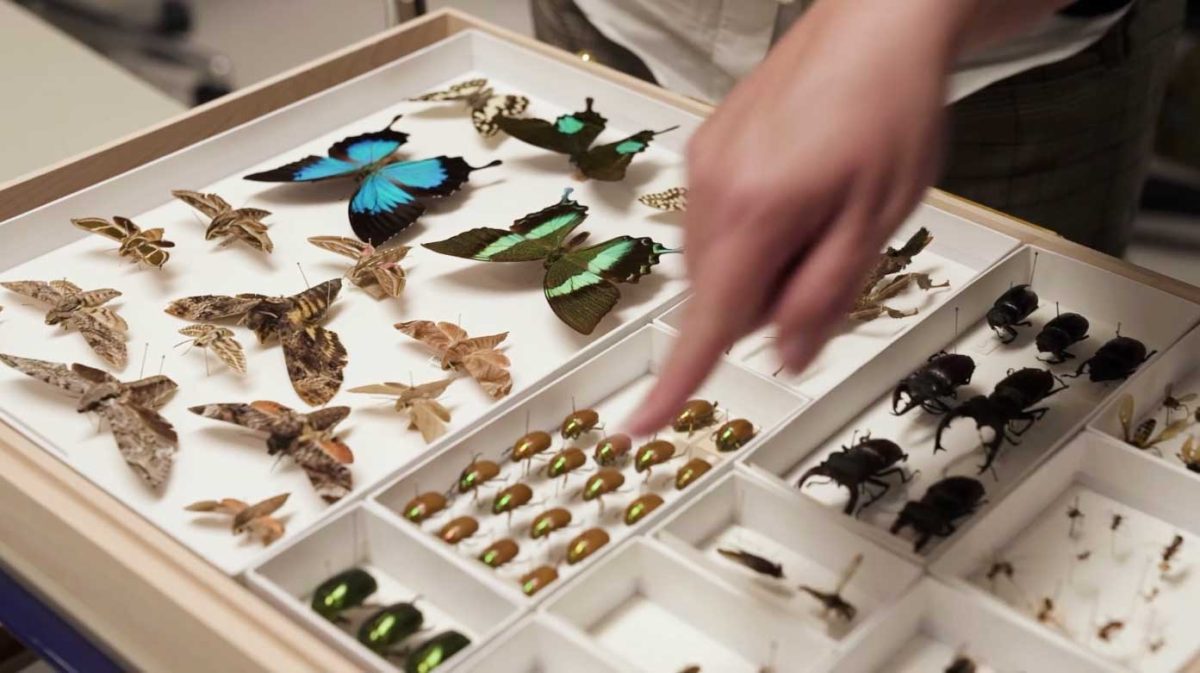
The methods range from digital registration and barcoding to high-resolution photography and CT scans that reveal hidden biological structures. Volunteers, both in the museum and around the world, play a surprising role. Through DigiVol, the museum’s online crowdsourcing platform, volunteers transcribe handwritten specimen labels, turning physical records into searchable data.
“It’s a process that takes collections from vaults into virtual space,” said Stephens. “Advanced imaging lets us preserve fragile structures while making them available for new generations of research.”
Natural history digitisation at NHM shows how specimen records can support research beyond their original collecting purpose.
Culture Meets Community
For Meredith Lynch Underwood, who leads the cultural collections stream, digitisation means something very different.
“These aren’t just museum objects,” she explained. “They’re repositories of knowledge, stories, and tangible and intangible culture that have often been separated from their communities for far too long.”
She cited a phrase from Auntie Grace Kinsella that guides her work: “Museums have sticks, we have stories. Without the stories, museums only have sticks.”
That ethos reshapes how CEP approaches cultural collections. In their Digital Collections Summit 2025 presentation, the speakers reported that the cultural team had restored almost 5,000 original-language names and re-associated over 170,000 items with Aboriginal Country, Nation and language provenance. The work moves beyond records centred on Western anthropological classifications.
“We’re removing data bias and mistruths from collection records,” Lynch Underwood said. “This is truth-telling through digitisation.”
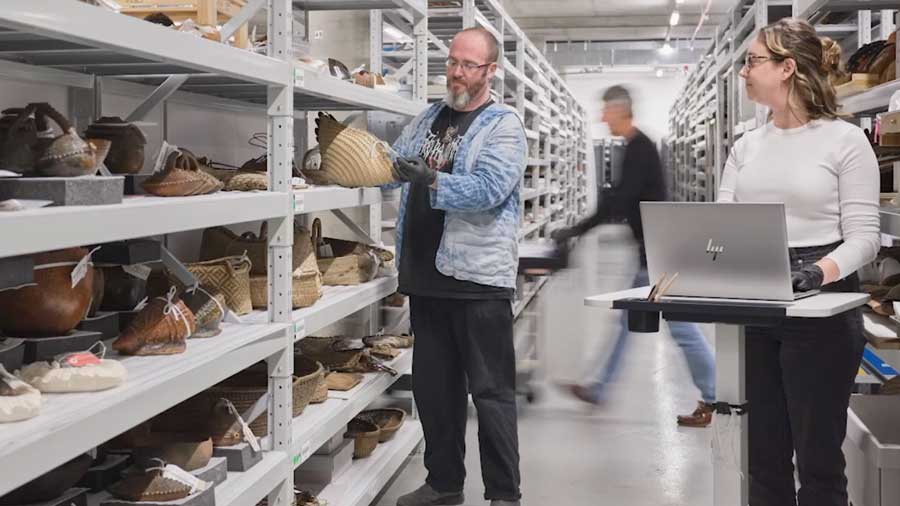
The work is painstaking. Each object requires consultation with knowledge holders to understand protocols for access and interpretation. In some cases, the digitisation process itself becomes a cultural event.
Sharing interpretive authority with creative participants at the Great North Museum offers a related example of changing who shapes a museum story.
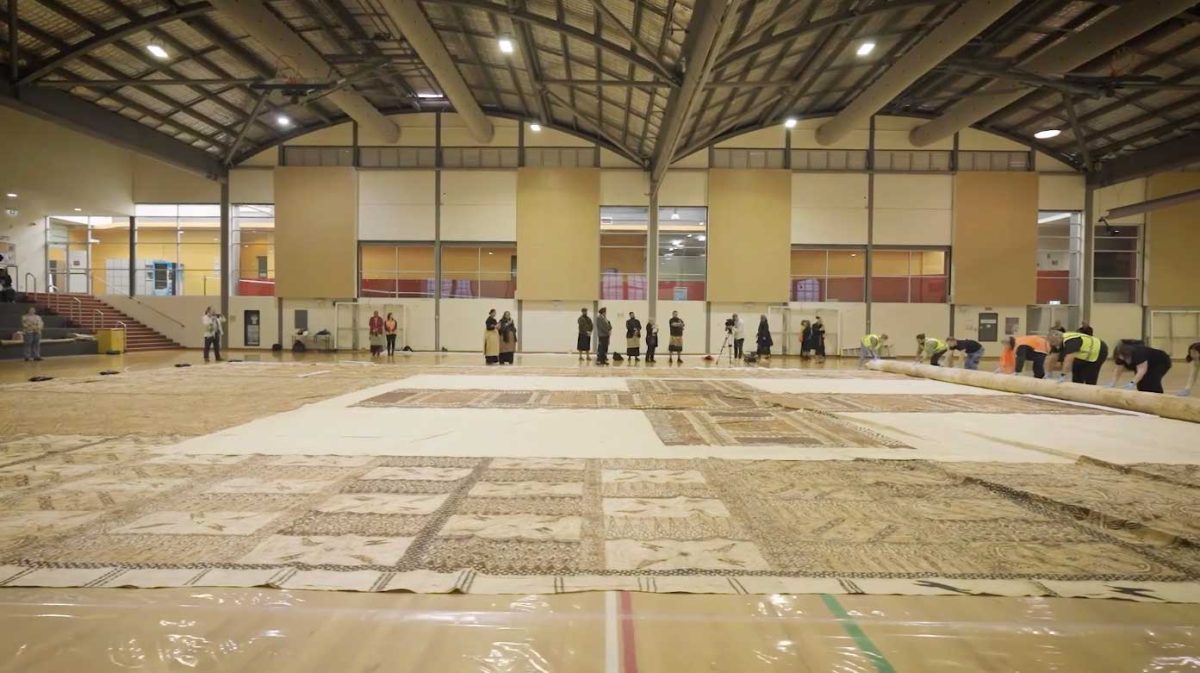
When the Australian Museum unfurled the Tongan Ngatu Me’a’ofa, the Museum’s largest object, digitisation wasn’t just a technical feat, it was ceremonial. Drones stitched together 157 images of the vast bark cloth, but the project also brought together the Tongan Royal family, conservation experts, and Tongan community members. “Digitisation facilitated not just access,” said Lynch Underwood, “but relationship-building and cultural continuity.”
From Storage to Gallery
Wansolmoana opened in October 2023. The speakers described a 2025 refresh that included a scaled-up digital replica of a Kiribati welcome mat and an interactive map linking nearly 6,000 digital assets representing about 1,500 objects from 22 Pacific nations. An image or file is an asset, not necessarily a separate collection item.
“Museum visitors can navigate cultural knowledge in ways that weren’t possible before,” Lynch Underwood explained. “Children observe traditions, researchers study materials, and diaspora communities reconnect with heritage.”
Here, digitisation becomes more than preservation. It becomes a tool for repatriation, cultural continuity, and even international diplomacy.

Two Streams, One Current
The Australian Museum’s approach reflects a global shift. Technology is critical, but cultural protocols and indigenous rights dictate methodology.
“We’re not just preserving the past,” Stephens said. “We’re building foundations for future discovery. Whether it’s a researcher examining a beetle specimen or a Community member analysing weaving techniques, these digital collections serve knowledge in all its forms.”
Lynch Underwood agreed: “As each specimen and cultural object makes its digital debut, they join different but complementary global networks—one serving scientific inquiry, the other supporting cultural continuity and indigenous rights.”
A Digital Revolution with Two Voices
The Collection Enhancement Project is, in essence, two revolutions running in parallel. One stream aims for universal scientific access; the other for community-led, culturally respectful pathways. Both are powered by technology, but value grounded.
As Lynch Underwood put it: “We’re not just digitising objects. We’re caring for them, interpreting them, and documenting their truth.”
The two streams share tools, but they do not share a single rule for access. Scientific digitisation can support broad research reuse, while cultural collection work also depends on the authority and protocols of knowledge holders. The useful lesson is to decide who can describe, view and reuse material before choosing how to put it online.
–
This article is based on the presentation, "Collection Enhancement At The Australian Museum", by Meredith Lynch Underwood and Rhiannon Stephens from the Australian Museum at the Digital Collections Summit 2025 organised by MuseumNext.


About the author – Manuel Charr
Manuel Charr is a journalist working in the arts and cultural sectors. With a background in marketing, Manuel is drawn to arts organizations which are prepared to try inventive ways to reach new audiences.