Fresh ideas from museums around the globe in your inbox each week

October 24 2026
 By Manuel Charr
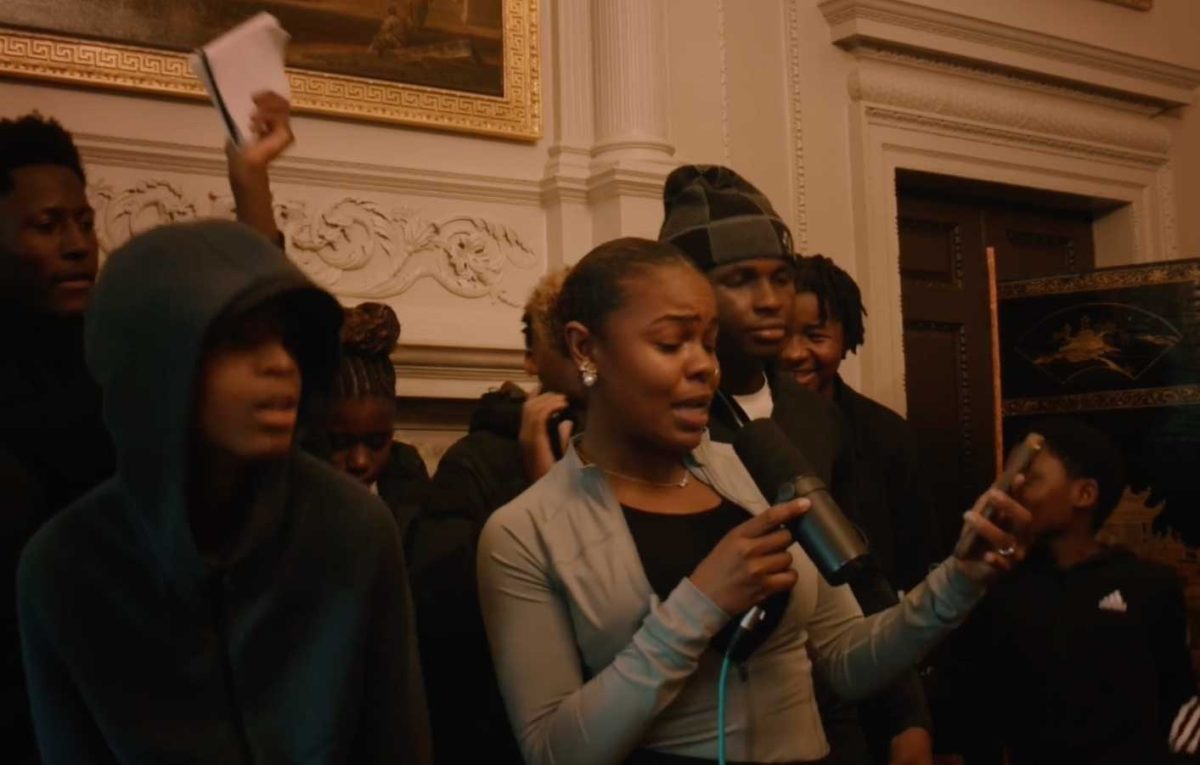
Museum and heritage learning teams share a common challenge: how do you help young people make a personal connection with collections and historic places, rather than simply visiting them?
English Heritage tested one answer through Inspiring Voices, inviting young people aged 11 to 25 to respond to its sites through poetry, in written, spoken, filmed and visual forms. At a MuseumNext presentation, Laura Taylor, Digital Learning Manager at English Heritage, and Domi Blackmore, Learning and Participation Programmes Manager at English Heritage, shared how the work was designed and delivered, and what they learned.
According to the speakers, eight on-site workshops reached 119 young people against a target of 50, and an online poetry festival received 168 submissions against a target of 50. These figures measure participation and reach. The team also gathered immediate before-and-after feedback, but the presentation did not report longer-term measures of connection or wellbeing.
What museum teams can learn
- Frame it as a creative response, not “poetry”. The word can deter bookings; a broader framing widened interest.
- Recruit through people who know the local networks. Regional staff brought in schools, youth groups and young carers.
- Let the group shape the session. The strongest work came when facilitators followed young people’s interests.
- Offer flexible formats. Writing, performance, film, rap and visual poetry all counted.
- Plan access early. Uneven ground, stairs, remote locations and transport costs can all exclude people.
- Build in a pre-visit call and a safe indoor base. Both helped groups feel ready and comfortable.
About the project
Inspiring Voices is English Heritage’s wider programme of contemporary creative responses to its sites. It builds on Untold Stories, an earlier poetry programme launched in 2020.
Partnered with it was Poetry, Heritage and Community, an 18-month research project with The Oxford Research Centre in the Humanities (TORCH), the University of Oxford and the History of Science Museum. It was co-led by Professor Christine Gerrard of the University of Oxford and Dr JC Niala of the History of Science Museum, with research associate Dr Abbi Flint investigating the poetic associations of English Heritage sites. That research shaped the workshops described below.
The youth work ran in two strands: on-site workshops and an online poetry festival.
Designing poetry workshops for young people
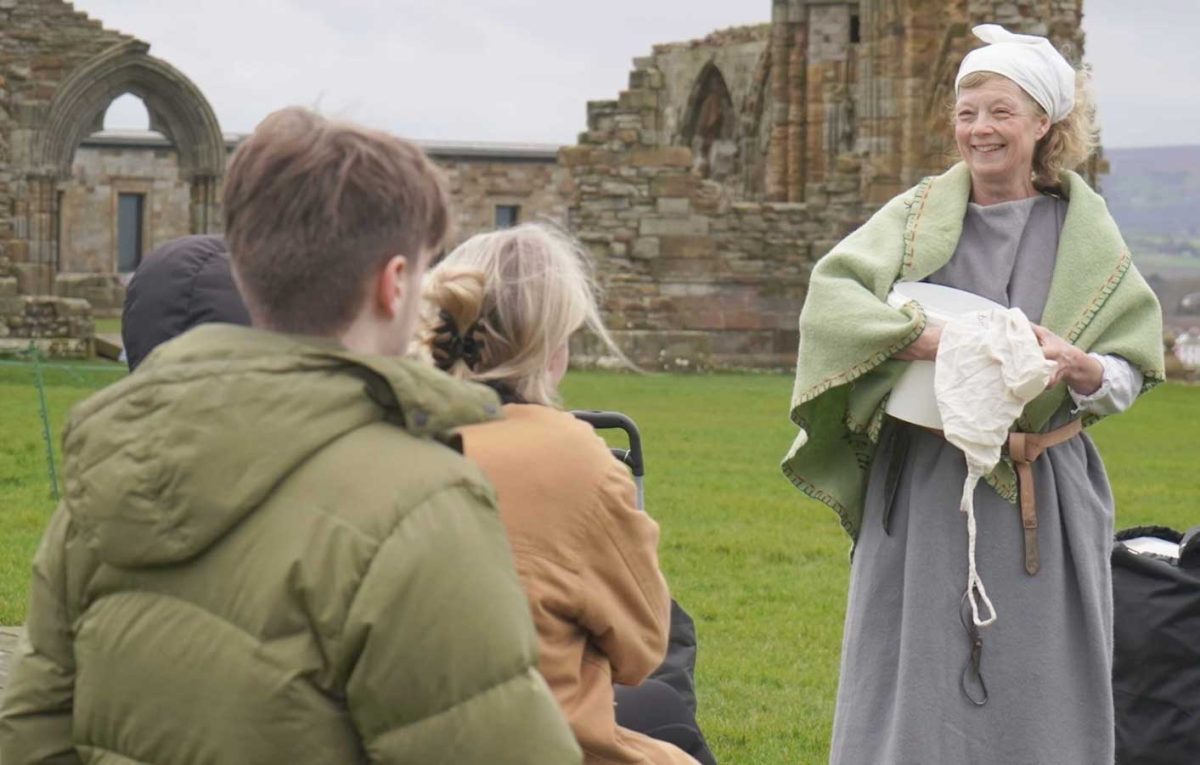
The team ran eight workshops at six sites: Bolsover Castle in Derbyshire; Down House in Kent, Charles Darwin’s home; Marble Hill House in Twickenham; Stonehenge in Wiltshire; Stott Park Bobbin Mill in the Lake District; and Whitby Abbey.
Sites were chosen against clear criteria. Each needed an indoor or covered base and a poetic association identified in Dr Flint’s research. The team also prioritised Arts Council England Levelling Up areas, and sought a spread of historical periods and regions.
Each workshop followed an outline by Dr JC Niala, built on that research. Sessions for A-level (Key Stage 5) groups were linked to the English curriculum, which schools often need to justify a trip. Every session opened with a site tour, used handling objects where possible, and included readings of poems connected to the place.
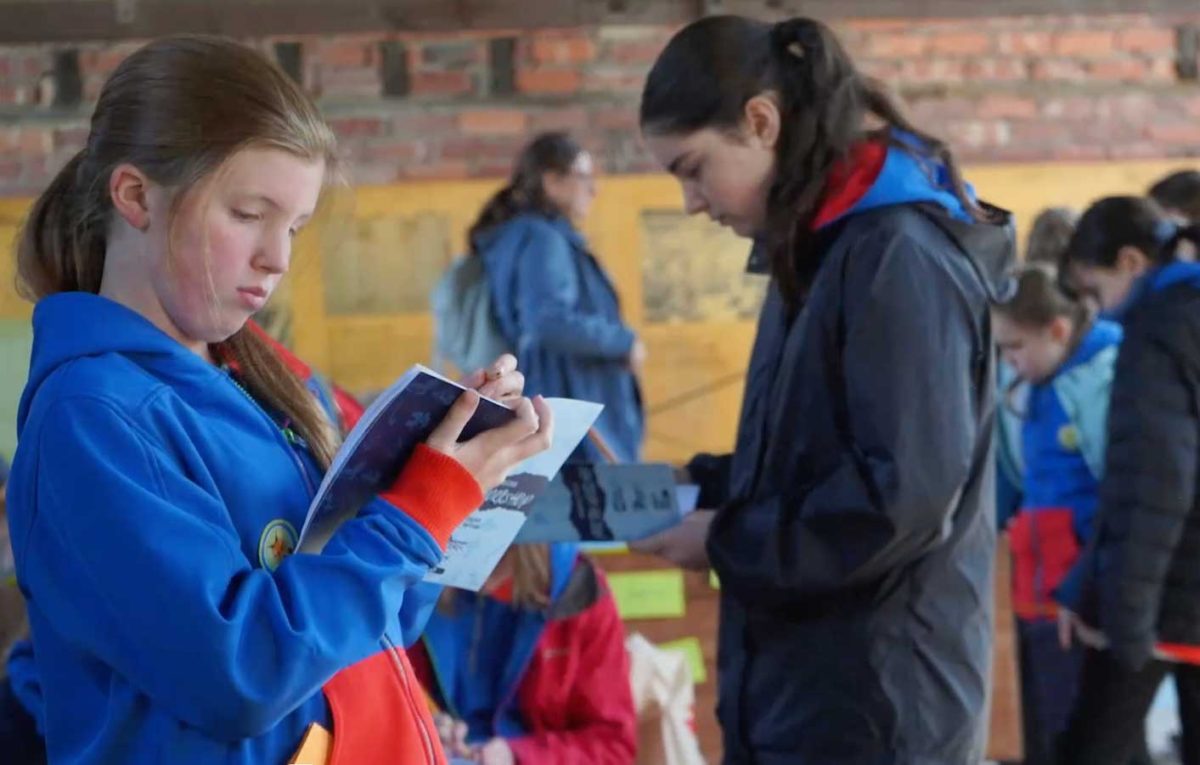
Facilitators then followed the group’s lead. At Stott Park Bobbin Mill, Girl Guides were drawn to the stories of child mill workers who would have been their own age, and wrote about them. At Down House, A-level English students responded to the story of Annie, Darwin’s daughter, who died aged 10 and whose writing box is in the collection.
Formats stretched well beyond the page. At Marble Hill House, Rap Club moved from a tour to a poetry workshop on Alexander Pope’s verse about a dog that lived at the house, then into a cypher rap workshop. The group created and performed a cypher about the house, its builder Henrietta Howard, its grotto and Pope.
Recruiting schools and youth groups
English Heritage’s regional learning and participation officers recruited participants through their local networks. Groups came from uniformed youth organisations, a young carers network, Rap Club and local schools at Key Stage 4 (GCSE) and Key Stage 5 (A-level). Site teams and volunteers supported each session.
Framing mattered. Domi Blackmore noted that the word “poetry” put some groups off; describing the session as a creative response to a heritage site led to more bookings.
Facilitation drew on a mix of academic, poetic and community expertise. Facilitators included Domi Blackmore; Professor Christine Gerrard; poet and Oxford lecturer Dr Claire Mulley; Tyler Turner, poet and community engagement officer at Bolsover; Sarah Terkaoui, English Heritage’s Community Poetry Champion at Marble Hill House; Gurleen Kalho, a creative writer and English Heritage Young Producer; and Benjamin Turner, founder of Rap Club, with three youth lead artists.
Planning for access
Heritage sites bring practical barriers. Ground can be uneven or slippery, there may be many stairs, and some sites are remote. Transport costs can stop groups attending at all.
Two measures helped. A short online meeting before each visit reassured groups about what to expect and gave them a chance to share needs or interests. On the day, an indoor space gave everyone somewhere safe and comfortable to work and to eat.
What the participation figures show
The figures below were reported by the speakers at MuseumNext. They show that both strands exceeded their recruitment and submission targets.
| Measure | Reported result |
|---|---|
| Workshop participants aged 11–25 | 119, against a target of 50 |
| Workshops | 8 at 6 sites: four youth groups, three Key Stage 5, one Key Stage 4 |
| Festival submissions | 168, against a target of 50 |
| Social media views across all content | more than 140,000 |
| Programme webpage views since launch | about 5,500 |
| Digital dice roller uses | almost 2,000 |
| Click-throughs to the submission portal | 582 |
The Key Stage 4 workshop was added after a local school heard about the programme and asked to take part. Every workshop participant produced a poetic response; some read their own work aloud, while others asked a facilitator or peer to read it.
Teachers who brought A-level groups reported that students left enthused and curious despite a cold wind, and that their questions and conversation afterwards suggested the visit had made an impression.
These results measure participation, reach and immediate response. They do not, on their own, show deeper connection with heritage, improved wellbeing or lasting engagement, which were among the programme’s aims.
Gathering immediate feedback
The team used two laminated sheets marked “before” and “after”. Participants wrote their thoughts anonymously on Post-it notes at the start and end of each session, and the sheets were photographed.
The method is quick and low-cost, and anonymity can encourage honest answers. Because it relies on writing, it may not suit every participant. Teams adapting it could offer spoken, drawn or supported responses alongside written ones.
Taking it online: the Inspiring Voices Poetry Festival
The Inspiring Voices Poetry Festival opened on 3 November 2025 and accepted entries until 15 March 2026. Young people could respond to any English Heritage site, in three age categories: 11–14, 15–17 and 18–25.
Laura Taylor attributed the strong response to a more ambitious marketing campaign and to working with established poets. The campaign combined:
- English Heritage’s youth networks
- a national email to schools from the education marketing team
- commissioned poems from Joseph Roberts, on Bolsover Castle, and Raymond Antrobus, on Down House
- listings with Young Poets Network, part of The Poetry Society, and the Southbank Centre
- short videos filmed at workshops, including writing tips and poets performing
Resources built to last
The team designed several resources to stay useful after the festival closed:
- A digital dice roller that combines a character, object, location, season and mood as a writing prompt, illustrated by commissioned artists. Many entrants used it, and it has since been broadened into a general creative prompt.
- An anthology of shortlisted poems, published online with a limited print run sent to applicants.
- A live showcase. Winners performed at the Past, Present, Future Weekender in Oxford, hosted by spoken word artist Inua Ellams, who also mentored them.
The dice roller, anthology and writing resources are available on the Inspiring Voices page.
How museums can adapt the approach
Inspiring Voices worked at historic sites, but its core method transfers: start with something specific, let young people find their own way into it, and accept many forms of response. The ideas below are our suggested adaptations, not part of the English Heritage programme.
- Galleries: begin with a single artwork and the story of its maker or sitter, then invite a response written in that person’s voice.
- Local history museums: use a personal object, letter or photograph from the collection, as Down House did with Annie Darwin’s writing box.
- Industrial and social history collections: focus on workers close to participants’ own age, echoing the Stott Park mill workers who resonated with the Girl Guides.
- Archives: pair a document with a creative prompt, such as an object, place, season and mood, in the style of the dice roller.
Whatever the setting, the lessons on framing, recruitment, access and flexible formats still apply.
This article is based on a presentation given at the Creative Museums Summit on 21 October 2026 by Laura Taylor, Digital Learning Manager, English Heritage, and Domi Blackmore, Learning and Participation Programmes Manager, English Heritage.


About the author – Manuel Charr
Manuel Charr is a journalist working in the arts and cultural sectors. With a background in marketing, Manuel is drawn to arts organizations which are prepared to try inventive ways to reach new audiences.


