Fresh ideas from museums around the globe in your inbox each week

August 22 2025
 By Manuel Charr
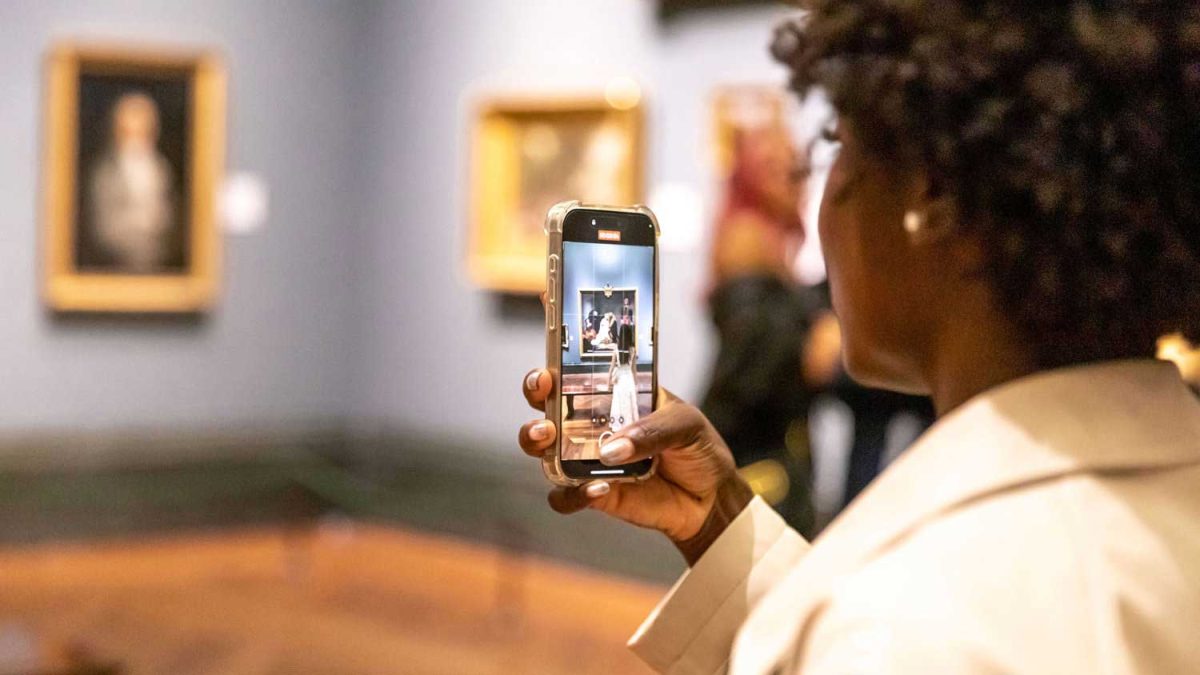
How can museums collaborate meaningfully with social media creators to reach new audiences? That was the question explored by Ellie Wyant, Senior Communications Manager for Social and Communities at The National Gallery, in her presentation at the MuseumNext Digital Museums Summit in July 2025.
Wyant, who led the Gallery’s ambitious 200 Creators Programme for its 2024 bicentenary, shared lessons from years of working with digital creators and insights into how museums can build long-term, authentic partnerships with them.
Why creators were part of NG200
The National Gallery has long recognised the potential of content creators to extend its reach beyond existing followers. While the Gallery already commands an enthusiastic social media audience, creators bring access to distinct online communities who may never have engaged with the Gallery before.

Historian, presenter and author Alice Loxton.
From TikTok explainers to Instagram reels, creators offer fresh storytelling angles that resonate with their audiences. Wyant emphasised that success comes when museums move beyond simply briefing creators, instead collaborating to develop ideas that feel authentic both to the institution and to the creator’s voice.
A case in point: during the Frans Hals exhibition in 2023, the Gallery worked with creators Alice Loxton, Lucy Donovan, and Matthijs Van Mierlo. Their unique takes—ranging from exhibition walkthroughs to playful explorations of Hals’ smiling sitters—generated more than 1.6 million views, with Donovan’s video alone drawing over 1.1 million views on Instagram.
Paid commissions and the wider creator network
For its bicentenary, The National Gallery set out to rethink creator engagement on a much larger scale. The 200 Creators Programme aimed not just to promote temporary exhibitions but to reimagine how the Gallery’s collection and history could be celebrated in the digital sphere.
The initiative had four key goals:
– Reach and engage new global audiences
– Amplify the Gallery’s collection and NG200 activities
– Take an inclusive, multi-voiced approach to creator partnerships
– Build a sustainable network of creators for the future
To achieve this, the Gallery launched a two-pronged strategy:
20 Creative Collaborators – Selected through an open call, these creators were paid £4,000 each to develop substantial projects. They received research support, after-hours filming access, and a year-long membership. The £4,000 was each collaborator’s commission fee, not a statement of the total programme cost.
200 Creators Network – A wider group offered membership, exclusive events, and workshops (including training with Meta) to inspire content creation. Participation was voluntary, but even without payment, their posts generated over 2 million views.

The two groups had different relationships with the Gallery. The twenty commissioned collaborators received a fee and support to develop substantial projects; the wider network received access and opportunities, with posting voluntary. That distinction matters when adapting the model: an invitation can create goodwill, while a commissioned deliverable needs a clear scope, fee and agreement about how the content will be used.
The open call and ideas lab
The open call and selection process was designed to attract creators from across the digital spectrum—not just art historians, but also book influencers, bakers, fashion historians, drag artists, and craftspeople.
A pivotal moment was the “ideas lab”—an after-hours event where shortlisted creators explored the Gallery, met curators, and discovered unexpected stories. For example, one fashion creator inspired by 1940s style found a connection in mosaics featuring Greta Garbo hidden in the Gallery’s Portico Terrace. This led to a creative “Get Ready With Me” piece that merged her niche with the Gallery’s history.
This collaborative model fostered both inspiration and community. Many creators who had only known each other online met for the first time, sparking new collaborations beyond the Gallery project.
Four different ways to interpret the collection
The final 20 Creative Collaborators demonstrated just how varied and innovative this approach could be:
– Historic tailor Zach Pinsent recreated 18th-century outfits (watch on YouTube).
– Drag queen Charity Kase designed an art-inspired look and transformed Van Gogh’s Sunflowers into makeup (watch on Instagram).
Compare Charity Kase’s interpretation with a collection-inspired makeup collaboration at The Wallace Collection.
– BookTok duo Hana and Hali connected literary themes to paintings (watch on TikTok).
– Great Pottery Throwdown’s Adam Johnson crafted ceramics based on works in the collection (watch on Facebook).
Wyant reported that by late 2024, content from the 200 Creators Programme had surpassed 40 million views and 2 million engagements.
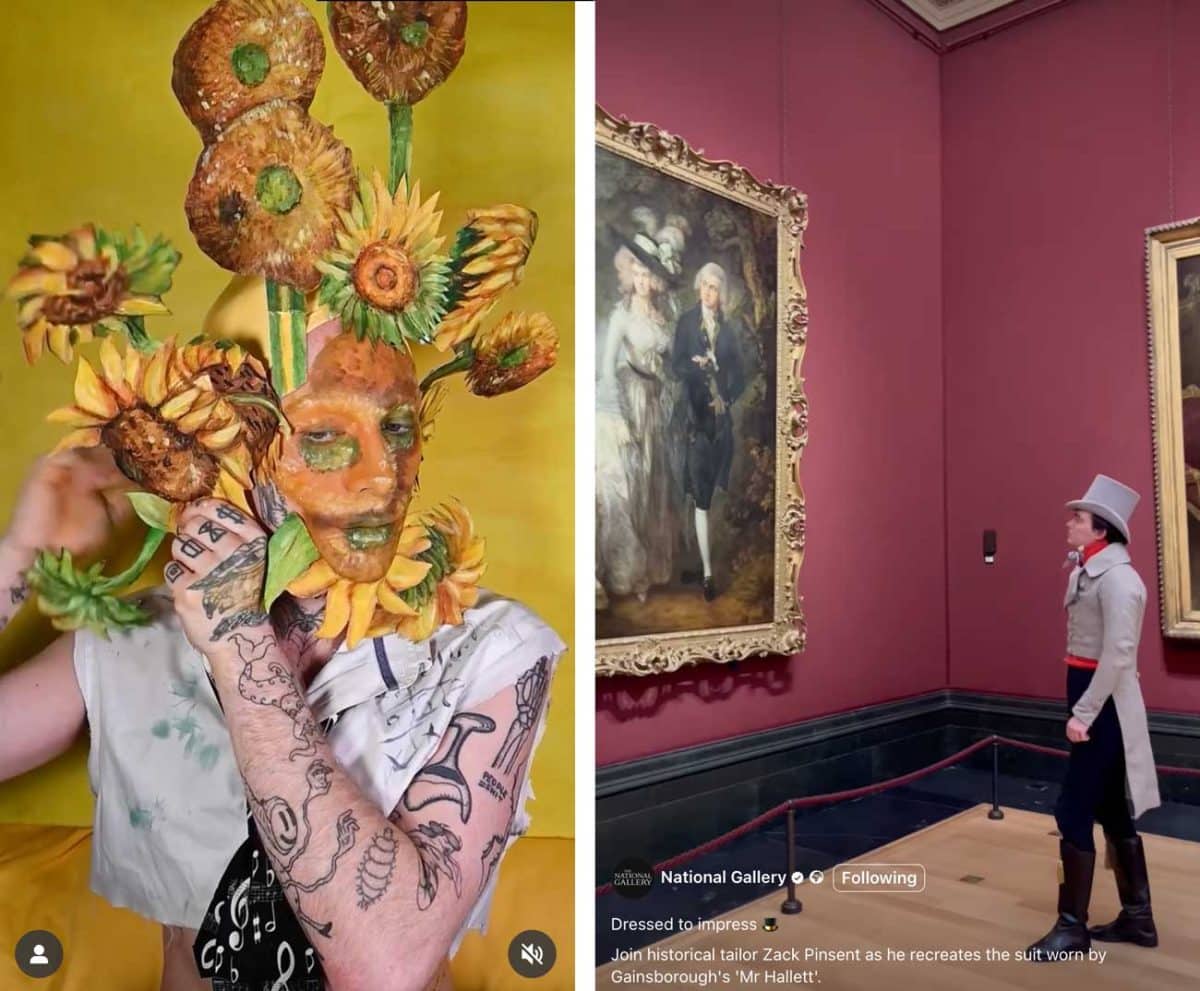
Creators Charity Kase and Zach Pinsent both produced creative responses to The National Gallery
What the programme achieved
Wyant stressed that the success of the project was not just in the numbers, but in how authentically audiences engaged. Many comments came from people expressing an intention to visit after encountering creator-led content. Those comments are audience feedback, rather than verified ticket sales.
For museums considering creator collaborations, choosing and briefing micro-influencers can help turn that distinction into a manageable brief. Wyant offered key questions:
What unique perspective does a creator bring to their community?
How can their passion and personality shape authentic storytelling about your collection?
What can museums learn from creators’ approaches to engaging audiences?
Above all, Wyant highlighted the importance of trust—allowing creators to experiment, take risks, and tell stories in ways institutions may not have considered.
Relationships beyond the anniversary
At her July 2025 presentation, Wyant described plans for 200 Creators 2.0, extending the initiative beyond the bicentenary. She also described creators engaged in new projects at that time, from specialist events to contributions to the Gallery’s audio guides.
For Wyant, the lesson is clear: creators are not a trend to experiment with briefly, but long-term partners who can help museums connect with audiences in meaningful and accessible ways.
“Creators are some of the best people to reach new audiences in accessible ways,” Wyant concluded. “This shouldn’t be a flash-in-the-pan project—we’re committed to continuing to work with them across the Gallery.”
This article is based on the presentation, “Building a ‘200 Creators’ network for the National Gallery’s Bicentenary – and beyond”, by Ellie Wyant at the Digital Museums Summit 2025 organised by MuseumNext. Ellie is Senior Communications Manager for Social and Communities at The National Gallery.


About the author – Manuel Charr
Manuel Charr is a journalist working in the arts and cultural sectors. With a background in marketing, Manuel is drawn to arts organizations which are prepared to try inventive ways to reach new audiences.


