Fresh ideas from museums around the globe in your inbox each week

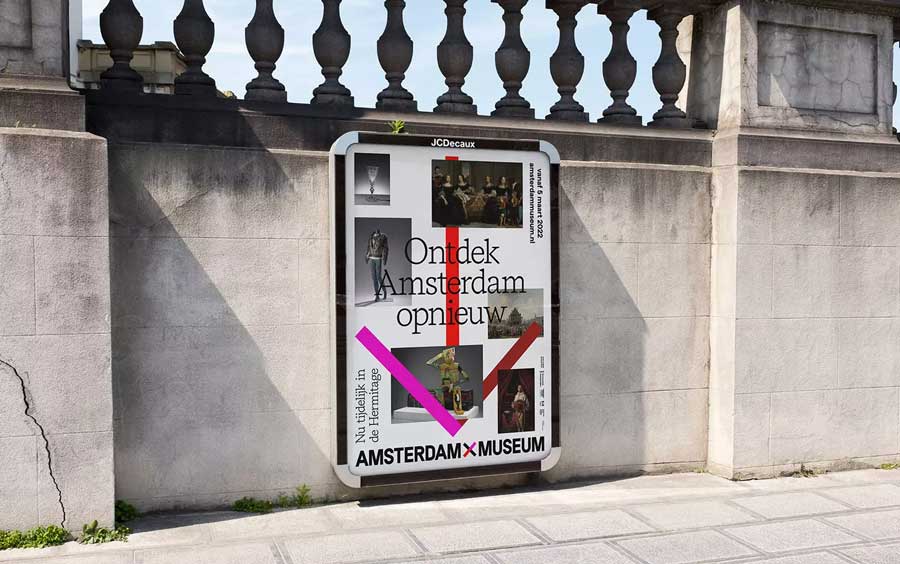
In his 2022 MuseumNext presentation, Maurice Seleky, then Head of Communications and Marketing and a member of the management team at the Amsterdam Museum, described a rebrand connecting the institution’s civic purpose, visual identity and visitor invitation. The website launch and relocation discussed below belong to that 2022 account.
A civic role beyond neutral storytelling
Seleky began by emphasising the museum’s role as an institution that is not neutral, setting it apart from other cultural organisations. “We address relevant themes and subjects in society, and also sometimes controversial ones,” he stated. He highlighted examples such as the museum’s choice to eschew the term “Golden Age” and its highly praised exhibition on the Golden Coach, which sparked national and international conversations around heritage.
Why the museum revisited its identity
The public name change from Amsterdam Historical Museum to Amsterdam Museum took place in January 2011, according to the museum’s account of its development. Seleky described the wider shift towards contemporary narratives using the decade from 2010 to 2020. This shift aimed to reflect the evolving identity of the city. However, Seleky reported a decline in national brand awareness over that period; the account does not isolate the name change as its cause. “We used to be a very famous cultural brand in the Netherlands, and we lost that between 2010 and 2020,” Seleky explained. Recognising the need to regain its national appeal, the museum embarked on a second rebranding process just a decade later.
A Commitment to Societal Dialogue
This new rebranding initiative was rooted in the museum’s commitment to contribute to public dialogue on pressing issues such as decolonisation, equity, gentrification, and urban development. For instance, the museum’s exhibitions often serve as platforms for addressing these critical topics. “We developed a new corporate story, five new core values, and organised a pitch to find graphic designers for a new visual identity,” Seleky outlined.
Translate five values into a visual system
In 2021, the design duo Hamid Sallali and Isabelle Vaverka from Studio Sallali Vaverka were selected to spearhead the museum’s visual transformation. The designers drew inspiration from the museum’s core values: Amsterdam-based, open, connecting, storytelling, and relevant. Central to their design was the Andreas cross, a symbol taken from Amsterdam’s coat of arms and a recognisable emblem deeply embedded in the city’s identity. “The cross became a metaphor for connection, representing the museum’s mission to link visitors with the city, different eras, and diverse communities,” Seleky elaborated.
A Refreshing Colour Palette
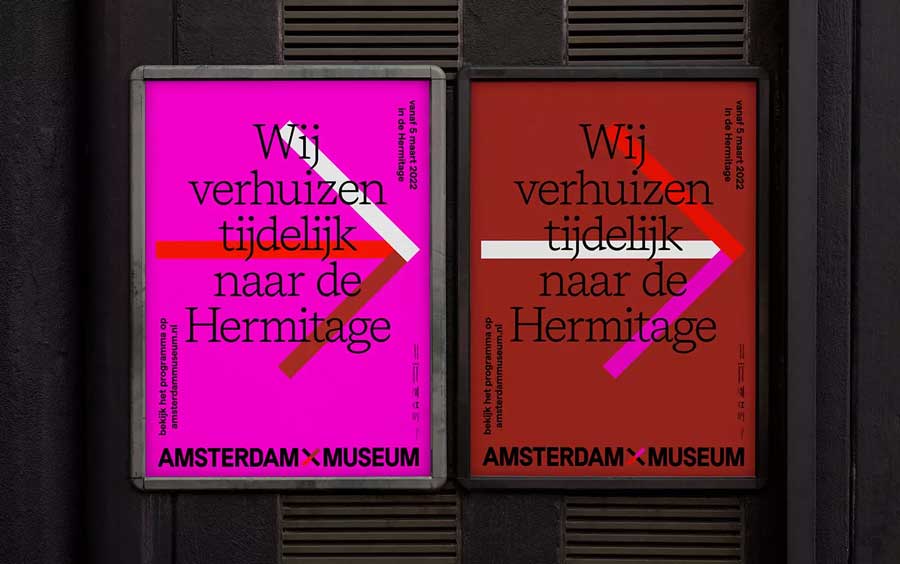
The museum’s corporate colour palette also underwent a refresh. While retaining the iconic Amsterdam red, the spectrum was expanded to include shades such as oxblood red and magenta. “These colours are deeply tied to Amsterdam’s identity and resonate with its cultural and historical connotations,” Seleky noted.
The cross motif was one expression of a broader decision about the museum’s role in Amsterdam. Seleky’s account links it to a corporate story, core values and a willingness to address contemporary issues. For another museum, the useful sequence is to clarify that purpose first, then ask how the identity, website and visitor invitation make it recognisable. That sequence is useful when building a museum brand brief.
Carry the identity into digital and physical touchpoints
The rebranding extended beyond visuals to practical applications. “We’ve introduced new business cards, corporate stationery, and outdoor communications. The new identity is also evident in our merchandise and even in the interior of our multimedia studio,” Seleky shared. A new logo, characterised by its linear design connecting the words “Amsterdam” and “Museum,” was introduced. Seleky presented recognition and connection as aims of the design, rather than reporting a measured increase in brand awareness.
Digital Transformation
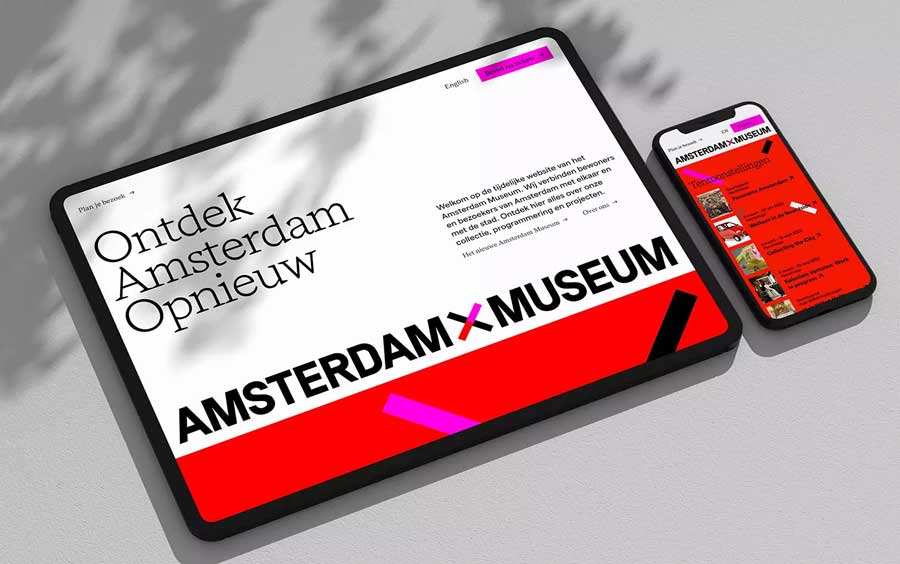
In the 2022 account, the museum had worked with Amsterdam-based agency Bravoure on a new website carrying the identity and collection stories. The launch was one part of making the museum’s purpose visible across its communications, alongside Amsterdam Museum’s local audience work.
A Temporary Relocation
The rebranding coincided with a significant relocation. As the museum’s main site undergoes renovations, it has temporarily moved to the Hermitage Amsterdam building. This transition provided an opportunity to launch a campaign introducing the new identity and location. Seleky proudly showcased the campaign materials, which included banners and flags featuring the revamped visual identity.
Reflections on the Journey
Concluding his presentation, Seleky reflected on the journey, summarising the key challenges and accomplishments of the rebranding process. “Rebranding is a process of iteration, and while we’re proud of what we’ve achieved so far, it’s an ongoing effort. We’re curious to hear your thoughts and look forward to welcoming you to our museum,” he said, inviting the audience to visit Amsterdam and experience the transformation firsthand.
Conclusion: A Case Study in Balancing Heritage and Relevance
The rebranding of the Amsterdam Museum serves as a compelling case study for cultural institutions navigating the delicate balance between honouring heritage and staying relevant in a rapidly changing world.
This article is based on the presentation “The Rebranding of the Amsterdam Museum” by Maurice Seleky at the Museum Marketing Summit 2022, organised by MuseumNext.






